


Maya sat on the old wooden bench at the edge of her grandmother’s garden, the morning dew still clinging to the leaves. She watched as the sun slowly climbed over the horizon, casting a warm glow over the cherry blossom trees that stood proudly like sentinels guarding ancient secrets. The garden, meticulously tended by generations, was a sanctuary that whispered stories of the past. It was here that Maya often found herself torn between the expectations of her family and the quiet call of her own heart.
Her grandmother, Aya, had always been the matriarch of the family, embodying the traditions and values that had guided them for centuries. Aya’s presence was like the constant hum of bees that flitted from flower to flower—a reminder of the harmony and order that defined their world. Maya admired her grandmother greatly, yet she felt a dissonance growing within her, a subtle note out of tune with the family symphony.
Maya loved art, not just as a hobby but as an expression of her innermost self. She dreamed of painting bold landscapes and vibrant abstracts that spoke to the soul, but this was not a path her family understood. They valued stability, practicality, and the secure professions that had ensured their prosperity and respectability. To them, a career in art seemed whimsical and uncertain, a risk they deemed unnecessary.
Growing up, Maya had tried to conform to their expectations, excelling in her studies and pursuing a degree in business. Yet, each success felt hollow, like a fruit that looked ripe but was tasteless inside. There was an unspoken pressure to follow the script written by her ancestors, and the weight of it rested heavily on her shoulders.
Maya’s parents, though loving, echoed Aya’s sentiments. They often spoke of duty and responsibility, of maintaining the family’s reputation. Maya knew they wanted her to be happy, but happiness seemed to have a different definition in their eyes. It was measured by security and adherence to tradition, rather than by personal fulfillment.
Maya’s inner conflict was like a gentle but persistent breeze, barely noticeable yet impossible to ignore. She often found herself lost in thought, her mind a tangled web of desires and doubts. She painted in secret, filling canvases with the colors and shapes that reflected her soul’s yearning. But with each stroke, an undercurrent of guilt threatened to wash over her, a relentless reminder that she might be betraying her family’s trust.
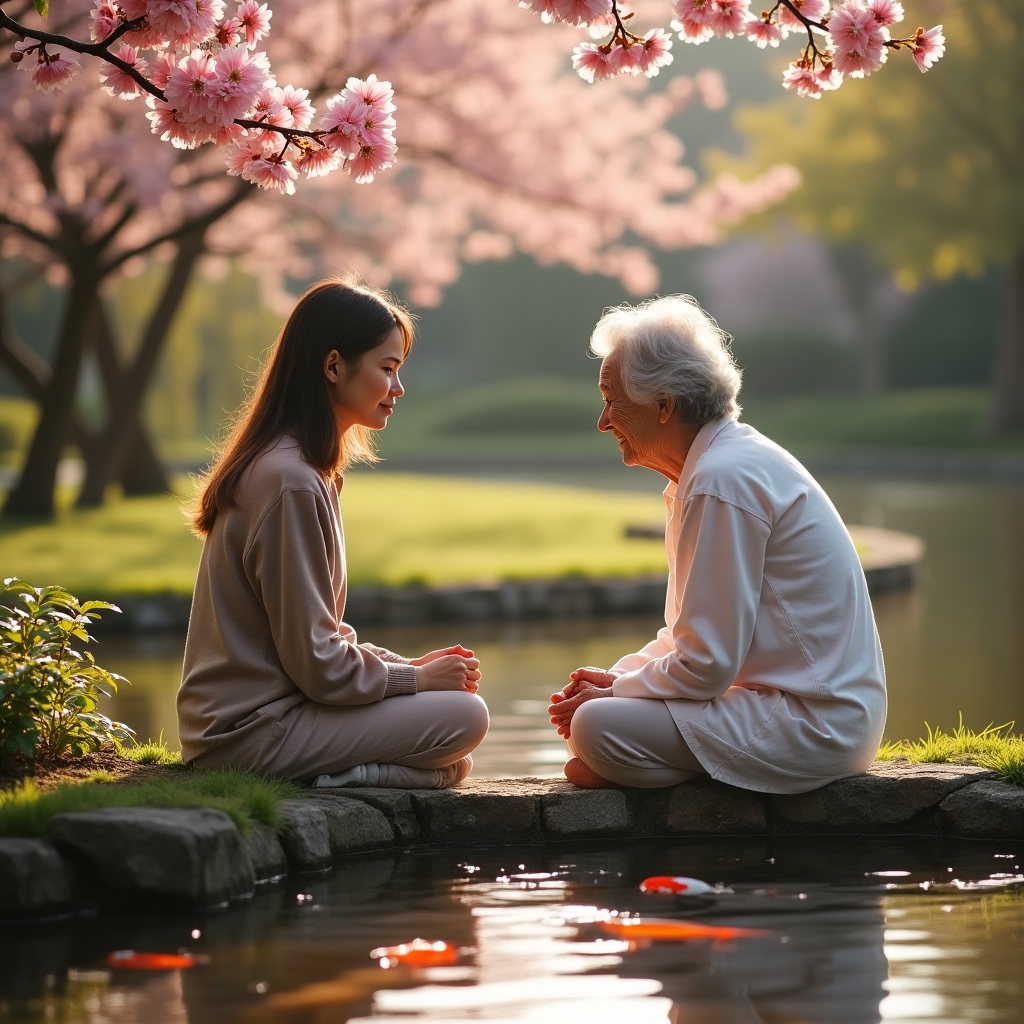
One afternoon, as Maya wandered through the garden, she paused by a small pond that lay at its heart. The surface mirrored her thoughts—unsettled, rippling with the faintest of breezes. She sat down beside it, the coolness of the earth grounding her in the moment. Her eyes followed the path of a koi fish, its vibrant scales glinting like jewels.
“You remind me of myself, little fish,” she whispered, the words carried away by the wind.
It was then that Aya joined her, moving with the grace and composure that had always marked her presence. She settled beside Maya, saying nothing for a long while. The silence was comfortable, filled with the unspoken bond that only years of understanding could forge.
“This garden,” Aya began softly, “it has seen many seasons. Each one is different, yet all are beautiful in their own way.”
Maya nodded, unsure of what to say. Her grandmother’s words were like a riddle, rich with wisdom she yearned to decipher.
Aya continued, “Tradition is our root, Maya, but it is not all that we are. Each generation must find its own way, its own season to bloom.”
Maya turned to look at her grandmother, surprise woven into her features. Aya’s eyes were gentle but searching, as if seeing her for the first time.
“Do not fear to follow your heart,” Aya said gently. “It is the source of your truth, your strength.”
Those words, simple yet profound, were the key that unlocked something within Maya. In that moment, she realized that her love for art and her respect for her family’s legacy were not mutually exclusive. She could honor both, finding harmony in what once seemed a discord.
As the afternoon sun dipped toward the horizon, casting long shadows across the garden, Maya felt a lightness she had not known before. The tension within her eased, giving way to a quiet resolve.
In the days that followed, Maya shared her paintings with her family, speaking openly about her dreams. To her surprise, their resistance was tempered by curiosity and, slowly, acceptance. Aya’s blessing seemed to awaken something in them too—a willingness to embrace the new while honoring the old.
Maya’s path was not without challenges, but she walked it with confidence, her heart a compass that guided her through the complexities of expectation and desire. In finding her voice, she unwittingly inspired her family to see the world anew, a tapestry woven with threads of tradition and individuality, past and present.
Maya looked out at the garden one last time before setting up her easel under the cherry blossoms. As she painted, the tensions of the past fell away like petals in the breeze, leaving behind a canvas of vibrant possibility.