


The autumn wind whispered through the tall sycamore trees, scattering leaves like forgotten thoughts across the narrow roads of Elmswood. It was a town where time seemed to linger in its past, wrapped in traditions as colorful and unyielding as the leaves that carpeted the sidewalks. To those who lived here, heritage was not just history—it was a script written over generations, a map for living that was both a comfort and a constraint. For Asha, it was more of the latter.
Asha Kapoor, at twenty-three, was caught in a quiet storm. Her life had been shaped by the heavy blueprint her parents, particularly her mother, laid before her—dutiful daughter, successful professional, eventual caretaker. In the Kapoor household, success was not just an expectation; it was the bare minimum. Her parents, immigrants who had carved out their own American dream, saw Asha’s future as a continuation of their legacy. From a young age, she was enveloped in their hopes, subtly encouraged to pursue medicine, marry within her community, and carry forward familial traditions.
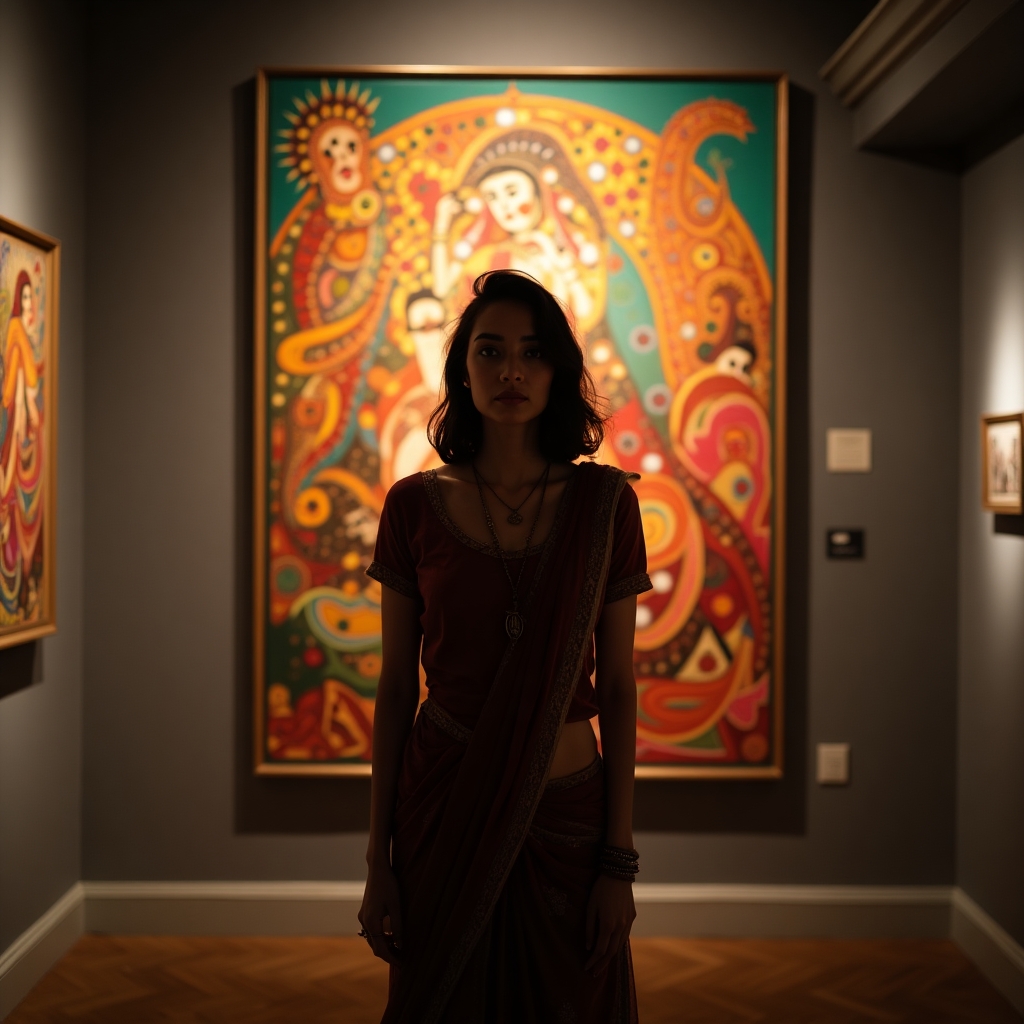
Yet, inside Asha burned a different desire, more abstract and seemingly at odds with her upbringing. She found solace in art, in painting images that existed only in her mind until they found their way onto the canvas. To her, colors spoke a language more sincere than words, capturing emotions she could not otherwise articulate. This passion continually clashed with the path her parents had imagined for her.
Most days, Asha moved through life wearing a mask of compliance. She attended medical school classes, acing exams with ease but little joy. She participated in family gatherings, smiling at the right moments, while the conversations washed over her like the rustling leaves outside. Her internal world was vibrant and tumultuous, a stark contrast to the calm, obedient exterior she presented.
Saturday mornings were sacred for Asha, a time she reserved for herself at the community art center. Here, she indulged in hours of painting—her secret rebellion against a life planned to precision. Her art teacher, Mrs. Whitaker, a retired school teacher with a gentle spirit, recognized the spark in Asha and encouraged it, offering her a small studio to work in whenever she needed.
“Art is where the heart lies, dear,” Mrs. Whitaker often said, her voice a soft embrace.
In these moments, Asha felt a quiet sense of belonging, a reprieve from the expectations that shadowed her. But when returning home, the weight of what she concealed pressed upon her with each step, turning her passion into a burden of guilt.
“You seem distracted these days,” her mother noted one evening as they sat at the dining table, the clatter of cutlery underscoring her words.
“Just school,” Asha replied, her voice barely audible over her mother’s unspoken hopes. “It’s a lot.”
Her father, always perceptive, glanced up from his newspaper. “You’re doing us proud, Asha. Keep focused.”
Asha nodded, the familiar ache of silence settling in her chest.
Weeks turned into months, each day a repetition of the last, until one particular morning in October. With a chill in the air hinting at the coming winter, Asha found herself in the studio, staring at a blank canvas. A leaf drifted through the open window, landing gracefully atop her workspace. She picked it up, tracing its delicate veins with her fingers.
As if the leaf whispered secrets, an idea bloomed within her—a painting more personal than she had ever attempted, reflecting the duality of her life. She began with soft strokes, mixing colors to capture the intricate dance of light and shadow. The minutes stretched into hours as she lost herself in the creation, each brushstroke pulling emotions from her depths.
Upon finishing, Asha stepped back, breathless. The painting depicted a young woman standing at a crossroads, her reflection cast in a pool of water. In one reflection, she wore a stethoscope, the symbol of the expected path. In the other, she held a paintbrush, colors spilling from its tip. Around her, leaves swirled, caught between motion and stillness.
In that instant, clarity washed over Asha—an emotional clarity so profound it left her trembling. The painting was more than art; it was her truth. For too long, she had carried the burden of others’ dreams, mistaking their happiness for her own. But here, now, she saw herself clearly.
That evening, dinner was notably quiet until Asha gathered her courage and spoke, her voice steady yet vulnerable. “Mom, Dad, there’s something I need to share with you.”
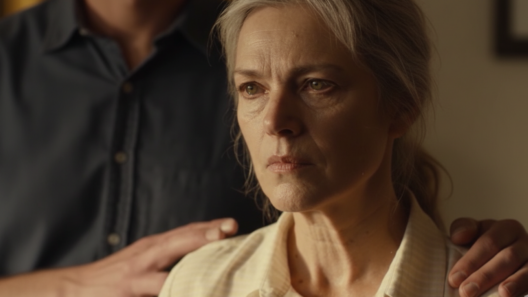
Her parents listened attentively as Asha unfolded her aspirations, her love for art, and the dichotomy she lived with. The room was thick with emotion, a blend of disappointment, understanding, and, ultimately, love.
“We only want you to be happy,” her mother finally said, her voice trembling with the weight of unshed tears.
“And fulfilled,” her father added softly, reaching across the table to hold her hand.
Asha nodded, tears brimming in her eyes, not from sadness but from an overwhelming sense of relief and hope. In breaking her silence, she found a bridge between generations, a space where her truth could coexist with her family’s dreams. The journey ahead was uncertain, but for the first time, it felt authentically hers.
As the sycamore leaves continued to fall, Asha understood that healing was a tapestry of past, present, and future, woven with threads of courage, love, and mutual understanding.