
Emily Harper awoke to the sound of the kettle whistling in the kitchen, a sound she had heard every morning for the last ten years. Her husband, Alan, was already dressed, his phone balanced precariously between his shoulder and ear as he negotiated another deal.
“Morning,” she muttered, though she doubted he heard her over the din of his conversation.
As she poured herself a cup of tea, Emily marveled at the predictability of her life. She had once been a vibrant painter, filled with dreams and colors. But somewhere along the line, those dreams had faded, painted over by obligations and the persistent tug of others’ expectations.
“Emily, can you pick up the dry cleaning? And remember, Mom’s coming over for dinner,” Alan called as he snatched his briefcase.
“Sure,” she replied, her voice barely above a whisper.
The day unfolded as they often did, her schedule dictated by a series of errands and tasks that left little room for her own pursuits. Drops of rain tapped against the windowpane as she sat down at her small kitchen table—a relic from her grandmother which she cherished. In those quiet moments, she would sometimes sketch, letting her pencil dance across the page. But today, as the rain continued to fall, her pencil remained still.
“Emily, you need to start painting again,” her friend Sarah urged during a rare coffee outing. “Remember how happy it made you?”
“I don’t have the time,” Emily replied, stirring her coffee absentmindedly.
“Or maybe you don’t have the space,” Sarah countered softly, her eyes filled with understanding.
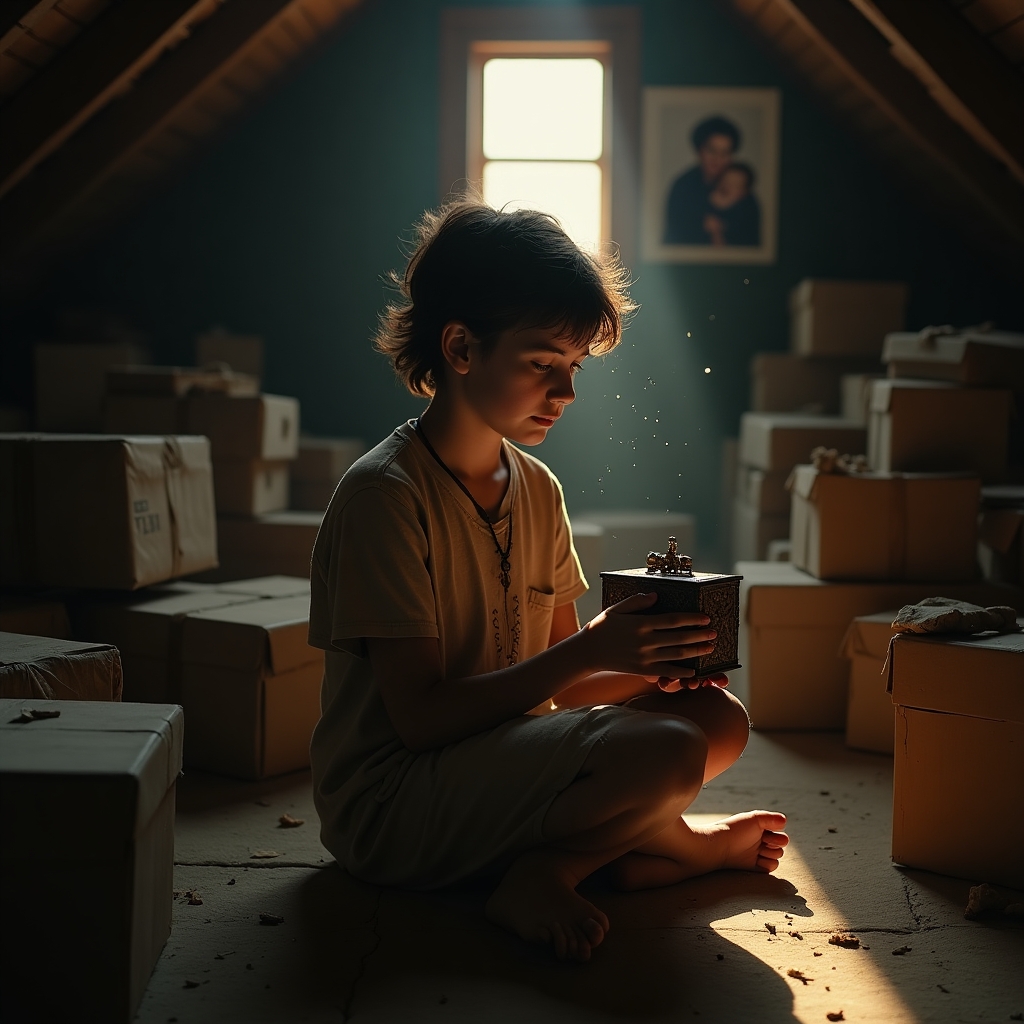
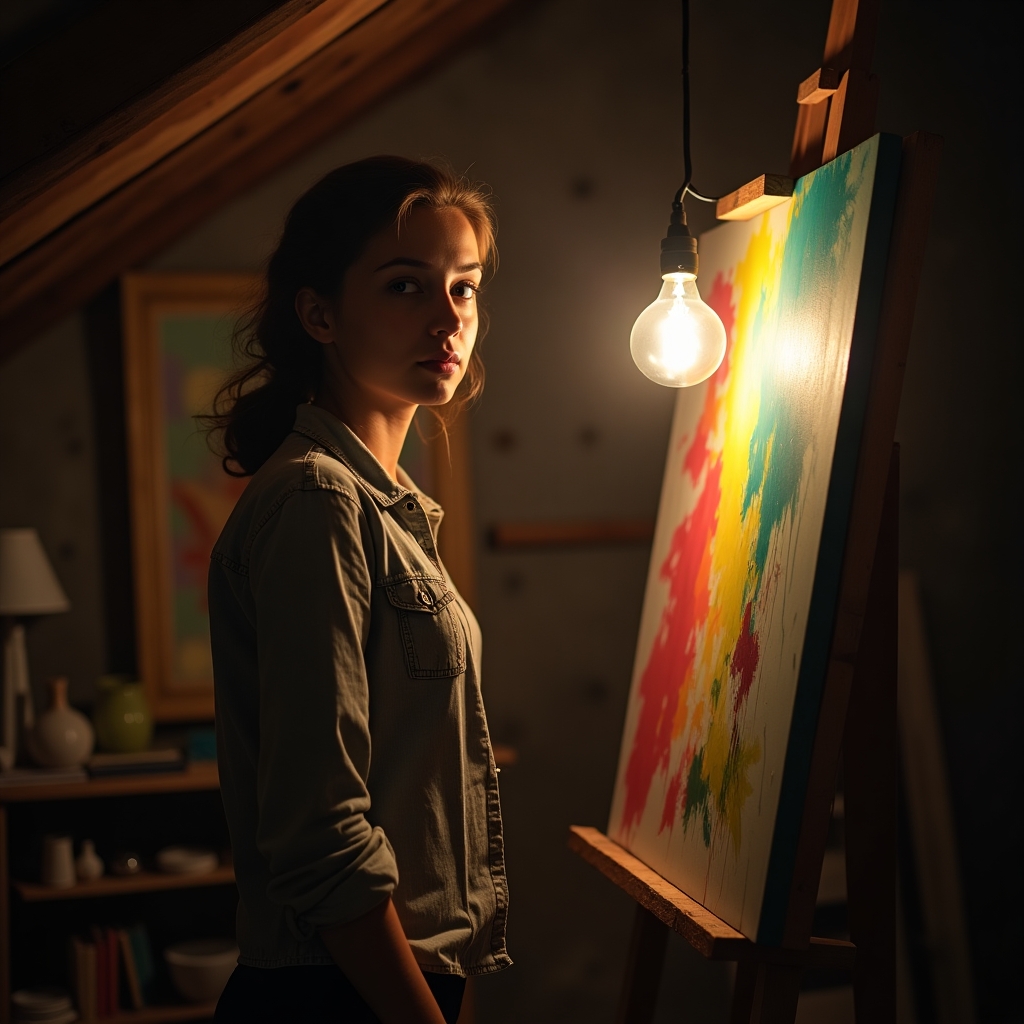
Emily returned home, Sarah’s words lingering in her mind. It was true; her life had been filled with everything but herself. She climbed the stairs to the attic, a space she hadn’t visited in years. Dust motes danced in the air as she pushed open the door. There, buried under forgotten boxes, lay her easel and paints. She ran her fingers over the brushes, each one a reminder of a past life.
That night, Alan was late returning from work. Emily took this small window of solitude to retrieve her sketchbook from the drawer. She flipped through pages, each sketch a reminder of who she used to be.
“What are you doing?” Alan’s voice cut through her reverie as he entered the kitchen.
“Just… looking,” she stammered, closing the book quickly.
“We agreed you wouldn’t waste your time on that anymore,” he said, his tone dismissive.
Emily nodded, her heart sinking. The conversation ended as it almost always did— with her acquiescing, her needs once again painted over by his.
But in the days that followed, something shifted within her. The brief glimpse of her sketches had ignited a spark, and she found herself stealing moments to draw when Alan was busy or out of the house. She became careful, finding small pockets of time to reclaim those lost parts of herself.
One afternoon, she stood in front of the attic door, a decision forming in her mind. Her heart raced as she pulled the cord for the light. The dim bulb flickered to life, illuminating the forgotten studio. She set up the easel, placed a fresh canvas, and began to paint.
Each stroke felt like a release, a reclaiming of space and self. The colors flowed freely, a stark contrast to the muted tones of her everyday life. As the image emerged, she felt the weight of years lift from her shoulders.
That evening, as Alan returned home, she met him with resolve.
“I need to talk to you,” she said, her voice firm.
“Can it wait? I’m tired,” he replied, sinking into the sofa.
“No, it can’t,” she insisted, her eyes meeting his.
Alan looked at her, surprised by her tone. “Alright, what is it?”
“I’m going to start painting again,” she declared, her words steady and unyielding.
The silence hung between them, thick with unspoken truths. “Do what you want,” he shrugged, turning on the television.
But this time, his dismissiveness didn’t brush her aside. Emily felt a new strength, a quiet determination filling the space between them. She realized that her autonomy was not something to be granted by others, but something to be claimed.
In the days that followed, Emily dedicated time to her art. The studio became her sanctuary, each session a step towards reclaiming her identity. She found joy in colors and textures, her confidence rebuilding with each completed piece.
And while her relationship with Alan did not transform overnight, Emily’s own transformation was undeniable. She had begun to redraw the boundaries of her life, infusing her days with purpose and presence.
One evening, as she sat at her grandmother’s table, sketchbook open, she smiled to herself. Her journey was far from over, but she was finally on her path. And for the first time in years, that path felt entirely her own.