

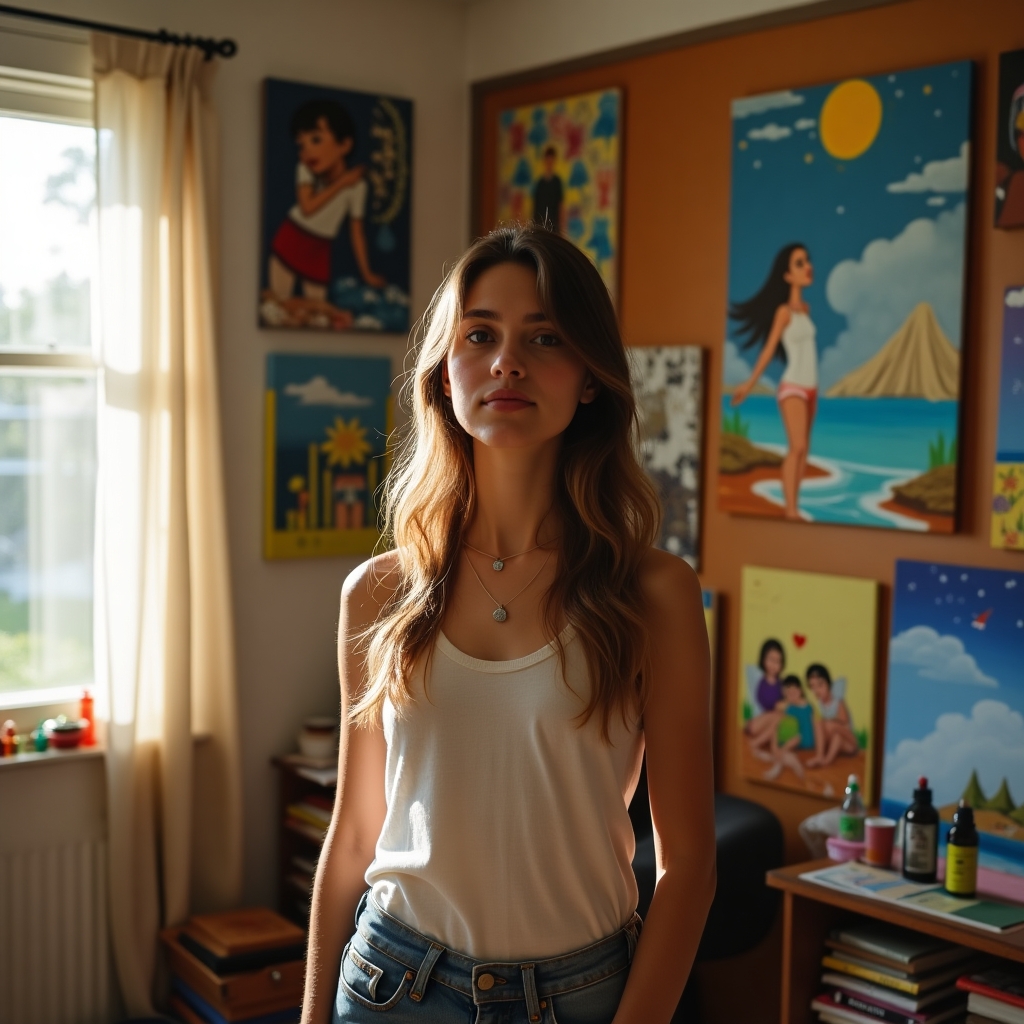
Aria Patel sat at her desk, the soft glow of her laptop screen illuminating her face in the dimly lit room. Around her, the walls were adorned with old family photographs, and the rich scent of incense lingered in the air—a constant reminder of her family’s deep-rooted traditions and values.
Aria was a first-generation Indian-American, toeing the fragile line between her own personal aspirations and the expectations her family had placed upon her. Her parents, immigrants who had worked tirelessly to provide for their family, held tightly to their cultural heritage. They had envisioned a specific future for Aria—one that involved a career in medicine or engineering, a respectable profession that promised stability and honor.
But Aria’s heart beat to a different rhythm. She was captivated by the world of art, finding solace in painting and drawing, her soul yearning to express itself on canvas. It was something she had hidden from her parents, fearing the disappointment and disapproval that would surely follow.
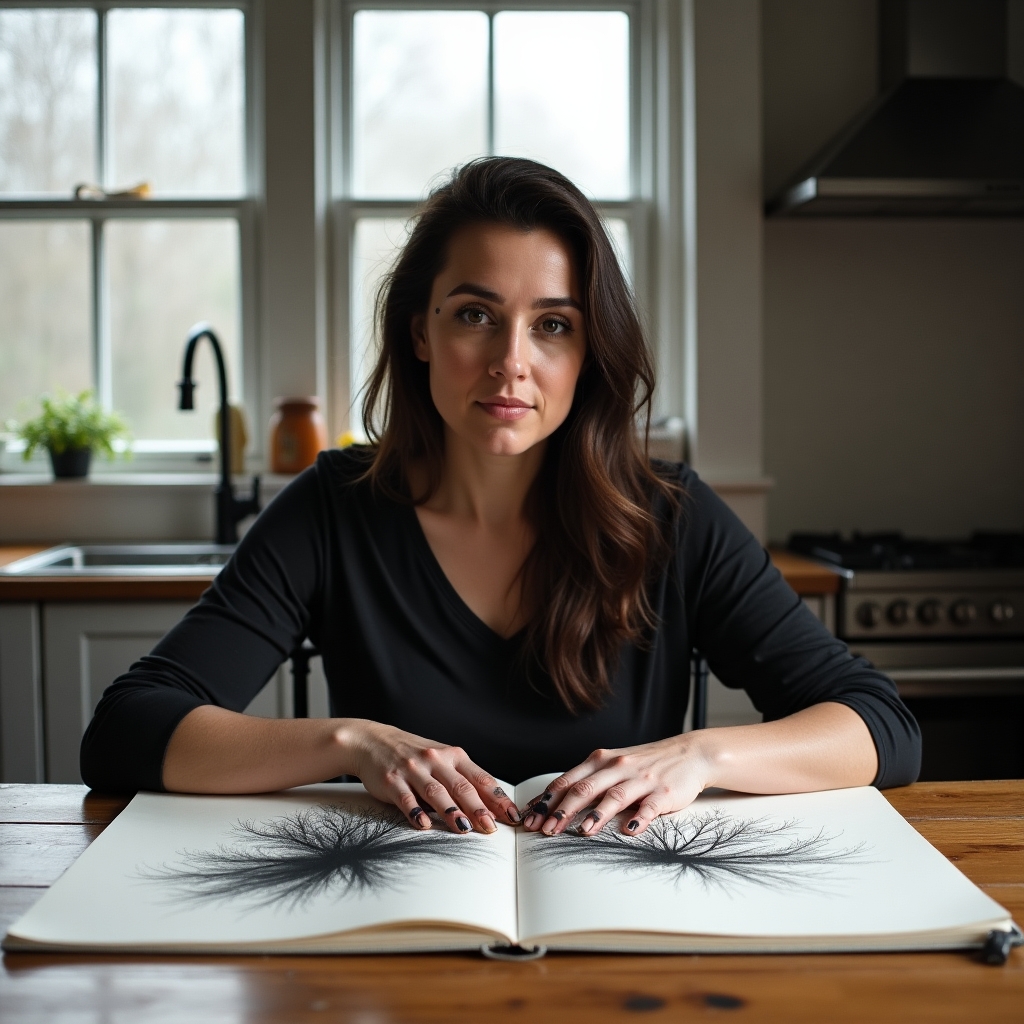
Each day, Aria lived two lives. By day, she was the dutiful daughter her parents knew—a biology major with impeccable grades, a quiet nod to the career her parents dreamed for her. By night, she was an artist, her room a sanctuary filled with sketches and paintings, each brushstroke a silent rebellion against the path laid out for her.
The tension was subtle, a constant hum in the background of her life, a weight pressing on her chest. Aria had long mastered the art of smiling through family dinners, laughing along with her parents’ anecdotes of her future as a renowned doctor. Yet, each laugh felt hollow, each smile a mask that hid her true self.
Aria’s struggle was not a storm; it was a gentle, persistent drizzle that soaked through her being, leaving her feeling isolated and misunderstood. Her parents loved her deeply, that she knew. It was not a lack of love but a lack of understanding that created the chasm between them.
One evening, as Aria sat before her easel, lost in the swirl of colors she had come to call home, a soft knock echoed through her room. Her younger brother, Rohan, poked his head in, his face a mix of curiosity and concern.
“Aria, can I come in?” he asked hesitantly.
She nodded, quickly covering her canvas with a cloth. Rohan tiptoed in, his eyes darting to the partially concealed paintings.
“You know, you don’t have to hide it from me,” he said gently, settling beside her.
Aria’s heart skipped a beat. Rohan was only fifteen, yet wiser than his years, an old soul in a young body.
“I just… I don’t want them to be disappointed,” Aria whispered, her voice barely audible.
Rohan nodded, his gaze thoughtful. “But aren’t you disappointed when you have to pretend to be someone you’re not?”
The question hung in the air, a mirror reflecting the truth Aria had long avoided. Rohan’s words were a quiet catalyst, urging her to confront the quiet discontent that had shadowed her life.
For days after, Aria carried Rohan’s question with her, a silent companion through her classes and late-night painting sessions. It gnawed at her, demanding introspection she had long evaded.
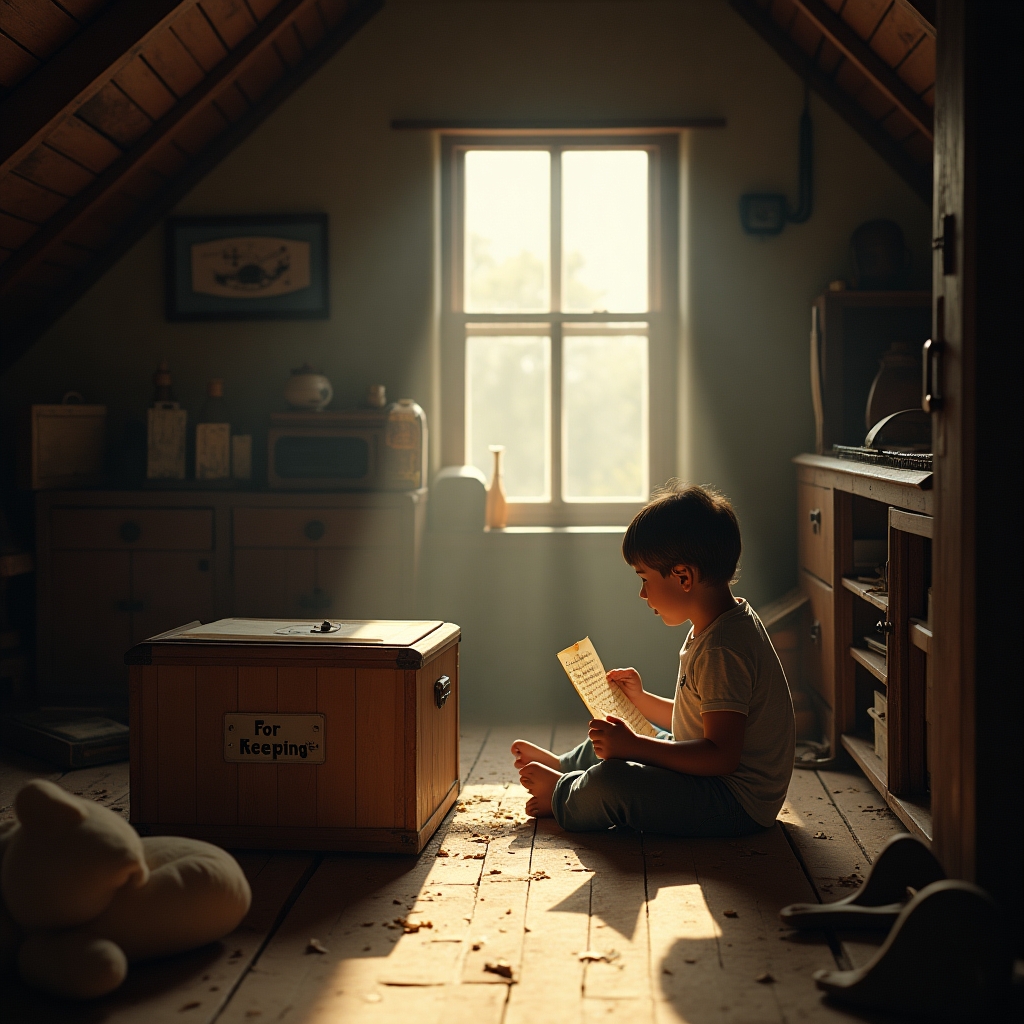
One Saturday afternoon, while her parents were out visiting friends, Aria found herself in the attic, rummaging through old family albums. Each photograph told a story—of sacrifices, hopes, and dreams her parents carried with them to this new world. In one photo, her mother, young and hopeful, stood before a painting, her eyes alight with passion.
A thought struck Aria, a connection she had never made before. Perhaps, somewhere along the way, her mother’s dreams had been set aside, just as Aria was preparing to do with her own.
With this realization came a softness, a quiet understanding. Her parents’ expectations were not burdens but expressions of love, born from a desire to see her secure and happy. Yet, happiness, she now understood, looked different for her.
Aria’s moment of clarity came as she sat in her room, the afternoon sun casting a warm glow across her paintings. She understood, finally, that asserting her truth didn’t mean abandoning her family or their values but integrating them in a way that honored both her heritage and her individuality.
That evening, as her parents returned, Aria felt a calm resolve settle within her. She invited them to her room—a space they rarely entered. Her heart raced as she unveiled her paintings, each imbued with her dreams and identity.
Her parents’ reaction was a mix of surprise and awe. Her father, usually stoic, was lost for words, while her mother, after a moment of silence, simply said, “I didn’t know you had this in you.” The quiet acknowledgment, laden with both pride and a tinge of sadness, was a beginning.
It was not a grand declaration but a quiet step towards understanding—an invitation to bridge the divide between generations with empathy and love.
In the days that followed, conversations flowed more freely in the Patel household. Aria learned of her mother’s own artistic inclinations, long buried under the responsibilities of life. Her father, though still concerned about her future, began asking about her art, slowly warming to the idea that success could be as diverse as the colors Aria painted with.
Aria realized that emotional courage was not always loud or defiant; sometimes, it was a gentle assertion of self in the face of fear and uncertainty. It was an act of compassion, both towards oneself and others, fostering a path towards healing past misunderstandings and paving a way for future dreams.
Aria’s journey was ongoing, the path to self-acceptance and familial harmony a winding road. Yet, in that quiet moment of clarity, she found the strength to weave her own narrative, one where love, loyalty, and individuality coexisted in harmony.