


In a quiet suburb, nestled between rolling hills and expansive cornfields, lived a young woman named Mia Kapoor. At twenty-three, Mia was at that delicate juncture between youth and adulthood, balancing the dreams she cradled close and the expectations her family wove around her life.
The Kapors were a family of tradition. Born to immigrant parents from India, Mia grew up with tales of the homeland, stories of resilience and sacrifice, woven through with unspoken rules and cultural expectations. For Mia, life was a dance between the whispers of her heart and the calls of her family. The expectations were simple yet profound: a stable career, a suitable marriage within their community, and a life that honored the sacrifices of the generations before her.
Mia’s heart, however, hummed a different tune. She was drawn to art—expressions of color and form that spoke more profoundly than any words ever could. But art was not a career; it was a hobby, a pastime. Her parents, particularly her mother, envisioned Mia as a doctor or an engineer—professions that affirmed their sacrifices, secured her future, and upheld the family’s honor.
It was in these quiet moments of contemplation that Mia felt the weight of her world. Her days were filled with a gentle routine: mornings spent at the university studying biochemical engineering, afternoons working part-time to ease the burden on her parents, and evenings tucked away in her attic room, painting.
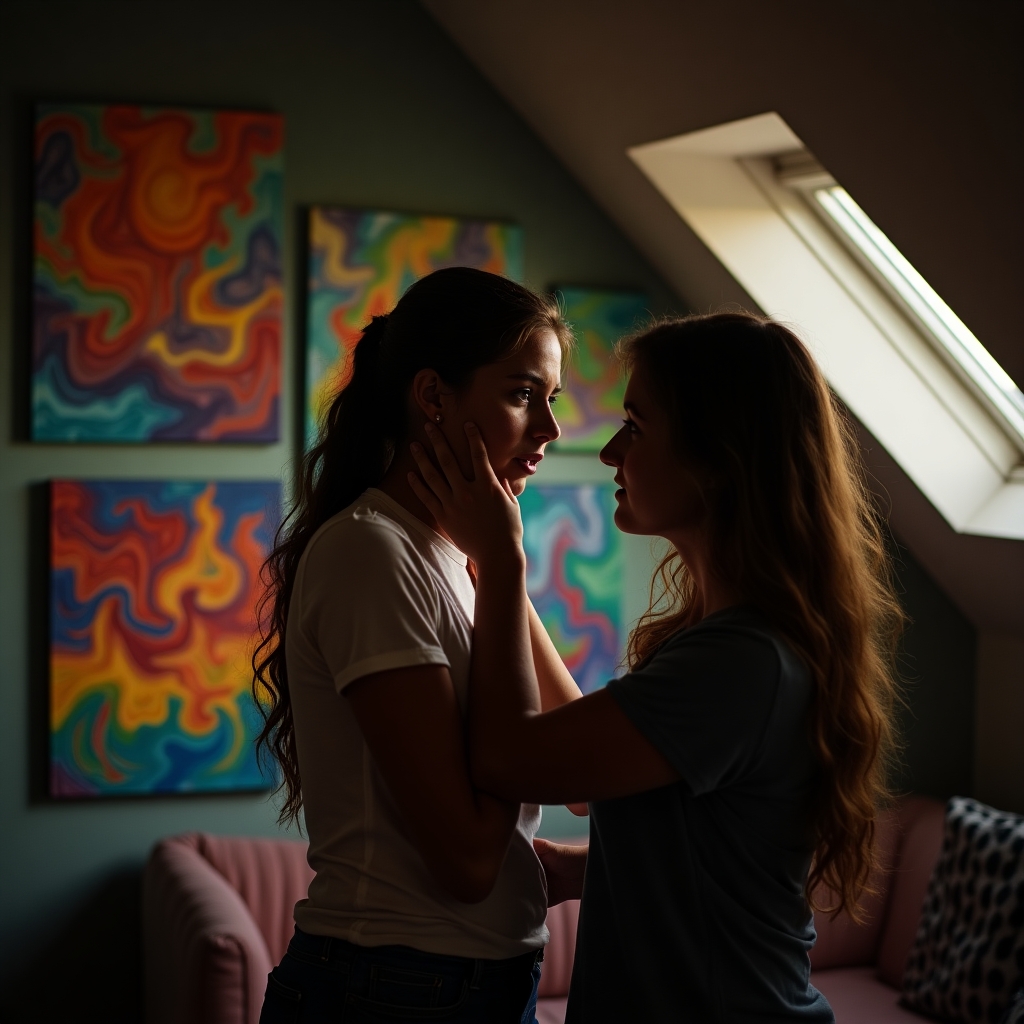
The attic was Mia’s sanctuary. Beneath its sloped ceilings and dim light, she let her hands and mind wander. The walls were lined with her canvases—a riot of colors capturing the myriad emotions she couldn’t speak aloud. Her paintings told stories of yearning and constraint, freedom and fear, a vivid representation of the tensions that lived inside her.
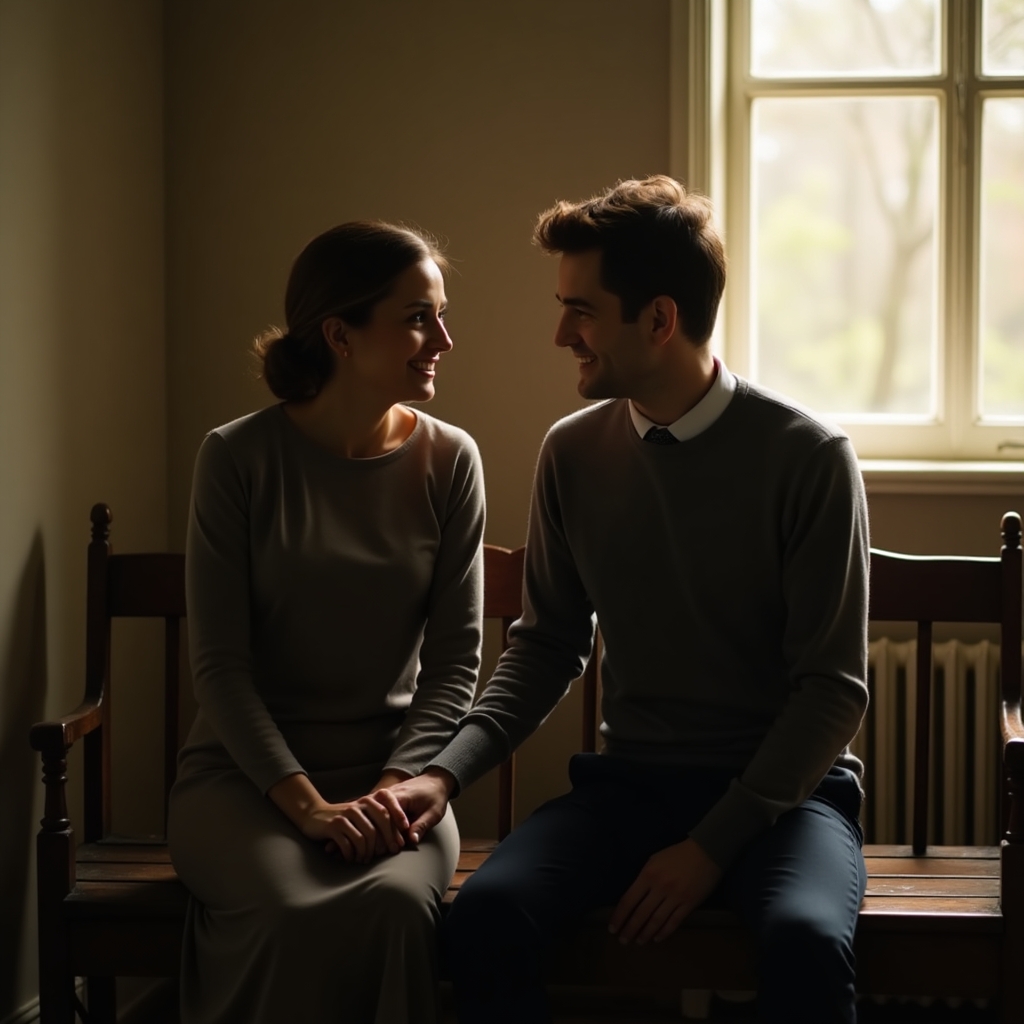
Mia often felt the clash between her world and her parents’ hopes during family gatherings. These were warm occasions filled with laughter, aromas of cumin and cardamom, and conversations about life back home, infused with nostalgia. Here, relatives would ask, “When will you start medical school?” or “Have you met a nice Indian boy?” Each question was a thread reinforcing the tapestry of expectations.
Her mother was a quiet force, her disapproval never voiced directly but seen in furrowed brows or small sighs when Mia mentioned art. Her father was more overt. “Art is beautiful,” he’d say, “But it won’t put food on the table.”
Yet, amid the gentle pressures, Mia’s heart clung to its whispers. She began to attend an art class on weekends, secretive at first, then emboldened by the sense of belonging and understanding she found among her fellow artists. They nurtured her creativity, and for the first time, she felt seen.
As months passed, the quiet struggle within Mia grew. She stayed awake in her attic, the moonlight casting shadows across her unfinished canvases, her mind a storm of questions. Could she disappoint her parents, who had done so much to ensure a future for her? Could she abandon the dreams woven into the very fabric of her upbringing?
It was a Sunday afternoon when clarity finally dawned. Mia had spent the morning at an art exhibit in the city, a world of color and creativity that resonated with her soul. Returning home, she found her family gathered in the living room. Her mother was showing relatives a photo album of Mia’s childhood, recounting tales of her achievements, her potential.
Mia stood at the doorway, her heart clenching as she saw her mother’s pride. She realized then that love lay at the root of her parents’ expectations. Their dreams for her were born of a desire for security, not constraint. It was an act of love to create a life that couldn’t be toppled by the winds of change.
In that moment, Mia understood she needed to communicate, to bridge the gap between what her heart desired and what her parents dreamed. She needed to show them that her love for art was as significant as their hopes for her future.
That evening, Mia invited her parents to the attic. Her heart raced as she revealed her sanctuary, her gallery of dreams and fears laid bare. The room was silent, the air thick with anticipation. Mia spoke of her passion, of how art gave her voice and purpose.
Her mother studied each canvas, her expression unreadable. Then she turned to Mia, resting a gentle hand on her cheek. “I see your heart,” she whispered. Her father remained quiet, but there was a softening in his gaze, a hesitant acceptance of Mia’s truth.
In those quiet moments, amid the shadows and colors, a new understanding was born. Mia’s decision to embrace her passion didn’t erase the love and respect she held for her parents’ dreams. It was an affirmation of her truth, woven with the same threads of love and resilience that her parents had taught her.
From then on, the path wasn’t always easy. There were still questions, still moments of doubt and negotiation. But there was also dialogue, understanding, and an easing of the quiet tension that had bound Mia for so long. Her art became a bridge, a testament to the strength of following one’s heart while honoring one’s roots.
In time, Mia’s paintings began to gain notice, her name whispered among circles that appreciated her unique vision. Her parents, once hesitant, started to share her work with pride, finding joy in the realization that their daughter could forge her path without losing her cultural identity.
Mia’s heart, once heavy with the weight of conflicting desires, now beat with a steady rhythm of hope and acceptance, a testament to the power of love and understanding across generations.