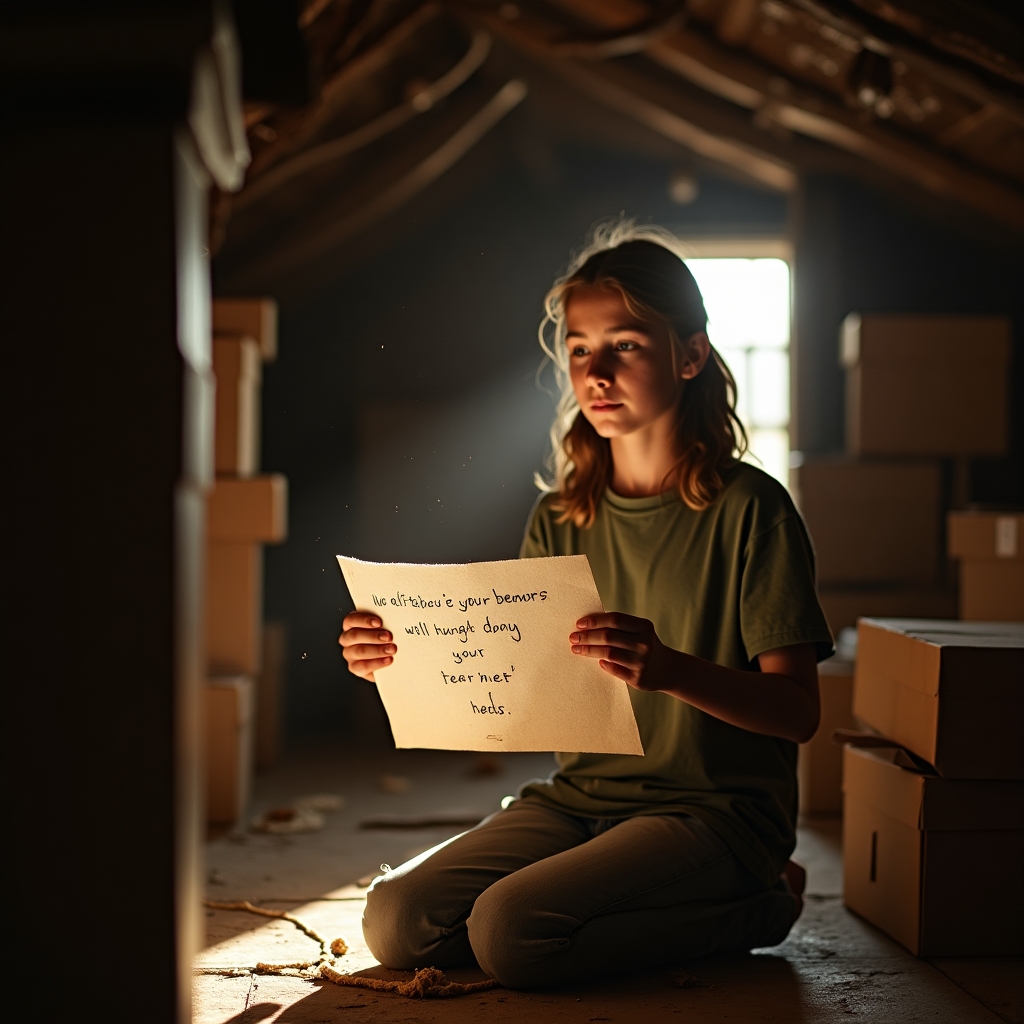



Amara sat at the old wooden table in her modest apartment, the late afternoon light casting gentle shadows across the room. Her father’s voice echoed in her mind, a persistent reminder of the expectations she had grown up with. “A doctor is what you should be, Amara. It’s stable, it’s respected.” He had repeated these words many times, always with an air of finality that left little room for argument.
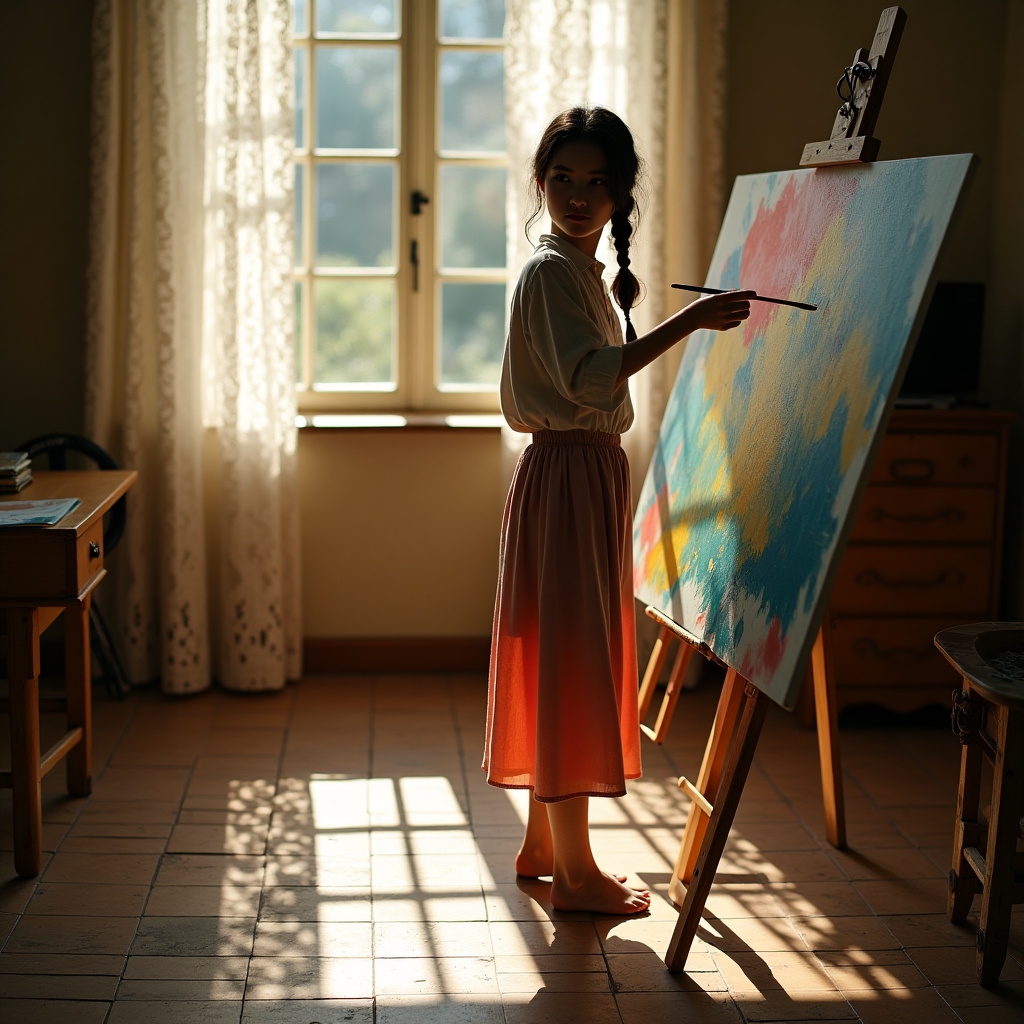
Ever since she could remember, Amara had carried the weight of these expectations. Growing up in a family of professionals, where success was measured by titles and accolades, she felt like a misfit. Her heart lay in the strokes of a paintbrush, the colors that came alive on canvas. Art was her sanctuary, a place where she could breathe and be herself, unhindered by the rigid lines of her familial duties.
Yet, every Sunday dinner brought her back to the reality from which she longed to escape. Amara’s mother would talk about her cousin Mira’s accomplishments—another published paper, another step closer to becoming a surgeon. Each mention was like a silent nudge, a reminder that Amara’s own path diverged from the one expected of her.
Sitting across the table from her at these gatherings was her grandmother, whose presence was a constant, comforting force in Amara’s life. Her grandmother’s gentle eyes always seemed to convey understanding, a silent acknowledgment of Amara’s internal struggle.
The tension between Amara’s passion and her family’s expectations simmered beneath the surface, a quiet storm she navigated alone. Her internal dialogue was a constant volley between what she wanted and what she felt obligated to achieve. She dreaded the inevitable conversation with her parents, fearing the disappointment etched in their faces when she revealed that her heart lay in art, not medicine.
The days passed, each one a tapestry of conflicting emotions. At the university, she studied biology, her mind often drifting to the studio where her paintings waited. There, she lost herself in the rhythm of creation, the vibrant hues and textures a balm to her soul.
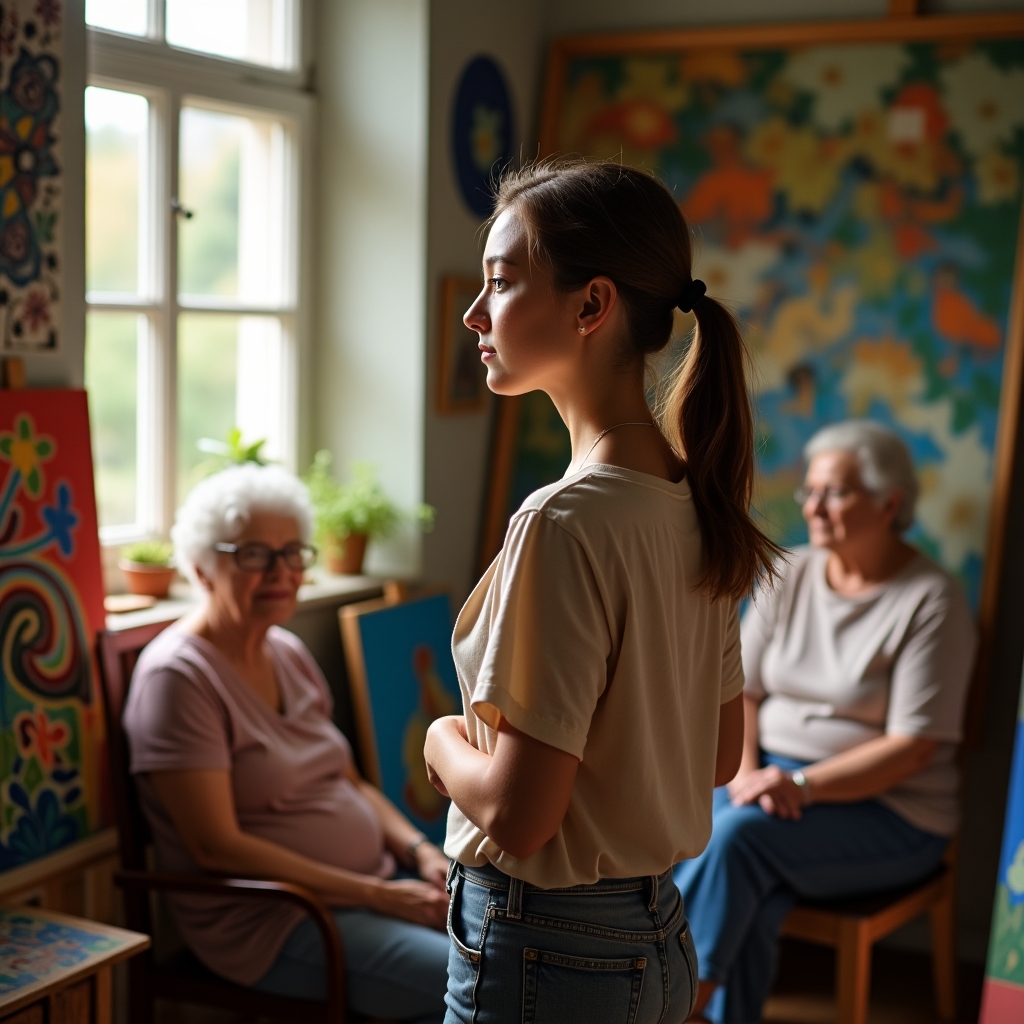
It was during one of these studio sessions, as she painted the soft glow of a morning sunrise, that a moment of clarity struck her. Her grandmother had joined her, quietly observing from a corner of the room. “You see the world with different eyes, Amara,” she said softly. “That’s a gift.”
Her grandmother’s words resonated within her, unraveling years of doubt and fear. They were simple words, yet powerful, breaking through the barrier of expectation that had long weighed her down. Amara realized that her grandmother was giving her something she hadn’t allowed herself to take—permission to embrace her true self.
The emotional clarity gifted by her grandmother’s understanding opened a doorway to courage. Amara knew she could no longer live a life dictated by the desires of others. The next family dinner, she would speak her truth.
As the evening of the dinner arrived, Amara felt a calm determination settle over her. She could see the path ahead with newfound clarity, no longer obscured by the nebulous threads of obligation. She anticipated the conversation with a mix of apprehension and resolve.
The dinner unfolded in its usual patterns—stories shared, laughter echoing—but this time, Amara felt the tangible weight of her unspoken truth. As the meal concluded and casual conversations began to wane, she gathered her courage.
“I need to talk to you all,” she began, her voice steady yet gentle. “There’s something important I need to share.” Her parents turned to her with curiosity, her mother’s eyes flickering with a hint of concern.
“I know you’ve always envisioned a certain path for me,” Amara continued, “but my heart belongs to the world of art, not medicine.” The admission hung in the air, a delicate balance of vulnerability and strength.
Her father’s brows furrowed, concern etching lines across his forehead. “Amara, are you sure? It’s a challenging path, not as secure.”
Amara met his gaze steadily, her grandmother’s reassuring presence in her peripheral vision. “I am sure, Dad. This is who I am.”
Her mother reached for her hand, a gesture of support mingled with apprehension. “We want you to be happy, Amara,” she said softly. “But we also want you to be safe.”
“I know,” Amara replied, squeezing her mother’s hand gently. “And I appreciate that. But true happiness and safety, for me, come from following my heart.”
The room filled with silence, a quiet understanding weaving its way through the generations gathered around the table. Amara’s grandmother smiled softly, her eyes reflecting pride.
In the weeks that followed, Amara embarked on her journey into the artistic world with renewed vigor. Her family, while still adjusting to the shift, stood by her, a testament to the power of assertion and understanding.
Amara realized that navigating the intricate dance between personal values and familial expectations was not about choosing one over the other, but about finding harmony within herself. She had learned the art of quiet resilience, and in doing so, had begun a healing journey not just for herself, but for her family as well.