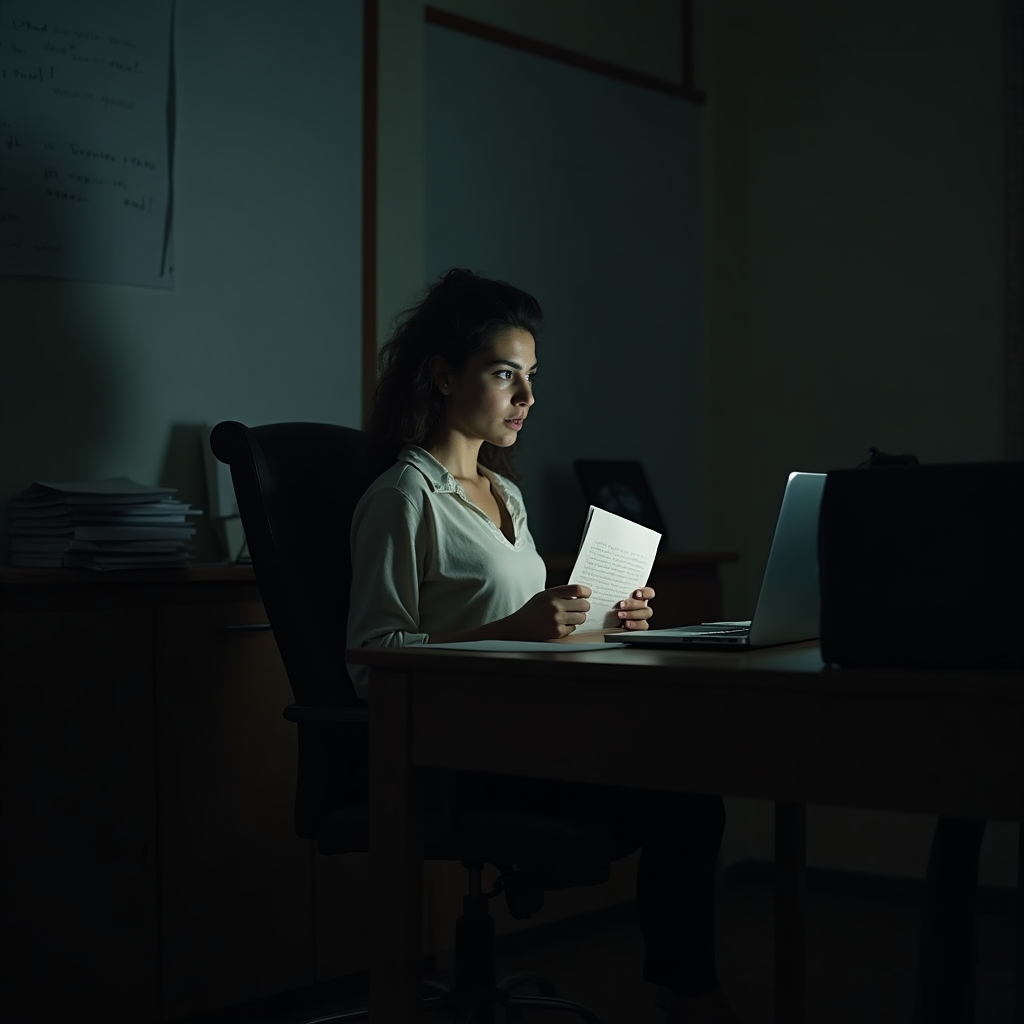





Mia sat at the kitchen table, the worn-out wooden surface marred by years of use and untold stories. It was the hub of her home, the place where each bland and overly familiar day began and ended. She listened to the rhythmic ticking of the clock, that persistent reminder of time slipping away unnoticed.
Mornings were always a rush, orchestrated with the precision of a military drill. Her husband, Tom, glanced over the newspaper, his usual armor of indifference shielding him from any meaningful conversation. “Mia, did you remember to call the plumber? The sink’s been leaking since last week,” he mumbled, eyes scanning the headlines.
“Yes, I have,” Mia replied, her voice barely above a whisper. She was accustomed to filtering out her emotions, keeping everything in a line of neat compliance.
As Tom left for work, Mia stood by the window, watching him disappear down the street. She looked at her reflection in the glass — a shadow of the vibrant person she once was. Somewhere along the way, she’d become a spectator in her own life, a reluctant participant in a narrative directed by those around her.
It was not always like this. Once, she had dreams and ambitions bursting to be explored. But those desires had been quietly shelved, layer by layer, by subtle discouragements and the unspoken expectation to conform.
The turning point started unexpectedly, on a day like any other. Mia was in the grocery store, shopping for the usual mundane essentials. She reached for a jar of her favorite brand of jam, the one Tom insisted was too expensive. As her fingers wrapped around the familiar glass, a small but resolute thought stirred within her.
“Why not? Why shouldn’t I have the small things that bring me joy?”
This seemingly insignificant decision sparked a cascade of realizations. For the first time in years, Mia allowed herself to question the life she was leading. Why was she continually sacrificing her own preferences and happiness for others?
As days turned into weeks, Mia began to notice other areas of her life where she had quietly acquiesced. She started with small steps — a different brand of coffee, a book that she had always wanted to read but never dared to buy, a visit to the art gallery she loved.
One evening, as she was tidying up the living room, Mia stumbled upon a box of old photographs. Buried in the stack was a picture of her from college, standing next to a painting she had done for an exhibition. Her eyes shone with a spark she had long since forgotten.
That night, as Tom sat across from her at dinner, Mia took a deep breath. “I was thinking,” she ventured, trying to keep her voice steady, “I might take a painting class.”
Tom looked up, a hint of surprise in his eyes. “You? Painting?”
Mia nodded, feeling a mix of fear and exhilaration. “Yes, I used to love it. I think it’s time I did something for myself.”
The following silence was thick with unspoken words, the air between them charged with an unfamiliar tension.
“Well, if it makes you happy,” Tom finally said, though his tone suggested reluctance rather than enthusiasm.
But Mia had taken her first step. It was a small but significant shift, a reclamation of a part of herself she thought she had lost.
As the weeks passed, Mia transformed her spare room into a small studio. It was her sanctuary, a place where colors and brushes danced under her fingertips, each stroke on the canvas a declaration of her newfound agency.
Through these creative expressions, she began to unravel the bindings that had held her in place for so long. Her internal landscape shifted, as did her interactions with the world around her.
One afternoon, as soft sunlight streamed through the window, Mia painted with an intensity she hadn’t felt in years. A sense of fulfillment washed over her, a deep-seated contentment in doing something purely for herself.
In that moment, she realized her life was a canvas, and she was finally holding the brush.