




Hello, everyone. I’ve been sitting here for hours, laptop open, staring out at the faint twinkling of streetlights through my window, trying to gather the courage to write what I’m about to share. It’s a deeply personal story, something that unfolded so quietly and subtly, it took years to recognize its true significance. I’m writing this not for sympathy, but because it feels like the right time to let go and embrace the truth.
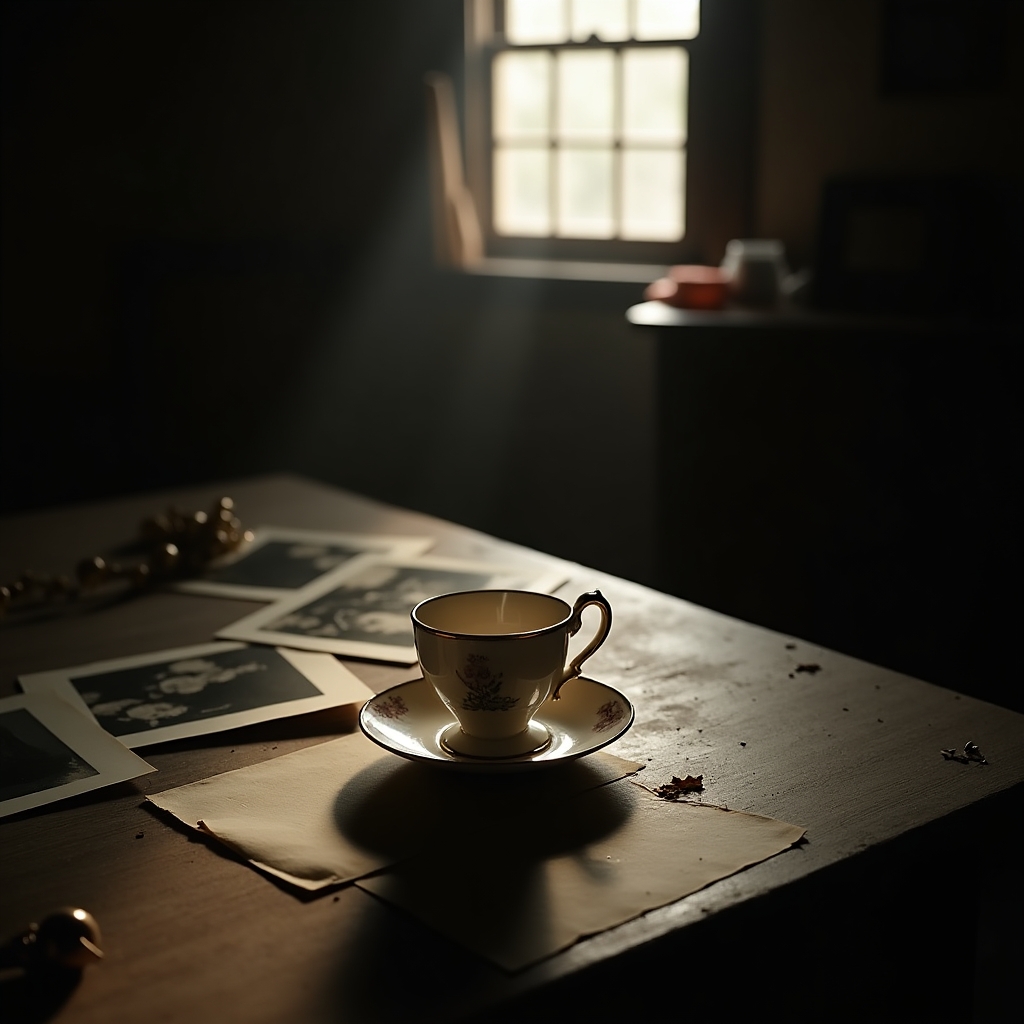
A month ago, while clearing out my late father’s attic, I stumbled upon something unexpected — a teacup. It was tucked away in a dusty cardboard box filled with old photographs and letters. The cup was small, elegantly simple, and had a delicate crack running down its side. It looked fragile and, in a strange way, familiar. I remembered seeing it on the kitchen shelf during my childhood, a part of the background, an object I never thought much about.
For some reason, I felt compelled to take the cup home. At first, it was just a quaint souvenir of nostalgia, a piece of family history to perhaps keep sugar packets in. Little did I know that it would soon become the key to unraveling a decades-old mystery that veiled my past.
I showed the teacup to my mother a few days later while visiting her. Her reaction was unexpected. She paused, her eyes widening slightly, and then a soft, wistful smile crossed her face. “Oh, you kept it,” she said, her voice tinged with something I couldn’t quite place at the time.
“It looks so familiar,” I replied, turning it in my hands. “Do you remember it?”
She nodded, her eyes misty. “Your father used to drink his morning tea in it. He had this silly superstition that it brought him luck.” She chuckled, but there was a wistful crack in her voice.
The conversation drifted to other things after that, but the teacup stayed on my mind. I found myself returning to it repeatedly, puzzling over its significance. What was it about this cracked cup that seemed so profound, so silently echoing with unspoken words?
A week later, as I held it in my hands once more, a memory surfaced — a flash of a moment long buried. I saw myself as a child, sneaking into the kitchen, clutching the teacup with childish fingers, not understanding the significance of what it meant. I remembered my father’s laughter as he found me, his deep voice saying, “Careful, my little lucky charm.”
It was in that moment, in the quiet solitude of my living room, that I understood. My father had always called me his lucky charm, and I never questioned it, never suspected there was more to it than just affection. But it was more. Somehow, the crack in the teacup paralleled a deeper truth — a hidden part of my father’s life, something he carried with him in silence.
I called my mother, needing answers that only she could provide. “Mom,” I said haltingly, “did Dad have something he wanted to tell me? Something he was waiting for the right time to share?”
There was a pause, a long intake of breath on the other end of the line. “He wanted you to know how much he loved you, Jess,” she said softly. “That teacup was his reminder that even the most fragile things could hold great strength. He once told me it was cracked on a day that brought him both heartbreak and joy.” She stopped, and I could almost hear her gathering her thoughts, the delicate balance of emotions in her breath.
“What happened?” I asked, my heart in my throat, sensing the gravity of what she was about to say.
“You were born on that day,” she revealed, her voice a gentle, unsteady timbre. “He lost his mother the night before. He said holding you — his little lucky charm — in one hand, and the teacup in the other, was what kept him grounded.”
Her words washed over me, a tide of revelation and bittersweet clarity. The teacup wasn’t just a cup. It was a symbol — of loss and hope, past and future, cracked but still whole. My father’s silence had been his way of protecting me, of keeping the joy of that day unmarred by sorrow.
Holding the teacup now, I understand its significance. It isn’t just an object; it’s a piece of my father, a testament to his love and the unspoken bond we shared.
I sit here, the teacup by my side, reflecting on everything I’ve learned. Life is fragile, like that teacup, but there is such strength in its fragility. I understand now that we all carry our own cracks, marks of the trials and triumphs that shape us. And like my father, maybe we all have our ways of quietly marking the immense power of love.
So, here’s to the cracked teacup — to understanding, to healing, and to the beautiful complexity of being human.
