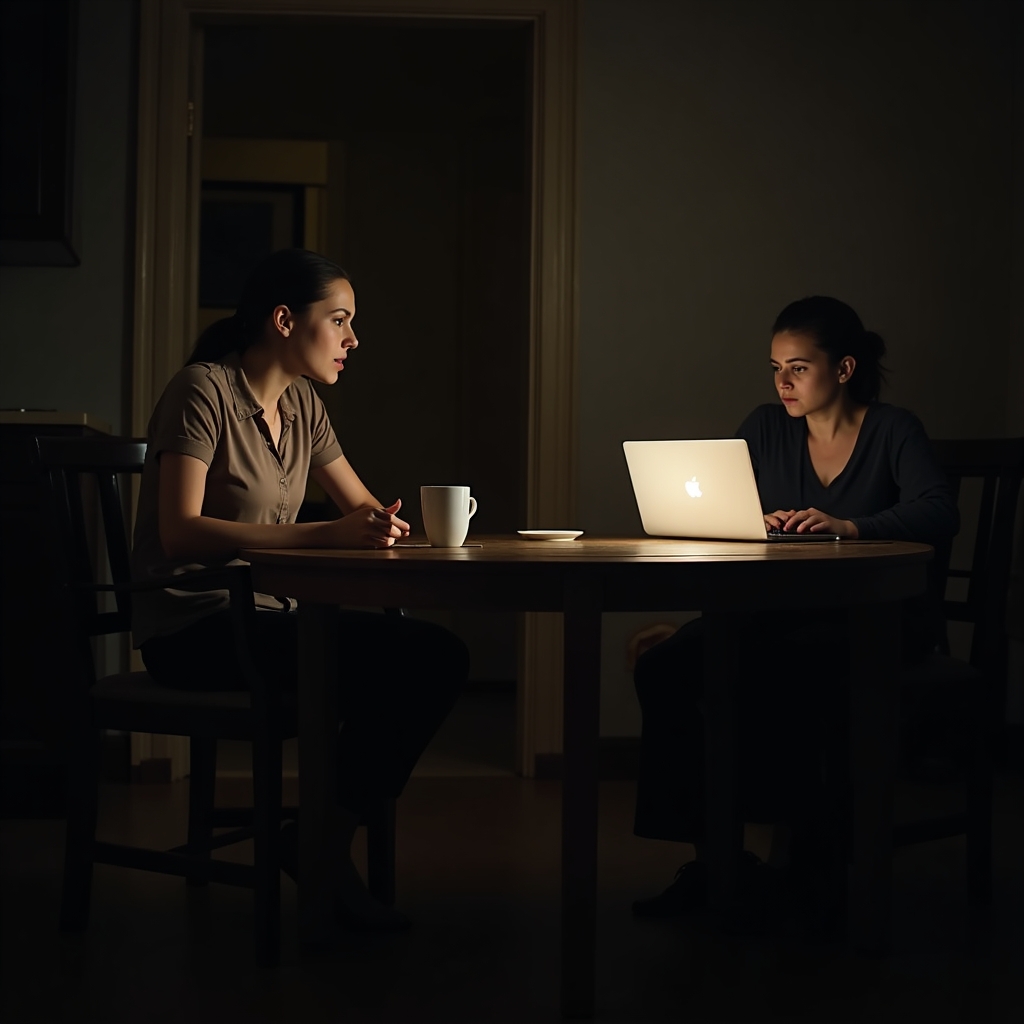





Margaret shuffled through the kitchen as the morning sun filtered in, casting soft shadows on the worn linoleum. The radio played softly in the background, the murmurs of a talk show interspersed with the clinking of coffee mugs and distant traffic. This was her time, the precious, quiet minutes before the rest of the house awoke and the demands of the day began.
Her husband, Tom, was still asleep upstairs, snoring away the remnants of another late night with the television. Their children—well, her children, now grown—had moved out years ago, leaving behind echoes of laughter and the occasional phone call. Margaret had always been the caretaker, the listener, the quiet supporter whose own needs had been tucked away, silent and neglected.
The kettle whistled, stirring her from her thoughts. She poured the hot water over ground coffee, the aroma rising like a promise she had long since forgotten how to keep. As she leaned against the counter, she noticed the garden through the window—the early blooms struggling against an unexpected frost, yet somehow still managing to stand resilient.
“It’s just like them,” she thought, as a small smile tugged at her lips. “Fighting for space, for sunlight. For survival.”
Her mornings were often spent in reflection, moments stolen to process the subtle, constant pressure from Tom’s expectations. He loved her, she knew that much, but his love came with conditions, an unspoken set of rules she had adopted over time. She had trained herself to avoid confrontation, to bend and adjust until she fit neatly into the spaces he allowed.
“Margaret, where’s my shirt?” His voice, gruff and impatient, called out from the bedroom.
“In the wash, Tom,” she replied, taking another sip of her coffee to steady herself.
“Well, could you look for it? I don’t have much time this morning,” he added, voice trailing closer as he descended the stairs.
Margaret resisted the familiar urge to jump up and comply immediately, instead closing her eyes and breathing deeply. “I’ll get it in a minute,” she answered, surprising herself with the firmness in her tone.
Tom appeared in the doorway, scratching his head, already half-dressed. “What’s gotten into you?” he asked, a hint of annoyance creeping into his words.
“Nothing,” she replied softly, steadying her resolve. “I just want to finish my coffee.”
He shrugged, grumbling something inaudible before leaving the room, leaving Margaret alone with her thoughts once again.
Margaret knew it was a small victory, but it was a victory nonetheless. The small flame of defiance flickered inside her, and she decided to tend to it.
That evening, Margaret found herself on a quiet street, walking off the tension of the day, each step a declaration of her independence. She strolled past neatly trimmed hedges, the scent of honeysuckle lingering in the cool air. Her feet carried her to the edge of the park, where children played under the watchful eyes of tired parents.
As she sat on a bench, a memory surfaced—the way she used to climb trees as a child, the rough bark against her hands, the thrill of height and freedom. It was a version of herself she hadn’t connected with in a long time.
In that moment, she realized she no longer needed permission for joy, for moments of reckless abandon. The idea was both exhilarating and terrifying.
Returning home, Margaret walked past her reflection in the hallway mirror. She paused, studying the woman who looked back at her. The same eyes, a little worn but still bright. The same face, now etched with lines of experience.
That night, after dinner, she sat in the living room with Tom, the television a constant, mind-numbing presence. She glanced at him, noting the way the light from the screen cast shadows across his face.
“You know, Tom,” she began, her voice steady. “I’ve been thinking about taking a class—writing, maybe. It could be fun to learn something new.”
Tom looked at her, eyebrows raised. “A class? At our age? Aren’t you busy enough around here?”
Margaret met his gaze, her conviction solid. “I think it’s time I did something for myself. Just once a week.”
He shrugged, turning back to the television. “Well, if that’s what you want.”
And just like that, the burden of expectation lifted slightly, leaving room for possibility to take root.
Margaret’s heart raced with the thrill of finally reclaiming something for herself. The decision brought clarity, a sense of self long submerged under layers of duty and routine.
The following morning, she awoke with a newfound sense of energy. She brewed her coffee as usual, but this time, instead of sitting at the kitchen table, she took it outside. Watching the sunrise, she felt the warmth of the cup seep through her fingers—a simple pleasure, a reminder of what it meant to feel alive.
For the first time in a long time, Margaret felt like she was no longer just surviving, but living.
With each passing day, she listened more to her own voice, growing louder and more confident. She stopped apologizing for taking up space, for wanting more, for needing time that was hers alone.
Margaret had taken the first step of many—a quiet rebellion, a rekindling of spirit—towards a life that was hers to define.