


In the heart of a small town, where the air was thick with the scent of cedar and the gentle echo of chimes swaying in the breeze, lived a young woman named Aisha. Her life was woven with threads of tradition and expectation, forming a tapestry that was both her comfort and her cage.
Aisha’s family had long settled in this town, a diaspora of a culture that was vibrant and rich in the lands they left behind. Growing up, Aisha absorbed the cadence of her elders’ stories, their laughter, and their hopes, feeling buoyed yet tethered by the weight of their aspirations.
Her parents, immigrants who had worked tirelessly to carve out a place in this new world, often spoke of the sacrifices they made. They instilled in Aisha a deep sense of duty and gratitude, a belief that honoring one’s lineage was paramount. They guided her toward a career in medicine, a profession respected and revered in their community.
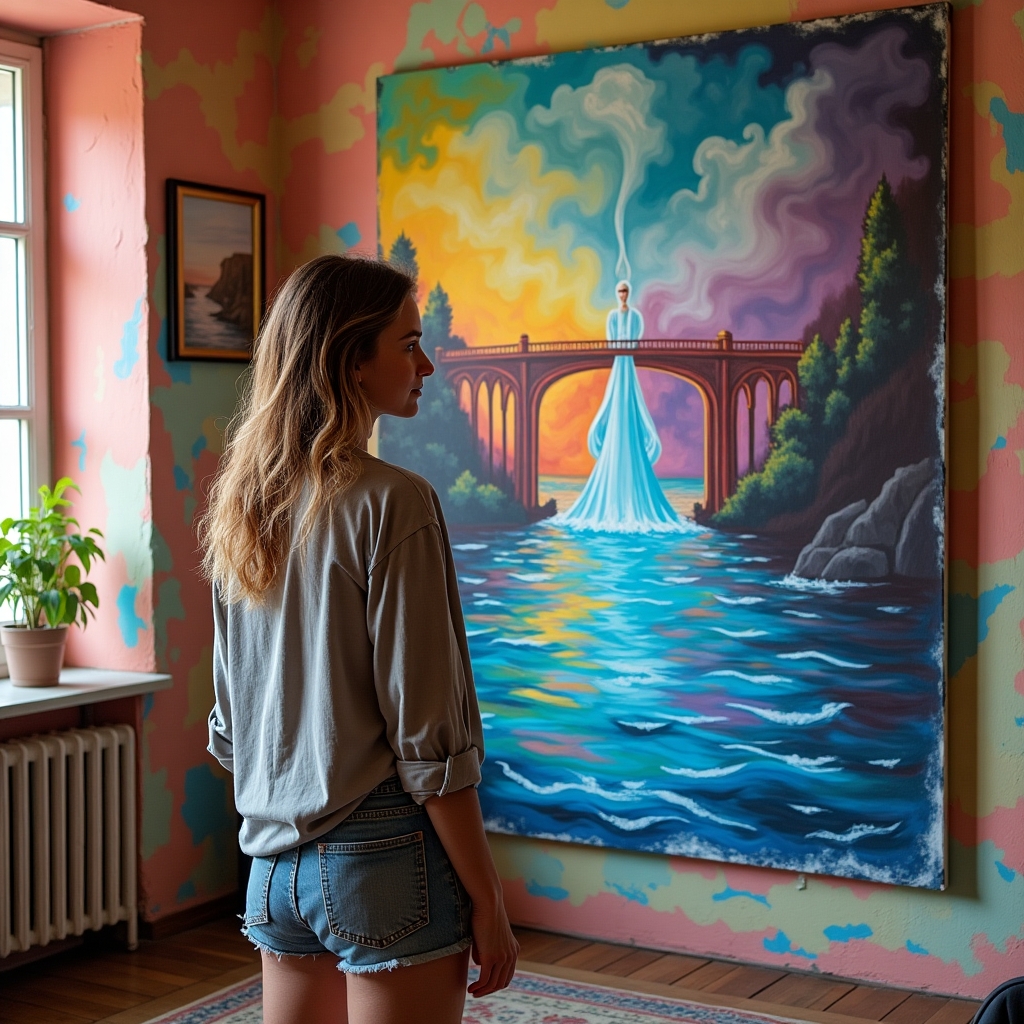
Yet, beneath her composed exterior, Aisha harbored a passion for something that seemed frivolous by comparison—art. Her fingers danced with the brush, capturing emotions on canvas with a sensitivity that felt like breathing to her. She found solace in colors, in the way they could speak truths that words struggled to convey.
The conflict simmered quietly inside her, an undercurrent of guilt entwined with desire. She knew the pride her family felt when they spoke of her future as a doctor, their eyes alight with dreams they had once deferred. Yet, she felt a persistent pull toward the studio, the one place where expectations faded, and only quiet creation remained.
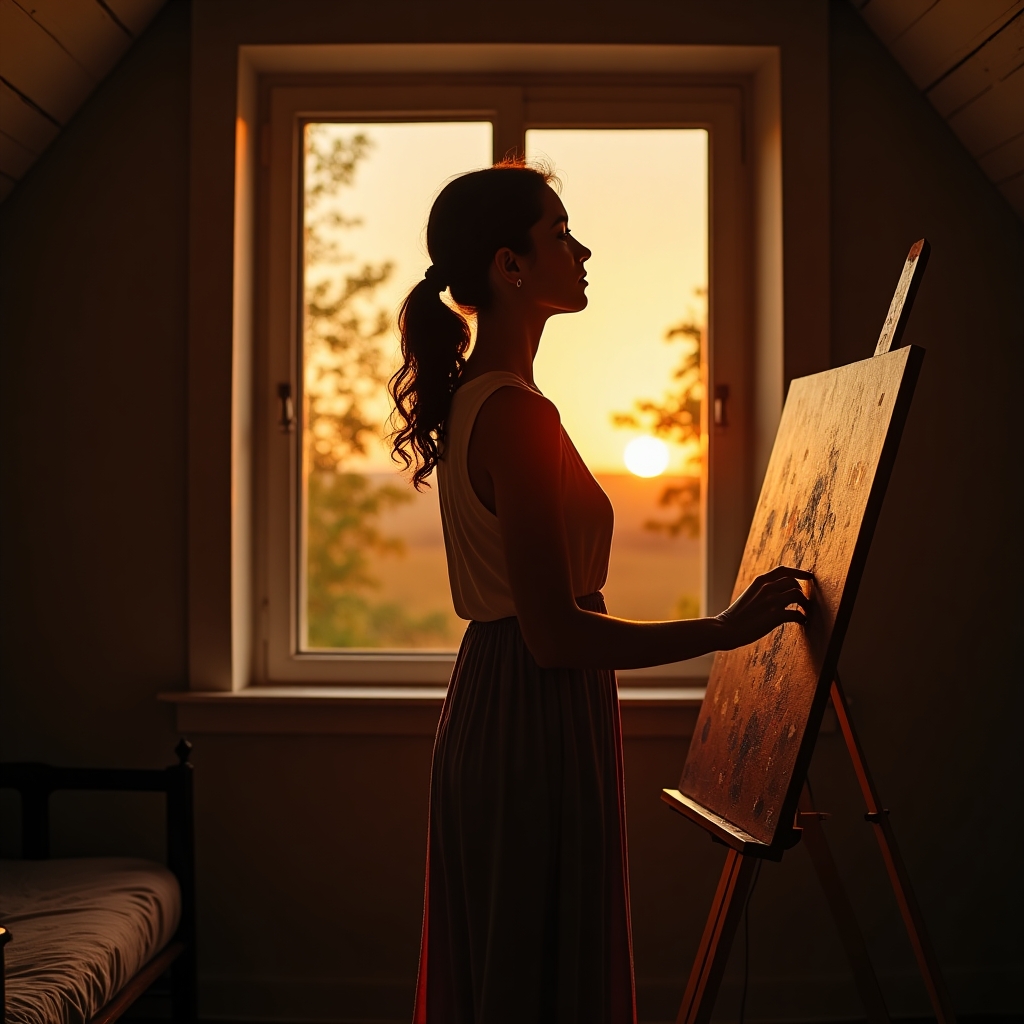
Aisha often spent her evenings painting in secret, the quiet hum of the town enveloped her like a gentle lullaby. The small room, tucked away in the attic of her childhood home, was a haven where her heart’s whispers could find voice. The strokes of her brush, the colors that erupted from her spirit, were her language of defiance and hope.
Her parents’ love was a constant, an unwavering presence that wrapped her in warmth. But their love was also a mirror reflecting their sacrifices, a reminder of what they had left behind for a better life. Her mother’s face, lined with both worry and pride, was a portrait of resilience; her father’s silence, a testament to quiet strength.
One evening, as the sun dipped below the horizon, painting the sky with a palette of oranges and purples, Aisha sat by her easel, immersed in her work. The canvas before her was a tumult of emotions, a landscape of longing and conflict.
It was in this quiet moment that a realization dawned on her—a clarity that felt as natural as the act of breathing. Her art was not a betrayal of her family’s dreams; it was an extension of their legacy. Each brushstroke was an honoring of their courage, of their journey to a new world.
The realization was gentle yet profound, like the first light of dawn. She didn’t have to choose between her passion and her family’s expectations. She could carry both within her, a harmonious blend of past and present, of duty and desire.
With each stroke, Aisha painted her truth on that canvas. She captured her ancestors’ resilience, her parents’ love, and her own dreams entwined in a dance of color and light. It was her story—a testament to the quiet strength within her, a declaration of her identity.
The following day, Aisha approached her parents with a calm resolve, her heart steady with newfound courage. She spoke of her love for art, of the way it connected her to a lineage of storytellers, to a heritage that valued expression in all its forms.
Her parents listened, their eyes reflecting a mixture of surprise and understanding. In that moment, the generational divide felt less like a chasm and more like a bridge, where love and acceptance met in the middle.
Her father, stoic yet gentle, nodded in acknowledgment. Her mother, tears glistening in her eyes, reached for Aisha’s hand, squeezing it in silent approval. Aisha realized that her truth had not shattered the family bonds; it had strengthened them.
The grove outside their home swayed gently with the evening breeze as if whispering secrets of the past to the stars. Aisha stood on the threshold of her old world and the new, her heart a blend of gratitude and resolve.
In the days that followed, Aisha’s art took on new life. She painted with a vibrancy that spoke of freedom, of the courage to be true to oneself while honoring the roots that nourished her.
She understood now that the journey was not just hers; it was one she shared with her family, with the generations who had come before her and those yet to come. It was a journey of healing, of finding harmony in the whispers of the ancestral grove.