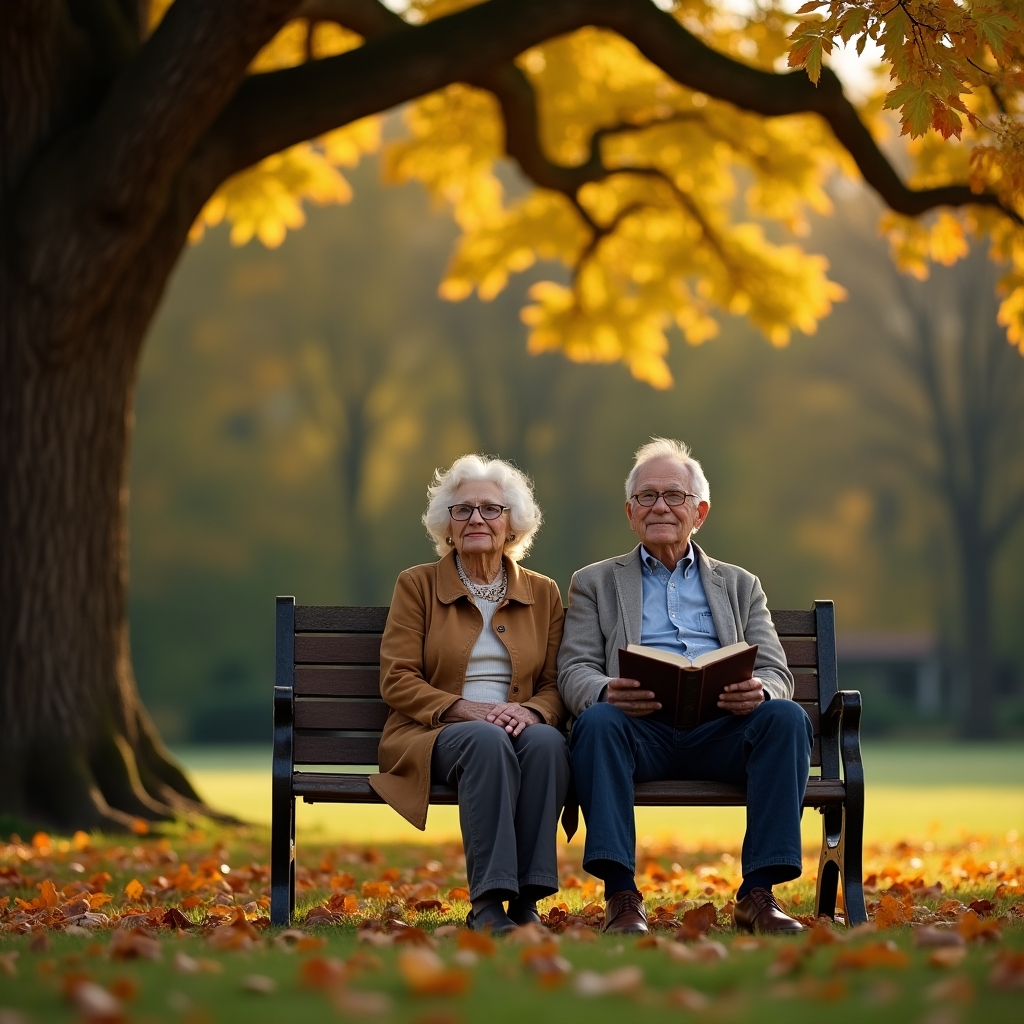
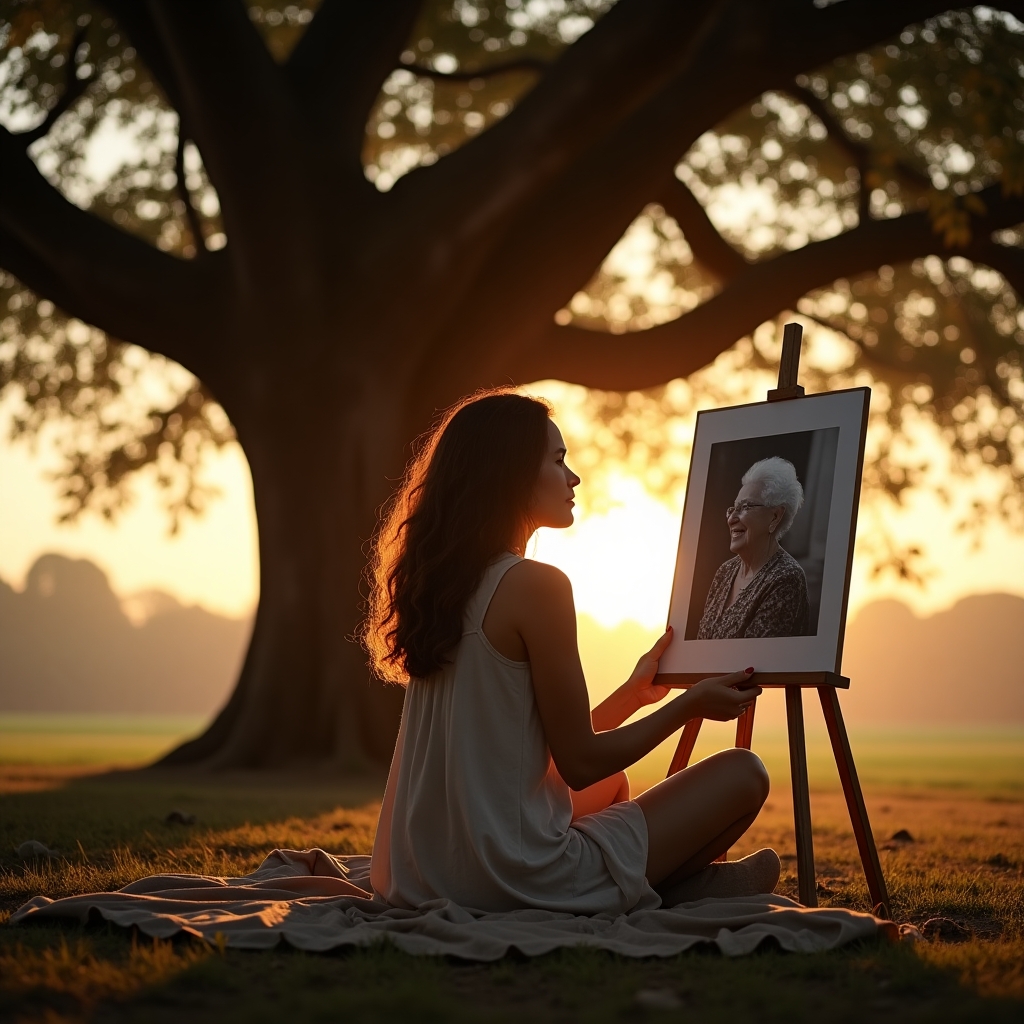



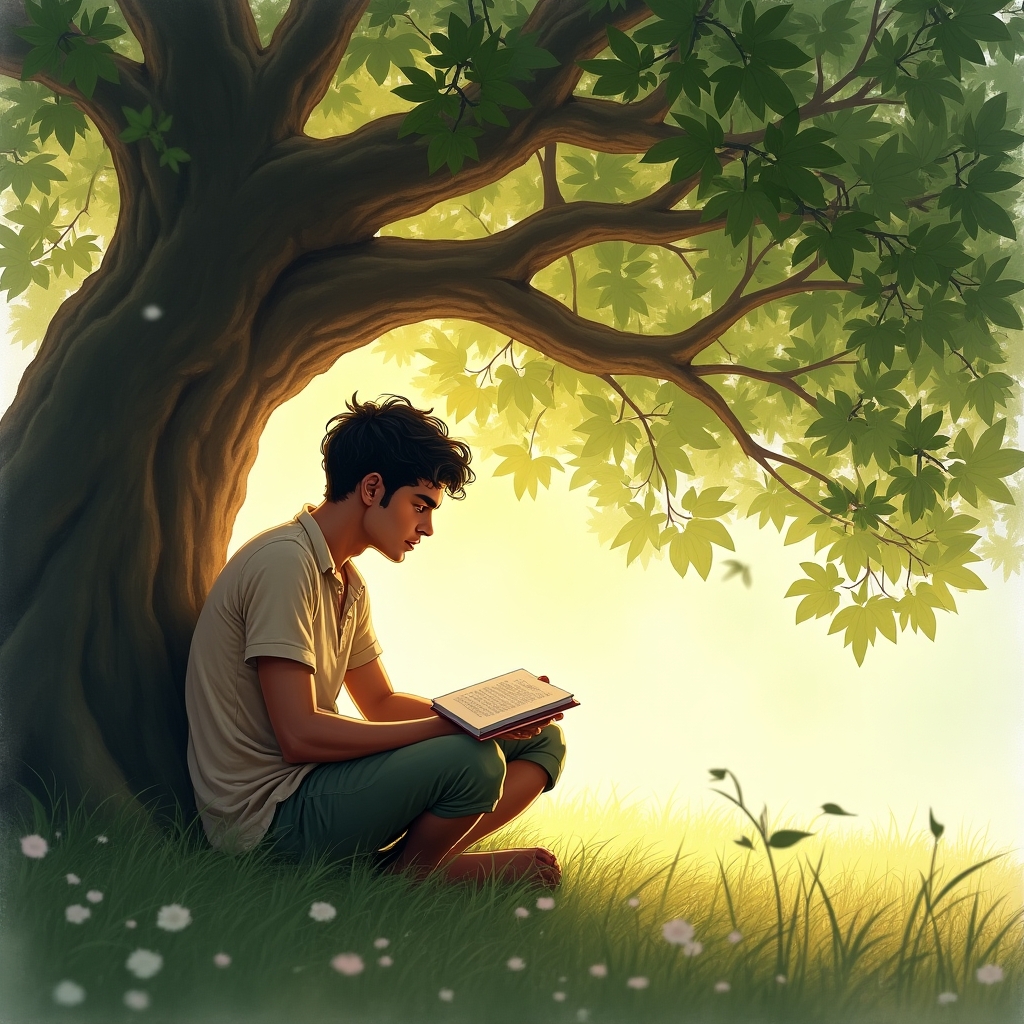
Aarav sat on the cool, earthen floor of his grandmother’s modest house, tracing the intricate patterns of a faded rug. The quiet murmurs of the village seeped through the open window, mingling with the scents of incense and jasmine that always seemed to linger in his grandmother’s home. Her words, spoken with both tenderness and the weight of generations, echoed softly in his mind. She often talked about the family’s legacy, the unspoken expectation that Aarav would follow in the footsteps carved by his forefathers.
In many ways, Aarav’s upbringing was a tapestry woven from threads of tradition, duty, and a rich cultural heritage. His family had deep roots in the small village of Saharanpur, and the past generations had always remained close to their ancestral home. The village itself seemed to breathe history, each tree and stone harboring stories passed down through countless lifetimes. Aarav felt these burdens keenly, yet was drawn to the allure of a world beyond the fields and temples that defined his early years.
He had always nurtured a passion for art — a world of colors and forms that allowed him to express the words he could never find. His sketchbooks were filled with portraits of villagers, vivid landscapes, and abstract forms born from his dreams. But the notion of pursuing art as a career was never entertained by his family; it was considered a fleeting hobby, a distraction from the serious matters of life.
His father, Rajesh, was a practical man. Rajesh worked tirelessly in the fields from dawn till dusk, expecting Aarav to one day take over the responsibilities. Rajesh valued the tangible, the work that bore visible fruit, and could not understand Aarav’s attraction to painting and drawing. “Aarav, art is a fine pleasure, but it will not feed you or your family,” he would say, leaving Aarav to nod in silent agreement, though his heart quivered with dissent.
Aarav’s mother, Meena, understood the struggle her son faced, having once harbored her own dreams of becoming a classical dancer. Her dreams had been set aside when familial duty called, a sacrifice she rarely spoke of but one Aarav felt keenly. Meena would steal moments to watch Aarav as he sketched, offering quiet, unspoken support through her gentle presence.
The tension between his inner desires and external obligations simmered within Aarav, an unvoiced conflict that manifested in fleeting moments of self-doubt and uncertainty. He felt a quiet pressure, a silent expectation that seemed to follow him with every step he took through the familiar pathways of his village.
One late afternoon, the sun hung low in the sky, casting long shadows across the village square. Aarav found himself at the foot of the banyan tree, a revered fixture in the village that had witnessed generations come and go. Its canopy spread wide, offering a sanctuary of shade and whispers carried by the wind.
Settling beneath its branches, Aarav opened his sketchbook, the pages filled with dreams half-formed yet achingly vivid. He began to draw, his pencil sweeping across the paper, the motions as familiar and comforting as an old lullaby. Yet today, something felt different — a subtle shift within him, like the first stirrings of dawn.
As his drawing took shape, the voices in his mind softened, replaced by a profound clarity. The banyan tree, with its sturdy roots and sheltering leaves, seemed to speak to him. In its quiet grandeur, Aarav found inspiration and a sense of belonging. It bore witness to the past yet embraced the ever-changing present, and in its embrace, Aarav felt the weight of expectation ease.
The leaves rustled gently, as if in agreement with his thoughts, and in that moment, Aarav realized that while his roots were deeply entwined with his heritage, his branches were free to reach towards new horizons. He could honor his family’s legacy while still pursuing his dreams. Art was not a rejection of his past but an extension of a story that could be told in new ways.
With this newfound understanding, Aarav felt an emotional clarity wash over him, a quiet strength that dispelled the shadows of doubt. For the first time, he felt capable of voicing his truth, of stepping onto a path that blended his familial ties with his personal aspirations.
Returning home that evening, Aarav approached his parents with quiet determination. He spoke of his love for art, how it was as integral to him as the fields were to his father. He promised them that he would find a way to honor their legacy while forging his own path, bridging the past with the hopes of the future.
Rajesh listened, his expression a mix of surprise and contemplation. It was Meena who first broke the silence, her eyes shining with a mix of pride and recognition. She understood the courage it took Aarav to voice his truth, and her support was a balm for the unspoken fears that lingered.
In the days that followed, Aarav felt a lightness in his step as he walked through the village. The banyan tree had become a symbol of his resolve, a reminder that he could embrace his heritage while staying true to himself. His art flourished, reflecting the harmony he had found within.
The village began to see Aarav’s art as not just a pastime but a bridge between tradition and modernity, a vibrant expression that enriched the community. And as the seasons turned, Aarav learned that loyalty to oneself and one’s roots could coexist, fostering not just personal growth but generational healing.