

In the quiet outskirts of Haverhill, Massachusetts, nestled between the burgeoning urban sprawl and aged woodland, lived Mira Patel, a twenty-three-year-old with aspirations as vast as the ocean but bound by the invisible threads of tradition. Her family, immigrants from Gujarat, carried the weight of expectations like a mantle, diligently preserving their cultural heritage amid the sea of Western influences.
Mira was the youngest of three siblings, each having pursued careers that brought pride and ease to their parents’ minds. Her brother, Rahul, donned the white coat of a doctor, while her sister, Naina, handled financial portfolios in a Boston skyscraper. Mira, however, found her passion not in the predictable paths of prestige but in the vibrancy of art and the stories she painted with each stroke.
Her parents’ home was a temple of sorts, adorned with Ganesha statues and the sweet scent of incense winding through the air. Conversations at the dinner table were often centered around tradition, respect, and duty. “Beta,” her mother would say, “it’s important to honor where you come from.” Her father’s eyes would silently echo the sentiment, their pride and hopes placed delicately upon Mira’s shoulders.
For Mira, the expectations were a constant, gentle whisper, a soft pressure that came not from malice but from love. Her art, however, was a voice that called louder, an unyielding siren that spoke of self-expression and unrestrained creativity. This duality lived within her, a peaceful cohabitation that, with time, became a silent struggle.
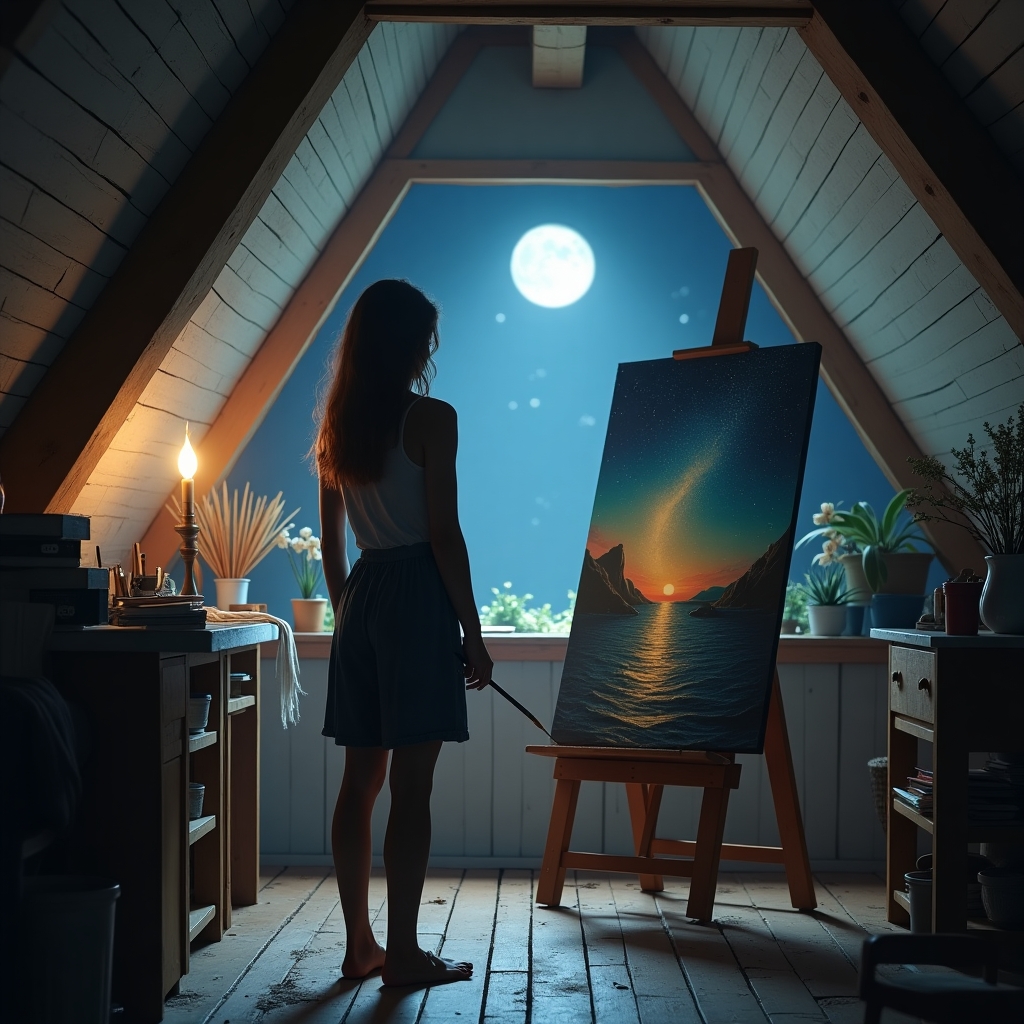
As months turned into years, Mira’s internal conflict grew more pronounced. Her art spoke of freedom, yet her heart ached to live up to her parents’ expectations. She spent countless nights in her small attic studio, surrounded by canvases that told stories her lips could not. She painted scenes of her childhood, her family, the duality of her existence, and the vibrancy of her dreams.
The attic became a sanctuary, where Mira poured her hopes and fears into every brushstroke. Yet each creation felt like a secret, a hidden part of her that she worried wouldn’t be accepted. Her parents’ dreams were clear and simple, but hers were complicated, tangled with guilt and longing.
One evening, after yet another day of balancing work at a local gallery with familial duties, Mira found herself alone in her studio. The moonlight spilled gently through the small window, illuminating a blank canvas. It was here, immersed in the soft hum of solitude, that Mira felt a shift—a gentle unraveling of her heart. There was no dramatic epiphany, just a quiet clarity that spread through her like a warm tide.
She painted not for approval, but for authenticity. Each brushstroke became an affirmation of her truth. She painted her dreams, vivid and unashamed, against a backdrop of the cultural roots that grounded her. It was an awakening, gentle yet profound, as if each color whispered, “You are enough.”
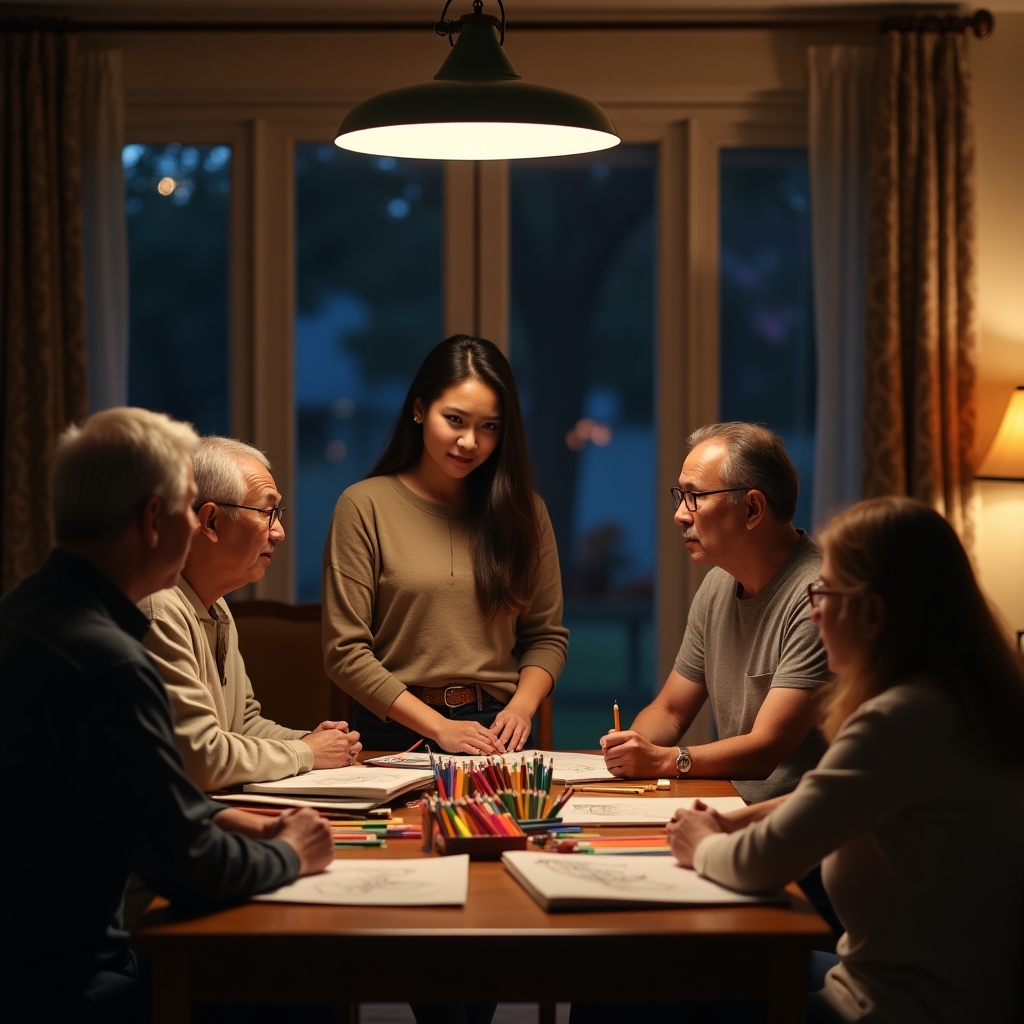
The following morning, Mira gathered her courage and her work, deciding it was time to share her truth with her family. Her hands trembled slightly, not from fear of rejection, but from the vulnerability of being seen. She invited her parents into her studio, a sacred space now revealed.
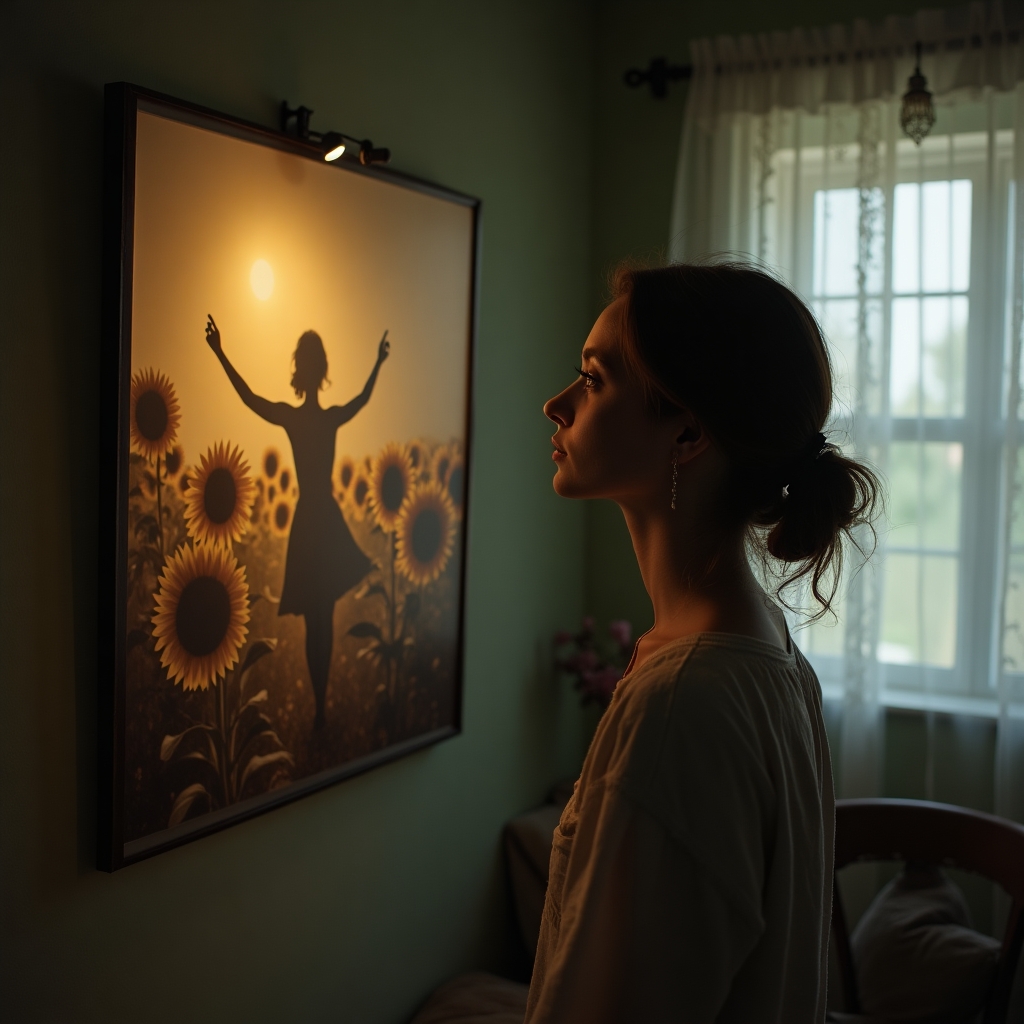
As they surveyed the room, Mira’s heart pulsed with quiet resolve. Her father’s eyes lingered on a canvas that depicted a young girl standing at the cusp of two worlds, vibrant and vivid. Her mother’s eyes softened, tracing the lines that spoke of love and longing.
Mira took a deep breath. “This is who I am,” she whispered. Silence enveloped them like a gentle wave, carrying with it the weight of understanding.
Her mother was the first to speak, her voice tender and resonant with love, “Beta, we see you.” Her father nodded, his expression softening into one of acceptance and pride.
In that moment, Mira realized the journey wasn’t about choosing between her passion and her heritage but weaving them into a singular truth. She understood that her parents’ expectations were rooted in a desire for her happiness and security. And in turn, her bravery offered them a glimpse into her world.
The quiet within Mira transformed, becoming a bridge between generations, between her dreams and the legacy of those who came before. It was a journey of gentle courage that carved a path toward healing not just for her, but for her family as well.
Mira’s story, though peaceful and subtle, was a testament to the strength found in authenticity. It was a reminder that true courage often comes not in grand gestures but in the quiet spaces, where hearts are laid bare and truths are spoken in whispers.