




Amara sat at her small, white desk, staring at the blinking cursor on her laptop screen. The blankness taunted her. She had been trying to write her personal statement for graduate school for weeks, yet the words wouldn’t come. They were caged, tangled in her mind alongside the expectations her parents had woven into her life since childhood.
The house was quiet except for the occasional noise from the kitchen where her mother prepared dinner. The familiar aroma of warm spices wafted through the air, mixed with the faint sound of the radio playing old Bollywood songs. It was a comfort and a reminder of the weight she carried.
Amara had grown up observing the reverence her family held for tradition. Her mother and father, immigrants from India, had sacrificed endlessly to give her what they called ‘a better life.’ Their dreams for her were packed with hopes of security, stability, and a prestigious career. Medicine was their chosen path for her, a field steeped in honor and respect.
But Amara’s heart lay elsewhere. She had discovered an insatiable passion for the arts, drawn to the world of storytelling and film. Her soul glowed when she crafted narratives, weaving together characters and plots, giving life to voices that might otherwise go unheard.
Yet, each time she approached the topic with her parents, a familiar look of disappointment would cloud their faces, their brows knitting with silent admonition. It was not anger but a quiet disapproval that sliced deeper than words ever could. Amara desperately wanted to make them proud, but in doing so, she felt she would lose herself.
This internal tug-of-war often left Amara exhausted, caught between worlds she loved deeply but knew could not coexist peacefully without sacrifice. Her friends would gently encourage her to follow her heart, but they did not carry the same cultural obligations, the same ancestral debts.
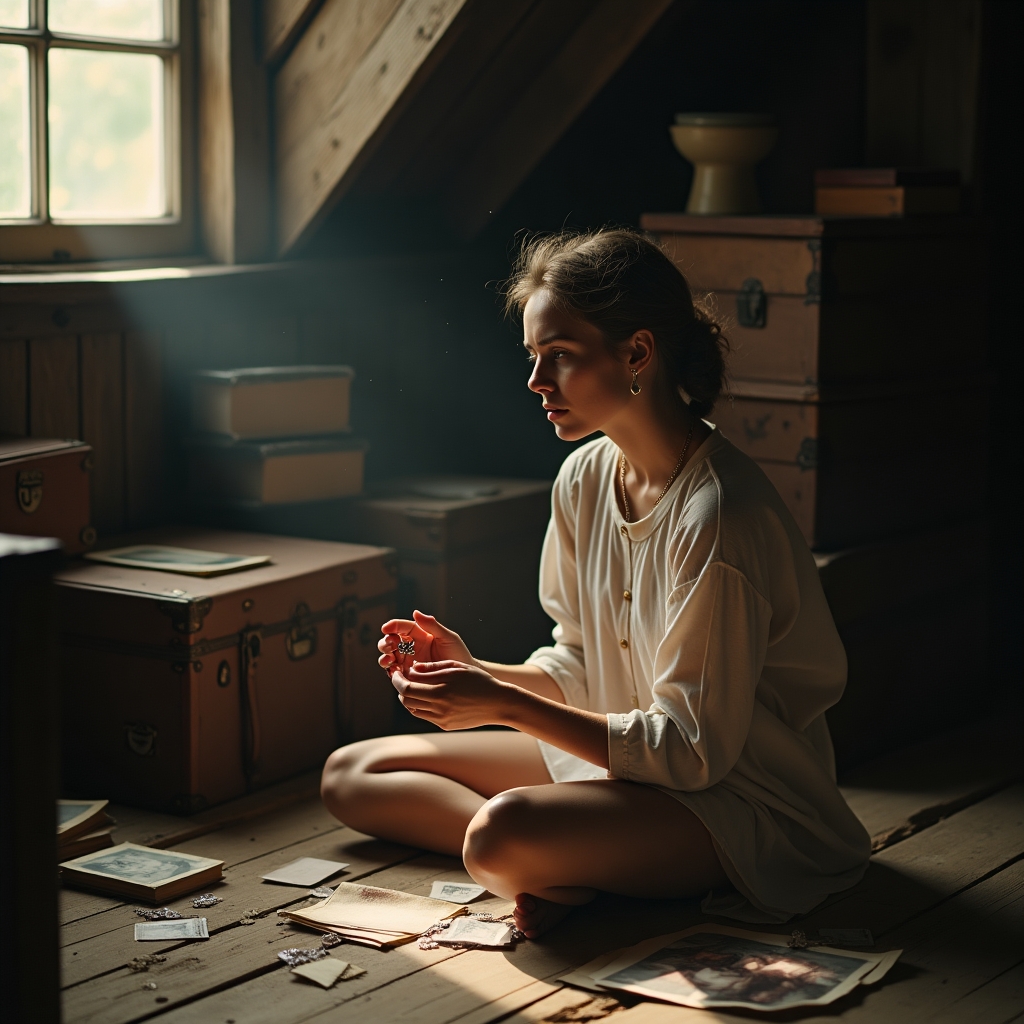
One evening, as Amara sat perched on her bed, illuminated only by the soft glow of a reading lamp, she found herself flipping through an old photo album. Images of her parents, younger and full of dreams, stared back at her with eyes that mirrored her own. Her father, always serious and strong, stood beside her mother, whose gentle smile spoke volumes.
A particular photo caught Amara’s eye. It was from a summer visit to India when she was eleven. She remembered the day clearly: visiting an ancient temple with her grandmother, who had told her a story of a goddess who forged her own path despite the odds. Amara recalled the feeling of awe she had felt, realizing even then that stories had the power to transcend time and place.
The stirring realization that her love for stories was a part of her legacy, as intrinsic as her parents’ hopes for her were, began to crystallize in her mind.
Her moment of emotional clarity came late one night. The house was silent, the hum of the refrigerator the only sound as Amara padded softly into the kitchen. She poured herself a cup of chai, inhaling its warmth, and sat at the small wooden table. In that solitude, she allowed herself to feel the full spectrum of her emotions.
She imagined a life where she followed the path set by her parents, its stability, and respectability forming a life without the vibrancy of her dreams. Her chest tightened at the thought, the air growing cold around her. Then she envisioned a life following her passion for storytelling. She saw herself traveling, experiencing new cultures, creating films that sparked conversation and empathy, her heart alight with joy.
Amara knew then that she could not choose one half of herself over the other. She needed to find a way to weave her own tapestry, incorporating the threads of her heritage while allowing the colors of her dreams to shine through.
The next morning, sitting with her parents over breakfast, Amara gently broached the topic. She spoke not of abandoning their dreams but of incorporating her own into the future they had envisioned for her. She shared her desire to study film and to use it as a bridge to connect cultures, to tell stories that mattered.
Her parents listened quietly, their initial expressions of surprise slowly softening into understanding. It was not an easy conversation, nor was it the last. But it was a beginning.
In that fragile moment, something shifted within the family dynamic—an unspoken acknowledgement that Amara’s journey, while different, was no less valuable. The path to healing the rift between generations had begun, paved by Amara’s newfound emotional courage to be true to herself while honoring her roots.