


Lena stood by the window, watching the sun dip below the horizon, casting the room in a shadowy glow. She turned her gaze back inside to the scattered remnants of the day—a half-empty cup of tea on the table, a book left open on the couch, its spine broken and the words fading in the growing dimness. Yet, the room felt too quiet, almost like it was holding its breath.
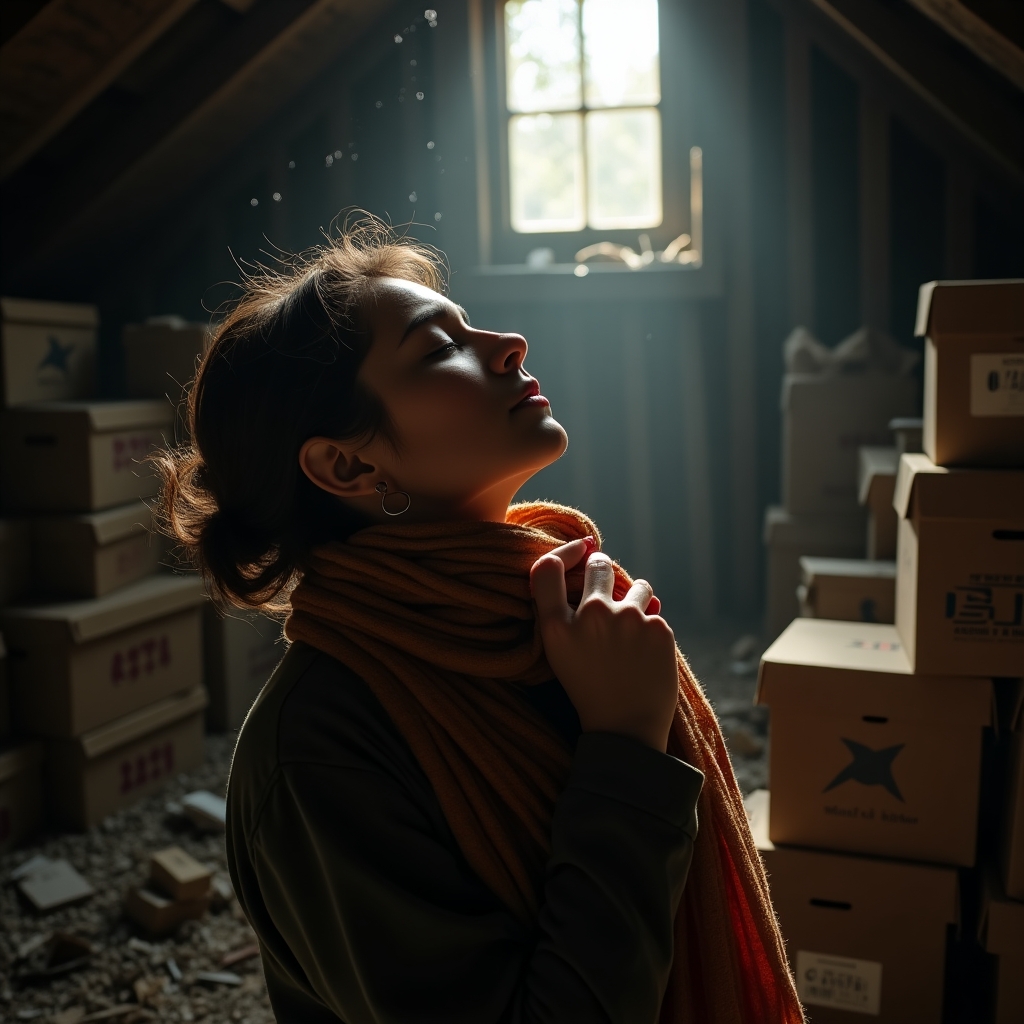
It began with the misplaced brushes, those tiny, innocent things that Jacob used for his painting. They were usually nestled in their jar by the easel, but he seemed to keep losing them lately. At first, Lena thought nothing of it; Jacob could be forgetful when he was caught up in his art. But then, there were more missing items—a favorite scarf, his old sketchbook, a bottle of ink. Each time he’d shrug, offering a distracted smile, promising to look and then falling into silence.
Lena found herself growing restless, her mind often trailing behind Jacob’s disjointed explanations, tangling in the threads of what felt like a story untold. She began watching him more closely. His paintings, once vibrant with life, had taken on a darker hue, brushstrokes heavy with emotion. His responses were clipped, and an unfamiliar tension steeled the air between them.
“What are you working on?” Lena asked one evening, leaning against the doorframe of his studio.
“A new project,” Jacob muttered, not looking up. The sound of the brush against the canvas was the only reply to her unasked questions.
He would disappear for hours, sometimes the entire day, leaving before she woke and slipping back after she had gone to bed. The first time she confronted him, he simply said, “It’s a commission. I’m trying to make ends meet.” His smile was reassuring, but his eyes never met hers.
As weeks passed, Lena noticed other changes. Jacob’s clothes were sometimes speckled with odd substances—dirt, bits of grass, even a faint yellow stain that didn’t look like paint. Once, she found a ticket stub from a train station two towns over, tucked carelessly in his jacket pocket.
Her mind spun with possibilities, each more ludicrous than the last. She didn’t want to invade his privacy, yet what gnawed at her was the sense of losing a part of him she had always thought she knew. She convinced herself to wait, to watch, to see what would unfold.
The breakthrough came one night as a storm raged outside. The power flickered, and in the dark, Lena found herself guided by a strange compulsion, stepping into Jacob’s studio with nothing but a small flashlight. Her heart pounded with the rhythm of the rain as she searched through his supplies.
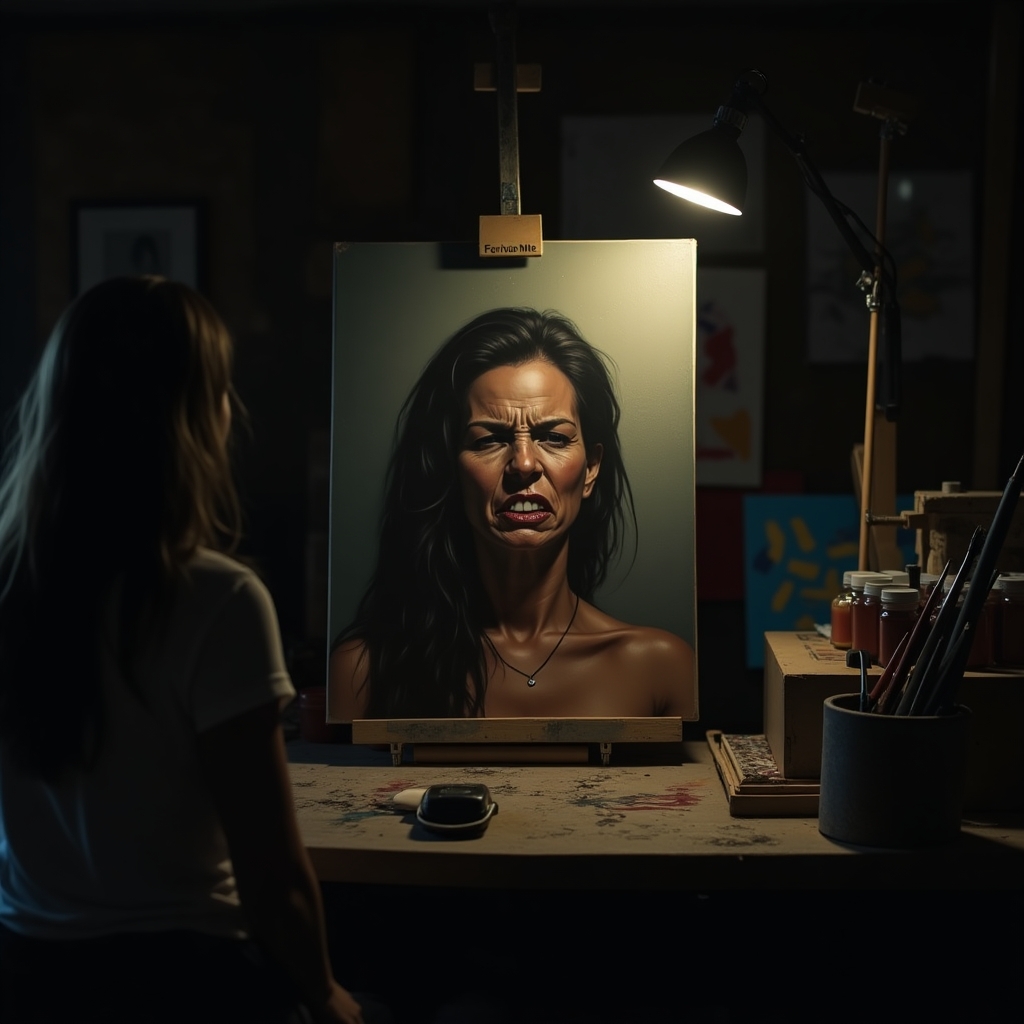
She found it tucked behind a row of canvases, a piece he hadn’t shown her. It was smaller than his usual works, and yet it emanated a raw intensity. Lena angled the flashlight, her breath catching as the image came into view—a portrait, unmistakably of her, but distorted, her features twisted in anguish, her eyes wide with something akin to terror.
Beneath the chaos of color was something scribbled, almost invisible, in the bottom corner: “Forgive Me.”
The reality crashed over her in a wave. Jacob was not hiding another woman or a secret life but his struggle, his tormented attempt to paint away a pain neither of them had spoken of. The loss they shared months ago, the child they never met, a silence that had grown between them like ivy, choking their words.
Jacob found her there in the dark, and the storm outside quieted as the truth settled between them. He didn’t speak as he took the flashlight from her hand and switched on the light, illuminating the studio.
“I didn’t know how to tell you,” he whispered, his voice cracking.
“Why?” Lena asked, her voice equally raw. “Why through this?”
“It’s the only way I knew how to feel it… to let it out,” he said, gesturing helplessly at the painting. “But I couldn’t let you see this part of me. I was afraid you’d leave.”
“Oh, Jacob,” Lena felt tears sting her eyes. “I never wanted you to feel alone in this.”
In the quiet aftermath of revelation, they stood together, the weight of their shared sorrow lightening, ever so slightly, in the understanding that neither had to face it alone. The painting was not a betrayal but a bridge back to each other, a testament to the vulnerability that lay hidden in their silence.
Perhaps the truth didn’t change everything. Instead, it placed them on a path of healing, one brushstroke at a time.