

Hey everyone, I’ve debated whether to share this here, but maybe putting it out might help someone else—or at least help me make sense of it all. It feels strange to pour my heart out like this, but I hope you’ll bear with me.
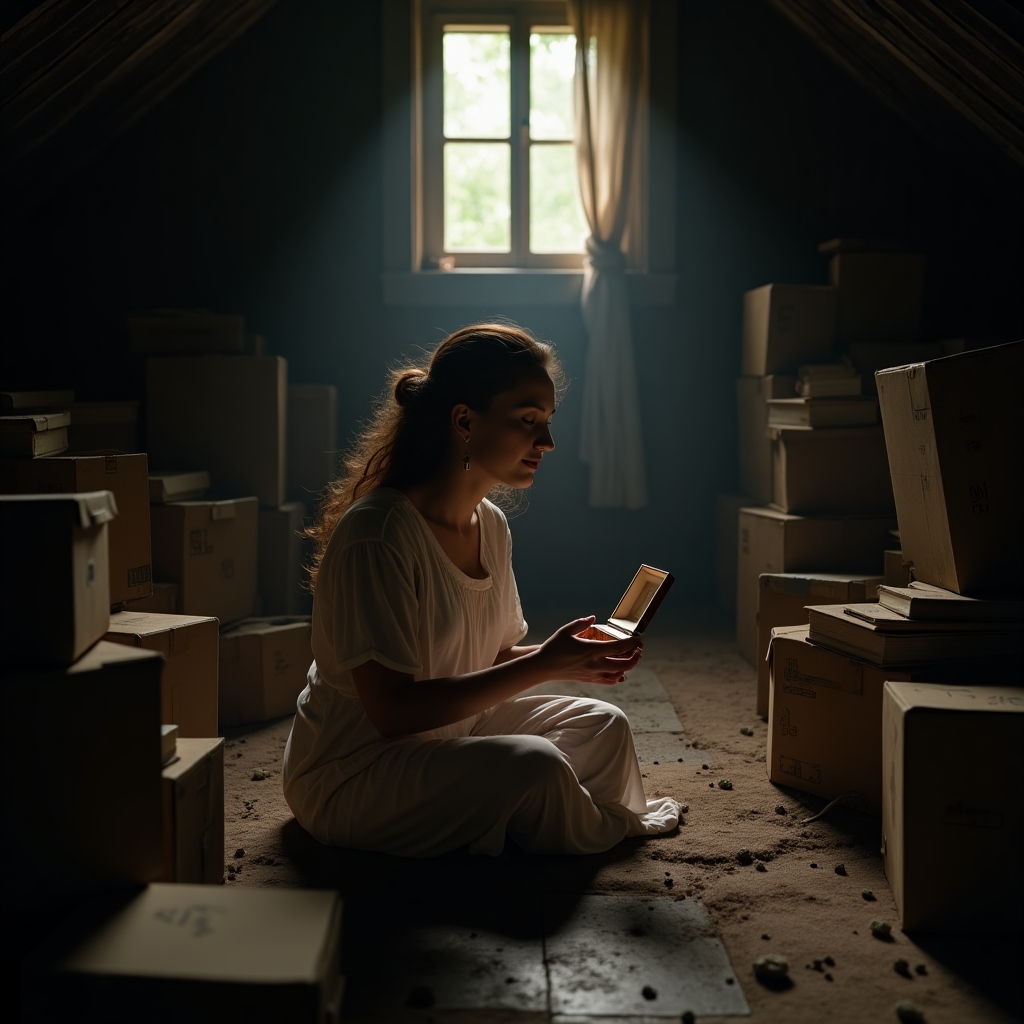
A few months ago, I was cleaning out my grandmother’s attic, a job I had put off for years. Life was always too busy, and if I’m honest, the thought of sorting through decades of memories was overwhelming. My grandma and I were close, but like many relationships, ours was tangled with unspoken feelings and mysteries I never dared to unravel.
As I sifted through old clothes, tarnished jewelry, and yellowed photographs, my mind wandered through childhood memories of summer afternoons spent in her sunlit kitchen, her laughter warm and comforting like the tea she brewed. It was an odd comfort even now, amid layers of dust and silence.
Then, amidst the clutter, I found a small wooden box, its lid slightly ajar, inviting yet discreet. Inside, a collection of sewing tools and colorful threads lay impeccably organized. It caught my attention not just because it seemed out of place, but because I never knew grandma was into sewing. I gently lifted a bundle of vibrant, almost glowing embroidery threads and was hit with a faint scent of lilac, her favorite.
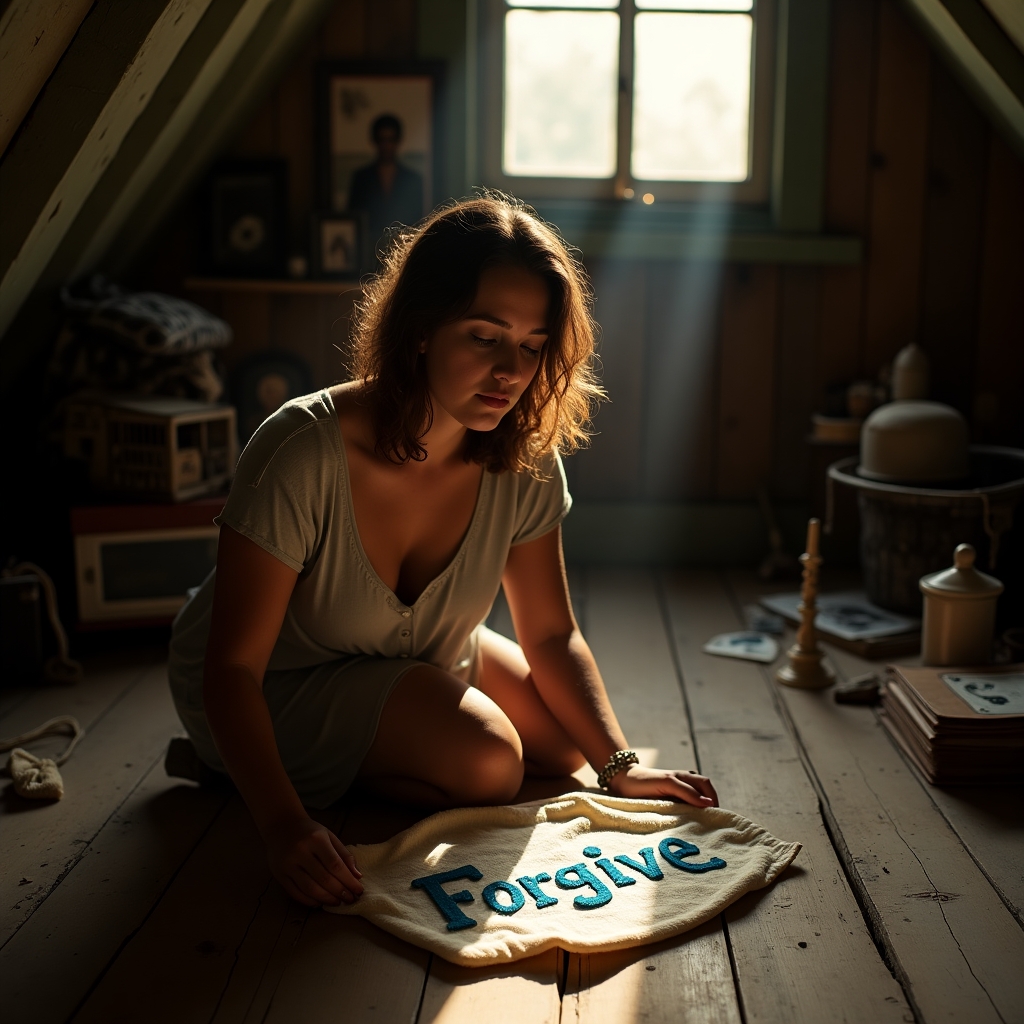
Beneath the bundle was a piece of unfinished embroidery. The linen was soft and worn, its edges frayed, and upon it, a half-completed garden scene—a tapestry of flowers in rich blues and greens, so vivid they almost seemed alive. What held my gaze, however, was a single word embroidered in a childlike yet intentional script: ‘Forgive.’
In that moment, the attic seemed to melt away, and I felt a wave of emotions, a connection to my grandmother that transcended time and understanding. This was her message, I realized—a message I needed to hear.
Over the following weeks, I carried that piece of unfinished embroidery with me, contemplating its meaning. Had she meant to ask for forgiveness? Or was she reminding me to forgive someone else? Or perhaps, herself?
I started reflecting on our last conversation, a few days before she passed. She had seemed unusually solemn, her eyes clouded with something unsaid. We had exchanged our usual pleasantries, but there was a moment where she grasped my hands and said, ‘There’s so much I wish I could tell you, but remember, the past is woven into the present.’
At the time, her words seemed obscure, but now they echoed with clarity. This simple act of embroidery—this ‘Forgive’—was a clue, a whisper from her past carried into my present.
I started connecting dots, pulling at threads of stories and memories I had tucked away, recalling family tales of old arguments, regrets, and unresolved tensions. It became clear this was her way of breaking the cycle, urging me to untangle the knots that had bound our family in silence.
I realized I had been carrying my own burdens of guilt and regret—things left unsaid, arguments unresolved, ambitions misunderstood. And so, I began to sew, adding my own threads to her tapestry. With each stitch, I forgave her for moments of misunderstanding and myself for holding onto them for too long.
That act of creation, of connecting past to present, of turning pain into art, helped me find peace. The quiet conversation between her intentions and my realizations became a testament to our shared humanity, to the complicated beauty of relationships.
Now, the little garden scene rests by my bedside, not as a reminder of loss, but of love and redemption. Each time I look at it, I am reminded that forgiveness, like embroidery, is a labor of love, requiring patience and tenderness.
Thank you for reading, and if you take anything from this, let it be a reminder to mend your own threads, for they might hold the key to unexpected truths.