



Lila sat by the window, watching the rain trace erratic paths on the glass. The droplets reminded her of the tears she kept tucked away, hidden under a brave façade. She was twenty-four, the age by which her mother had married and borne her first child. It was an unspoken milestone etched into the fabric of her family history. Expectations wrapped around her like chains, subtle but unyielding.
The Rao family was known in their community for their adherence to tradition. Lila’s grandmother, a matriarch with eyes like storm clouds, had dedicated her life to preserving their cultural legacy. At family gatherings, she was known to recount tales of valiant ancestors and the sanctity of established customs, her voice a silken thread binding one generation to the next.
Lila admired her heritage deeply, a vibrant tapestry of dance, music, and spirituality. Yet, she felt a quiet pull towards uncharted paths, towards a life her family might not understand. Since childhood, she had loved painting — the way colors mixed and spoke silent stories. However, her artistic ambitions were often dismissed as whimsical hobbies rather than serious pursuits, and she had obediently pursued a degree in business administration.
As she grew older, Lila found solace in the city’s art galleries, immersing herself in the works of artists who had dared to defy convention. She admired their courage, feeling a kindred spirit in the bold strokes of paint and unrestrained emotion that spilled across canvases. But each time she returned home, she slipped back into the mold shaped for her, smiling politely at suitors introduced by her family, making notes on compatibility and status.
The emotional tension within her was subtle, a soft hum that never abated. During quiet evenings, she often sat in her room, the walls painted with shades of dreams unspoken. She listened to the whispers of another life, where her identity was not confined to tradition, where her spirit could dance freely without the weight of legacy.
Her closest friend, Anjali, understood the storm beneath Lila’s calm exterior. Anjali was a rebel in her own right, often challenging norms with sharp wit and an unyielding sense of self. “You owe it to yourself to be happy,” Anjali would say, her voice both a comfort and a challenge.
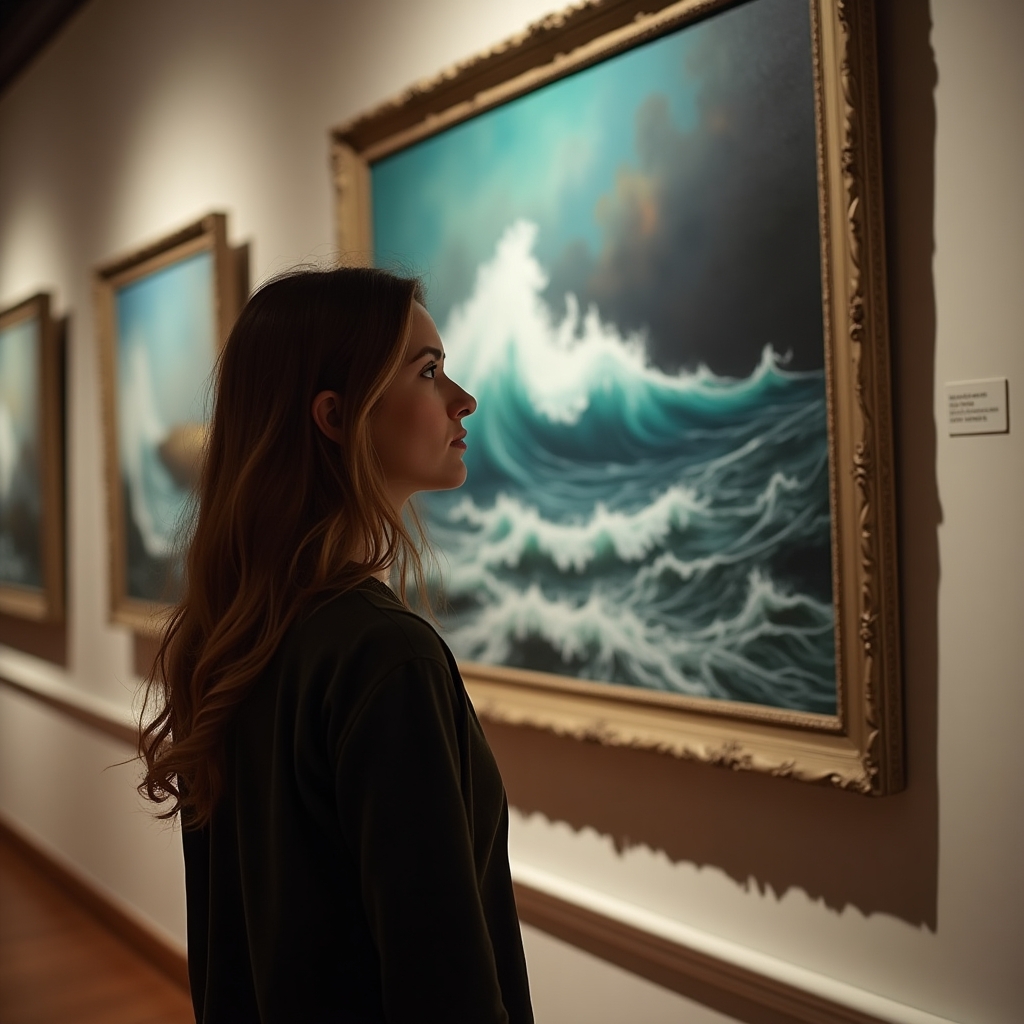
One evening, Lila attended an art exhibition at the behest of Anjali, who had insisted it would be enlightening. The gallery was a sanctuary of colors, the energy electric with the presence of dreams realized. Lila wandered through the displays, each painting a portal to worlds forged by courage.
She lingered before a particular piece — a vibrant depiction of a lone figure standing at the edge of a stormy sea. The eyes of the figure seemed to hold a mirror to Lila’s soul, reflecting her silent struggles and unvoiced desires. As she stood there, a soft voice reached her ears. “It speaks to you, doesn’t it?”
Lila turned to see the artist, a woman with a gentle smile and eyes that seemed to see into her very core. They spoke for hours, their conversation a symphony of shared experiences and unspoken yearnings. The artist’s journey mirrored Lila’s own, a path of quiet rebellion against constraints.
In the quiet of that gallery, amidst the whispers of paint upon canvas, Lila felt a moment of emotional clarity. The figures in the paintings were not unlike her — seeking freedom, seeking truth. In that hushed realization, she found strength.
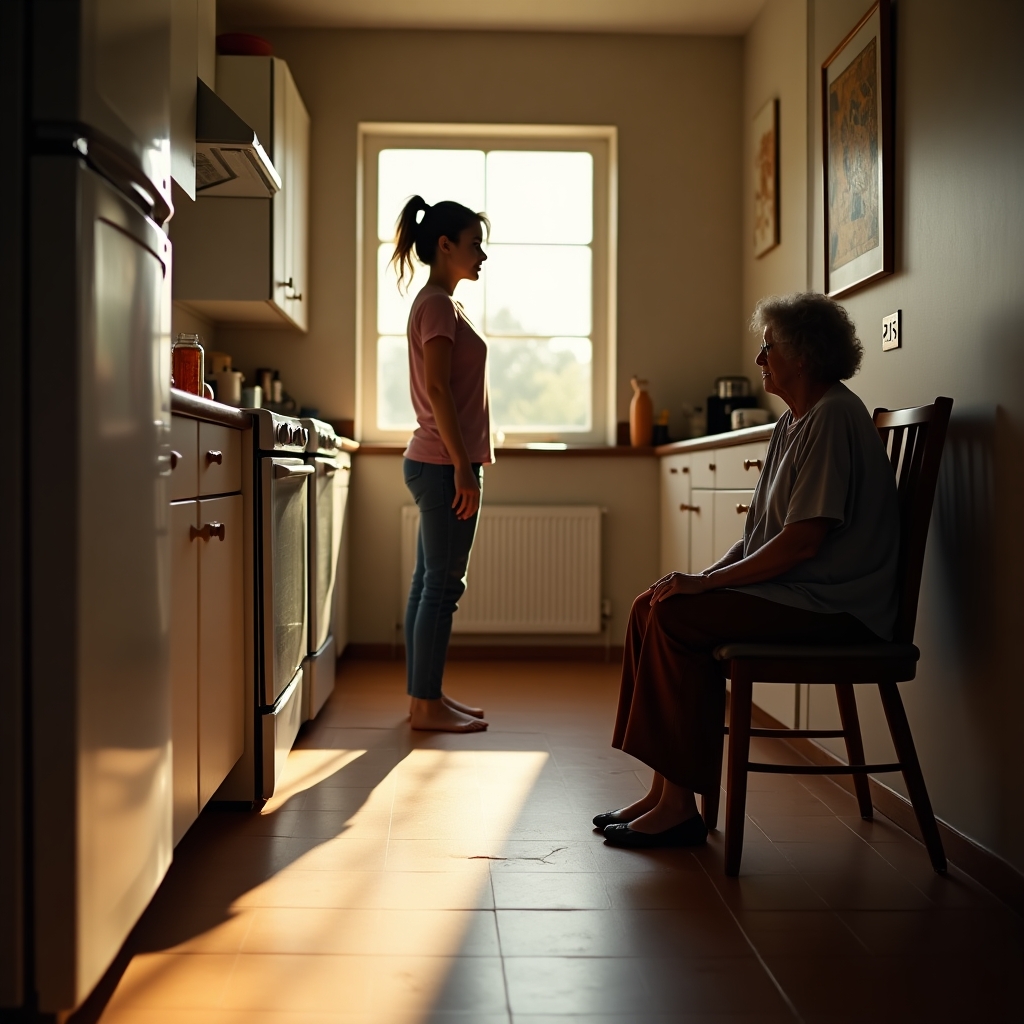
Three days later, Lila sat with her grandmother, the matriarch whose expectations felt like a shadow at every family gathering. The room was filled with the aroma of jasmine tea, the air thick with unsaid words. Lila took a deep breath, the storm within her reaching a crescendo.
“Grandmother,” she began, her voice steady but imbued with emotion. “I love our family, our traditions. They are a part of me. But I also love painting. It is more than a hobby to me. It is who I am.”
The matriarch studied her, the weight of years reflected in her gaze. Silence draped over them like an ancient tapestry. Finally, her grandmother spoke, her voice softer than Lila had ever known it to be.
“Your grandfather once told me,” she said, eyes distant with memory, “that courage is not the absence of fear but the decision to honor the truth within. If painting is your truth, Lila, then honor it.”
Tears welled in Lila’s eyes, not of sadness but of profound relief and understanding. In that moment, she realized that honoring her truth did not mean betraying her heritage. It meant weaving her own strand into the family’s tapestry, adding her colors to its rich history.
The rain had stopped, leaving the world outside fresh and new. Lila looked through the window, the path ahead no longer obscured by clouds. She felt the quiet strength of the figures in the paintings, their courage now a part of her own story.