



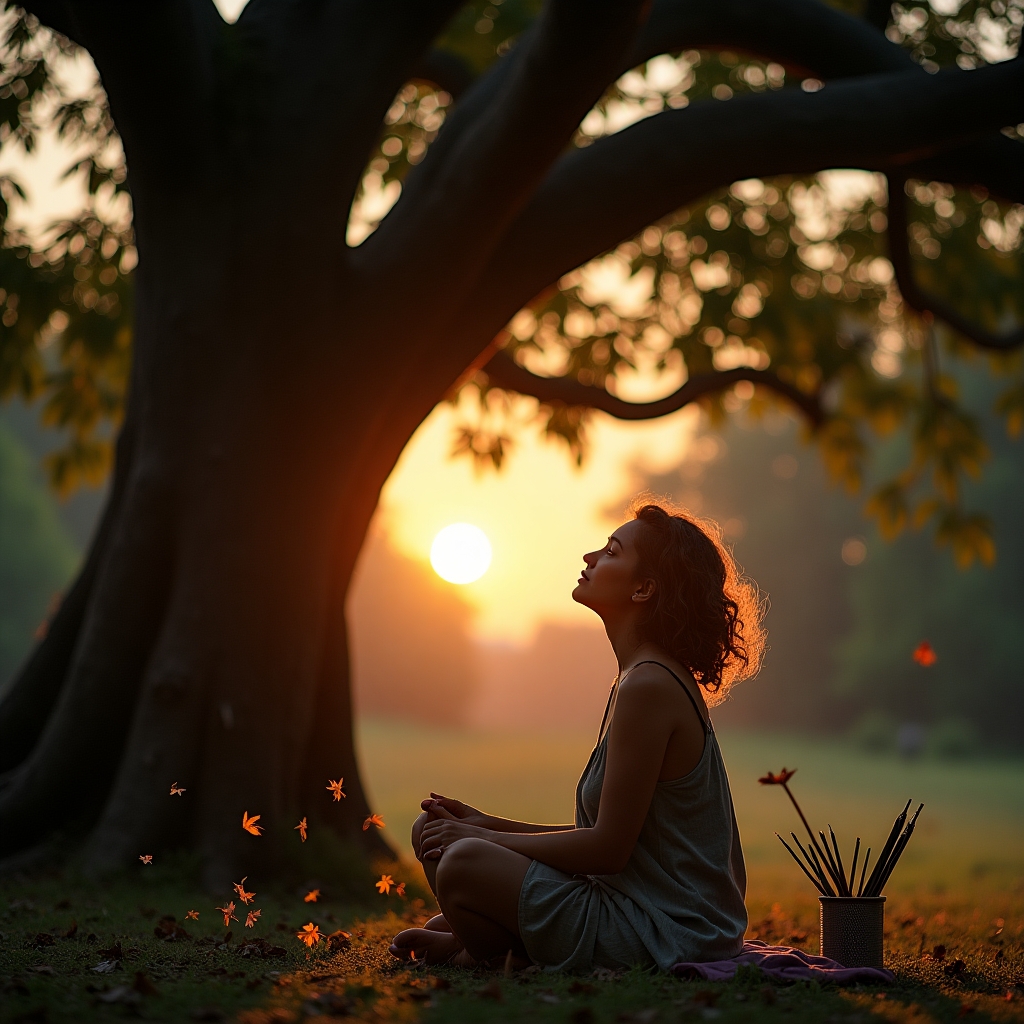
Alia Sharma sat at the window of her childhood bedroom, bathed in the soft glow of the fading evening light. Outside, the grand banyan tree stood like a sentinel, its roots entwined in the earth, branches reaching for the sky. Under this tree, generations of her family had gathered for stories, rituals, and celebrations. It was a symbol of continuity, of unyielding tradition.
Alia had always loved this room. As a child, she would spend hours here dreaming and sketching. Now, at the age of twenty-three, she felt the weight of expectations that clung to her like the banyan’s heavy leaves. Her parents, immigrants from India, had woven their hopes into her being. They longed for stability and success, the kind that could be measured by academic degrees and a steady career.
Alia had dutifully followed the path laid before her, excelling in school and securing a place in a prestigious law program. Yet, as she sat at her desk, surrounded by casebooks and legal tomes, her heart yearned for something different. She craved the freedom to explore art, her true passion—a path her family viewed as uncertain and impractical.
The unspoken rules of her family weighed heavily on her shoulders. She knew the sacrifices they had made, leaving everything familiar to build a life in a new country. This knowledge cultivated a sense of loyalty that bound her to their wishes, even as it conflicted with her own desires.
The tension simmered quietly within Alia, never boiling over but manifesting through restless nights and an inexplicable heaviness in her chest. Conversations with her parents were cordial but always skirted around her future, where their dreams and her reality diverged. Yet, she could not bring herself to shatter their expectations, fearing disappointment would fracture the delicate threads of familial love.
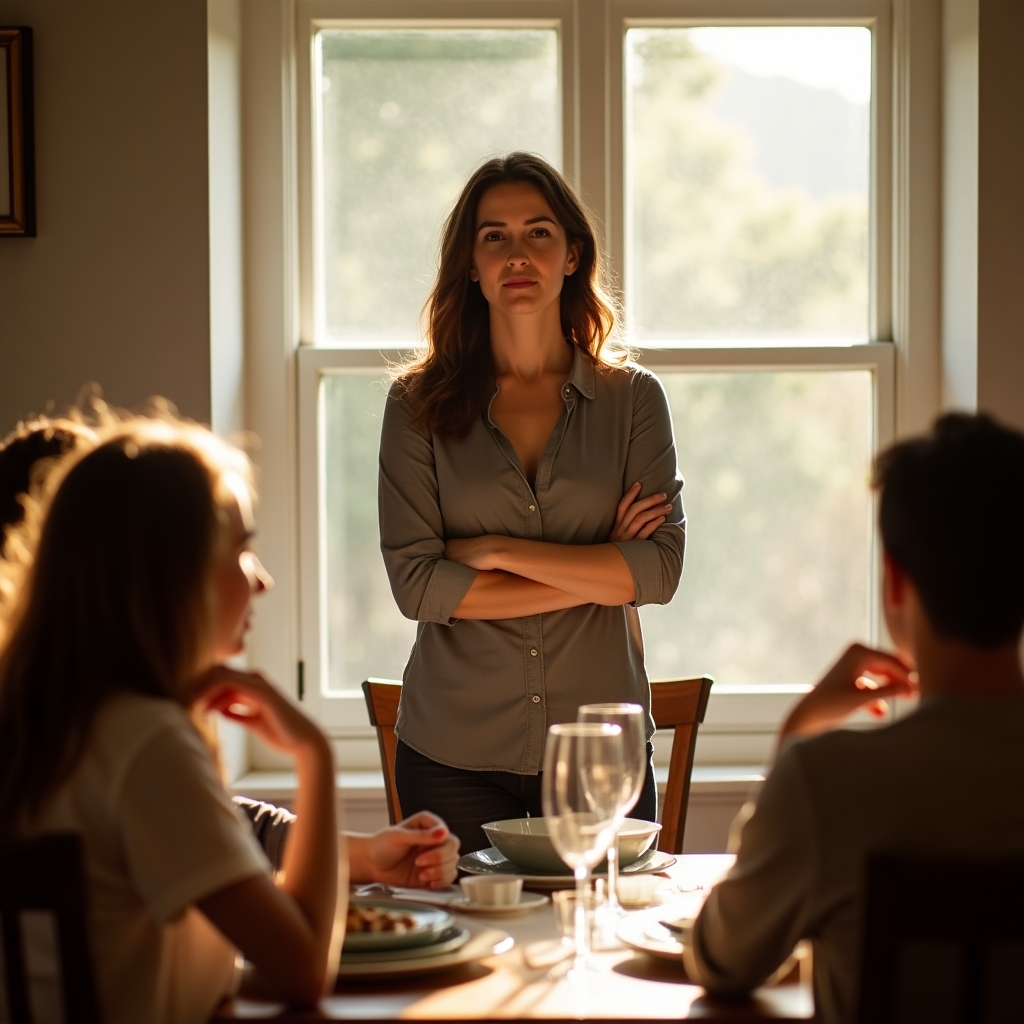
Weekends brought gatherings at her aunt’s home, where laughter and the smell of saffron and cardamom filled the air. At these events, the presence of her cousins, all pursuing respectable careers, served as a mirror reflecting her internal struggle. The conversations around the table invariably turned to achievements and milestones, leaving Alia feeling like an outsider in her own family.
It was during one such evening, amidst the chatter and clinking of teacups, that she found herself in conversation with her grandmother, Amma, who was revered as the matriarch of the family. Amma had always been a figure of wisdom, her words carrying the weight of lived experience.
“You seem quiet, my dear,” Amma observed, her eyes searching Alia’s face as if reading the fine print of a complex contract.
“Just tired, Amma,” Alia replied, her voice conveying more than the words themselves.
Amma leaned closer, her decades-old bracelets jingling softly. “Sometimes, silence speaks the loudest. You know, our hearts are like water—they find their own level, no matter how much you try to contain them.”
The analogy lingered in Alia’s mind, echoing through her thoughts long after the evening had ended. It was not the first time Amma had offered wisdom layered with metaphor, but this time, it resonated deeply.
Over the following weeks, Alia began to retreat inward, contemplating her grandmother’s words. She sketched more frequently, each line on the paper a thread gradually weaving a tapestry of clarity. The quiet struggle within her persisted, but Amma’s metaphorical insight had awakened a flicker of understanding.
One night, while the world outside lay blanketed in the hush of slumber, Alia experienced a moment of revelation. She sat in her room, surrounded by her art, the drawings of faces and landscapes that told the stories she longed to paint on a larger canvas. Her brush moved with a newfound certainty, strokes aligning with the rhythm of her heartbeat.
It was then, under the watchful gaze of the banyan tree silhouetted against the moonlit sky, that the tension within her uncoiled. She realized that staying true to herself did not necessarily mean forsaking her family’s dreams. Instead, it meant integrating her passion with their aspirations, seeking balance rather than surrender.
The next day, Alia approached her parents with a mix of trepidation and resolve. They listened, their faces a mosaic of surprise and concern as she spoke of her love for art, her desire to pursue it alongside law.
“I want to find a way to do both,” she concluded softly, her voice carrying the tentative strength of newfound conviction.
Her parents exchanged glances, the silence speaking volumes. Then her mother, with a slight nod, said, “If this is what your heart truly seeks, we will support you. Just promise us you won’t abandon your studies.”
Alia’s chest lightened as she nodded, gratitude swelling in her heart. For the first time, she felt the roots of her family’s expectations supporting rather than confining her.
In the days that followed, Alia’s life took on a new rhythm. She attended her classes and spent her free time immersing herself in art, finding a sense of peace and purpose in the balance between the two worlds.
The banyan tree outside her window was unchanged, yet it seemed to stand taller, its silhouette a testament to a lineage strengthened by acceptance and understanding. Alia knew she was not alone in her struggle; her journey was part of a larger tapestry, woven from the threads of personal courage and familial love.