



Nestled between the towering, snow-capped peaks and an endless sea of emerald forest lay the quaint village of Eldergrove. It was a place where time seemed to loiter, where traditions were revered like heirlooms passed down the generations. In this timeless village, lived a young woman named Elara. Twenty years old, with eyes the color of the slate-gray river that snaked through Eldergrove, she was known for her quiet strength and gentle demeanor.
Elara’s family, the Astors, had been the caretakers of Eldergrove’s ancient craft of willow weaving. For centuries, the craft had been more than just a means of livelihood; it was a link to their ancestors, a sacred tradition that held the community’s history in its intricate patterns. From her childhood, Elara learned to weave stories into the supple branches, creating pieces that whispered the tales of those who came before her.
Elara’s mother, Adeline, was the matriarch of the family. She wielded the art of willow weaving with a reverence that bordered on the religious. Adeline was a woman of few words but many expectations. She believed that the strength of a family lay in the threads of responsibility and tradition that bound them together. For Adeline, Elara’s path was clear: to follow in her footsteps, to uphold the Astor legacy.
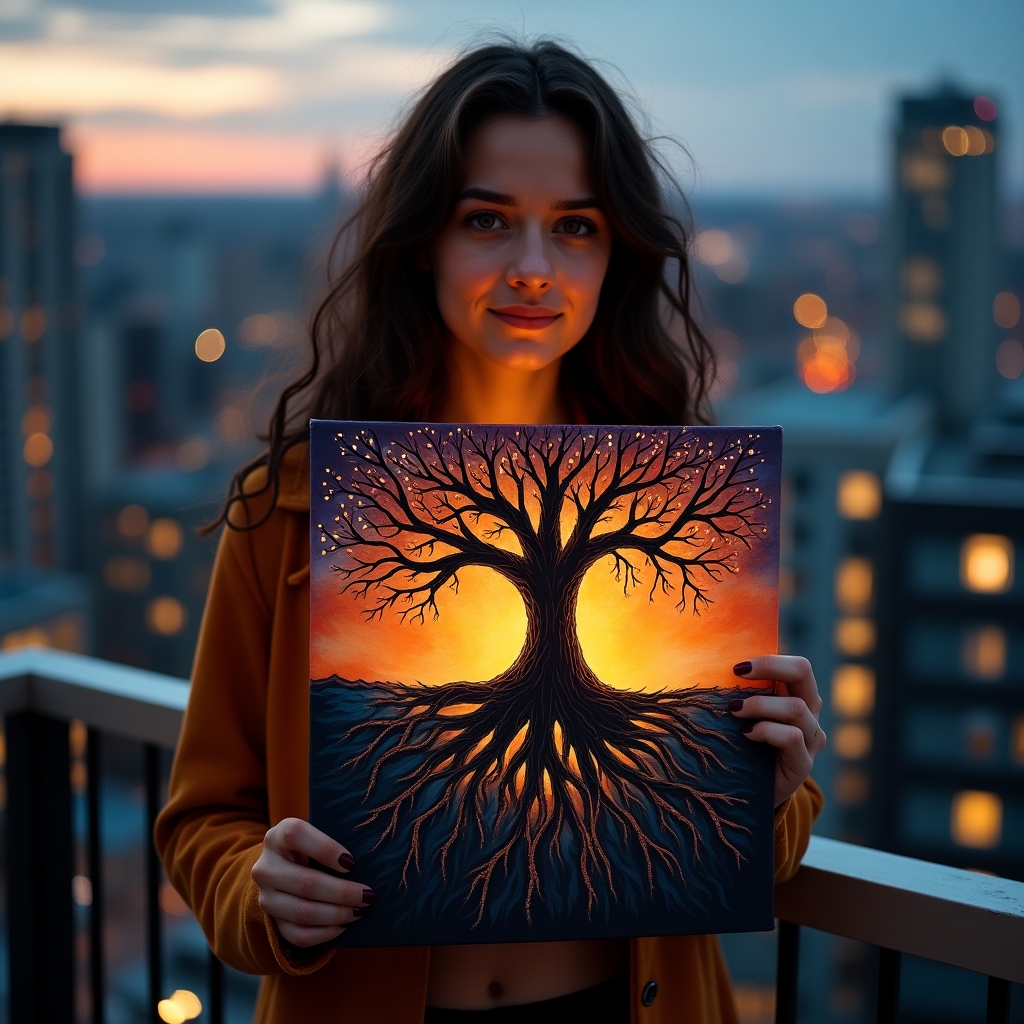
But Elara’s heart sang a different tune. While she loved the craft, revered its place in her family’s legacy, she longed for something that felt distinctly hers. Elara had a passion for painting, a medium through which she could explore her own emotions and ideas, unfettered by the weight of expectation. Her paintings were a riot of color, a stark contrast to the muted earth tones of the willow branches.
Every morning, Elara would spend hours by the river, sketching the way the light danced on the water, the way the wind whispered secrets to the leaves. Her sketchbook was filled with visions of what could be, but each evening, as she returned home, the reality of her family’s expectations pressed down on her like a heavy cloak.
Adeline sensed the quiet tug-of-war within her daughter. The conversations they had were often laden with unspoken words, the air thick with unshed tears and unvoiced dreams. Elara knew her mother loved her, but love, she realized, could sometimes feel like a weight, a tether holding her back. Still, she wove the willow, her fingers nimble, her heart heavy.
The village held its annual festival in the heart of spring, a celebration of renewal and tradition. Eldergrove came alive with colors, music, and laughter. It was during this festival that the Astor family’s exhibition took center stage. This year, as Elara arranged her family’s collection, she felt the familiar pang of responsibility. Yet, amidst the crowds, she found herself retreating into the thoughts of her own dreams.
As night fell, the village square was lit with lanterns, casting a warm glow over the festivities. Elara stood beneath the branches of an ancient willow that stood at the edge of the square, its branches swaying gently in the breeze. It was here, in the sacred stillness, that Elara felt a shift within her.
The night was serene, the air fragrant with the promise of spring. Elara closed her eyes, allowing the moment to wash over her. In the rustle of the leaves, she heard the whispers of her ancestors, urging her to listen not just to the stories of the past, but to her own. A clarity settled over her, an understanding that she could honor her family’s legacy while forging her own path.
The realization was subtle but profound, a spark of courage igniting within her. She knew then what she had to do. Elara returned to the festival, her heart lighter, her spirit unburdened by doubt. When she sought out her mother, Adeline was watching the dancers in the square, her face softened by the gentle light of the lanterns.
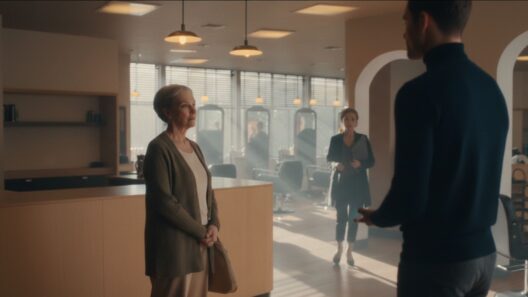
“Mother,” Elara began, her voice clear, “I need to talk to you.” Adeline turned, her gaze questioning yet open. Elara took a deep breath, the words she had practiced now flowing naturally. “I love our craft, I do. But there’s a part of me that yearns to paint, to create in a way that’s all my own. I want to honor our legacy, but I need to find my own voice as well.”
The silence that followed was full of potential, a pause pregnant with possibilities. Adeline looked at her daughter, truly seeing her for the first time. She reached out, smoothing a stray lock of hair from Elara’s face. “Your voice is a part of our legacy, Elara,” she said softly, her own eyes glistening with unshed tears. “You are my daughter. You carry our love and our stories. Whatever you create, it will always be a part of us.”
In that moment, beneath the ancient willow, a new understanding blossomed between mother and daughter. It was the beginning of healing, a bridge between generations built on love and acceptance. Elara felt the weight of expectation lift from her shoulders, replaced by the warmth of her mother’s support.
As the festival continued around them, Elara knew that her journey was just beginning. She was learning the delicate art of balancing tradition and personal truth, of weaving her own story into the fabric of her family’s legacy. And in this newfound clarity, she found the strength to embrace both parts of herself—the weaver and the painter.
In the heart of Eldergrove, beneath the whispering willow, Elara discovered the courage to be both. And as the lanterns flickered in the night, she saw the path ahead, illuminated by her own light.