



In the quiet town of Maplewood, where the streets were lined with aging trees and rolling hills, Clara Harper awoke every morning to the gentle hum of her alarm clock, a sound that had become a familiar call to duty rather than an invitation to embrace the day. She lived in a modest house on Elm Street, surrounded by memories and expectations that seemed to cling to her like an old, heavy coat.
For years, Clara had played the roles assigned to her with dutiful compliance. As a daughter, she was expected to be the caretaker of her aging mother, a woman who had perfected the art of wielding guilt as a tool to shape her daughter’s life. As a wife, she was often reduced to the background, her desires and dreams overshadowed by her husband Tom’s ambitions and routine demands.
Clara’s life was defined by routine. She woke up, prepared breakfast for Tom, visited her mother to assist with her morning rituals, and returned home to manage the household. There was a set rhythm to her days that left little room for spontaneity, leaving her to wonder if the dreams of her youth were simply figments of her imagination.
One cool autumn morning, Clara found herself standing in the local grocery store, contemplating which cereal to buy—Tom’s favorite or her own. As she weighed the decision, a reflection of herself in the freezer’s glass caught her eye. She barely recognized the woman staring back. Her once-vibrant eyes were dulled by exhaustion, and her shoulders seemed perpetually slumped under unseen burdens.
“Clara, is that you?” a familiar voice interrupted her reverie. It was Anne, an old friend from high school whose life had taken her away from Maplewood and its narrowing grip.
They exchanged pleasantries, and as Anne spoke of her travels and experiences, Clara felt a growing sense of longing sprout within her. Anne’s words were like water to parched soil, awakening a thirst for something more, something she had long buried under responsibilities and expectations.
The conversation lingered in Clara’s mind as she went about her day. She returned home, unpacked the groceries, and began preparing dinner. Tom arrived shortly after, immersing himself in the nightly news, his presence as predictable as the sunset.
“How was your day?” he asked, not looking up from the screen.
“It was…I saw Anne today. She’s just returned from Spain,” Clara replied, waiting for a spark of interest.
“Spain, huh? Must be nice to have that kind of freedom,” Tom said dismissively, his attention still on the television.
Clara felt the words weigh heavily in the space between them. ‘That kind of freedom,’ she mused. It wasn’t the travel she envied—it was the autonomy.
A few days later, while on her regular visit to her mother’s home, Clara found her mother in the garden, surrounded by fallen leaves. The air was crisp and filled with the earthy scent of autumn.
“Clara, dear, could you help me with the raking? My back isn’t what it used to be,” her mother said, her request laced with a tone Clara knew too well.
As Clara gathered the rake, her mother began recounting old stories, each laced with subtle reminders of the sacrifices she had made for Clara’s well-being. Clara listened, her hands moving rhythmically as she raked the leaves into a pile.
A gust of wind stirred the air, sending a flurry of leaves into motion, and with them, a sudden thought. What if she allowed herself to let go, just as the wind carried the leaves away?
That evening, Clara sat at her kitchen table, a cup of tea warming her hands. The house was quiet, save for the ticking clock. Clara found herself reflecting on her life, her choices—or the lack thereof, and the constant undercurrent of a life lived for others.
She reached for her phone, hesitated, and then dialed Anne’s number.
“Anne, it’s Clara,” she said, her voice steady.
“Clara! How lovely to hear from you,” Anne replied.
“I’ve been thinking…about visiting Spain. You mentioned a friend there who could use some help with her art studio, right?”
Anne’s enthusiastic response filled Clara with a warmth she hadn’t felt in years.
The decision had been made as easily as breathing, yet it felt monumental. Clara’s gaze drifted to the window, where the last of the autumn leaves fluttered down. For the first time in years, she felt a profound sense of lightness.
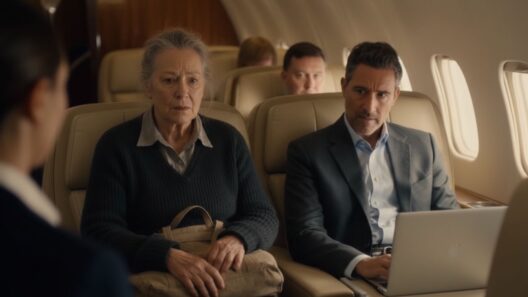
The next morning, as she prepared breakfast, Clara placed a single boarding pass on the kitchen counter, where Tom would find it. When he finally noticed, his expression was one of confusion.
“What’s this?” he asked.
“My flight to Spain,” Clara said simply, meeting his gaze with a calm she hadn’t realized she possessed.
“I don’t understand…” Tom began, but Clara interrupted him gently.
“I need to do this, Tom. For myself. I’ve spent so long living for everyone else, I’ve forgotten how to live for me.”
There was no need for raised voices or dramatic confrontations. The simplicity of her words carried the weight of truth, and in that moment, Clara reclaimed her voice, her autonomy.
The conversation with her mother later that day was met with a similar surprise, though tinged with a silent acceptance. Clara knew the journey would be challenging, that expectations and dependency would not easily dissolve, but she felt ready to navigate this new path.
As the taxi drove away from her house, Clara watched the trees blur past, their branches bare and reaching towards the sky. She felt the whisper of the leaves in her heart, urging her towards a new beginning.
In the years that followed, Clara would often think back to that autumn in Maplewood, where she found the courage to listen to the whisper of leaves and choose a path of her own making.