


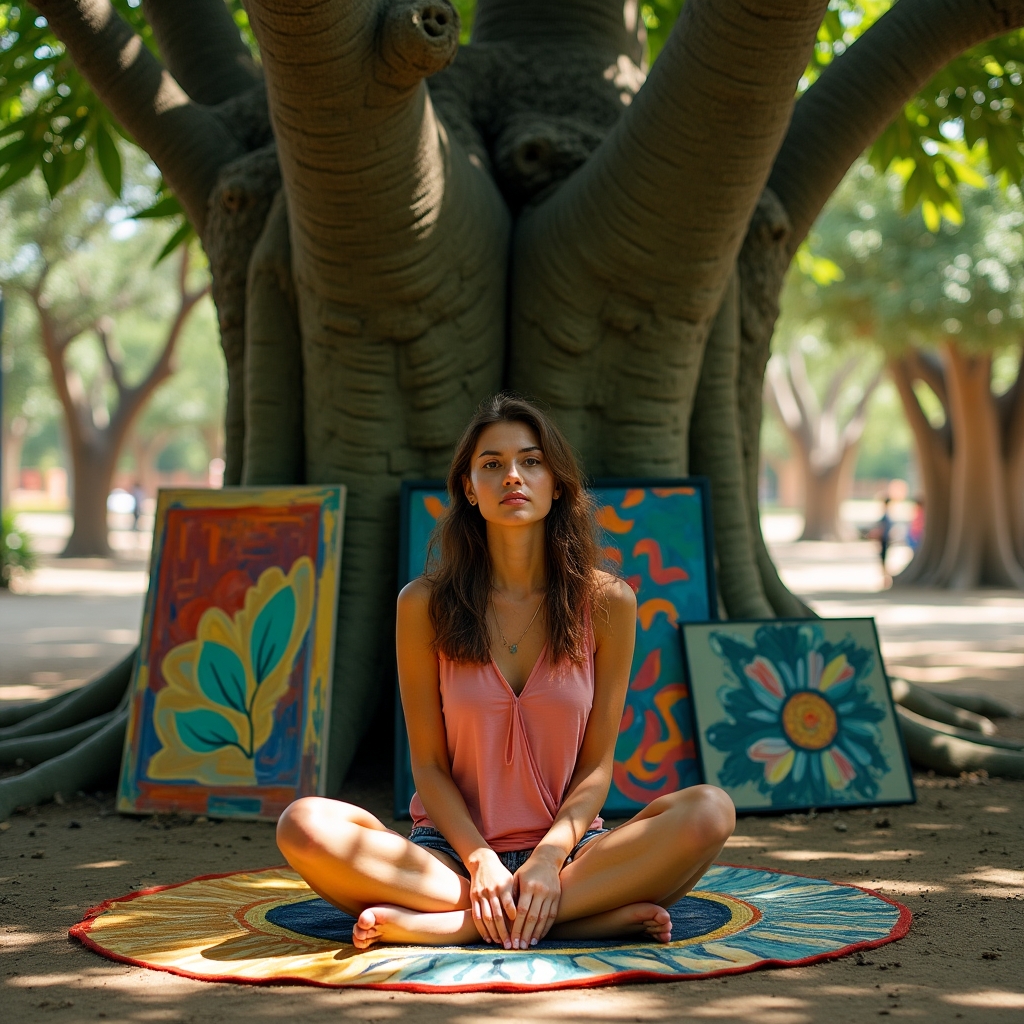
Beneath the wide, embracing canopy of a banyan tree, Leila sat after another long day of navigating the delicate maze of expectations that surrounded her. From her spot on the wooden bench, she could see the shimmering pond at the far end of the garden, reflecting the soft hues of dusk. It was a place she often retreated to, seeking solace in the quiet that nature offered, a stark contrast to the cacophony of voices that filled her family home.
Leila was the youngest of three siblings, the one her family described as the ‘dreamer’. Her parents, immigrants from a small coastal village, held tightly to their traditions and values, ensuring their children grew up never forgetting their roots. As she sat there, Leila remembered her father’s words, “Success is the only way to honor our sacrifices.” To Leila, success meant something entirely different than it did to her father.
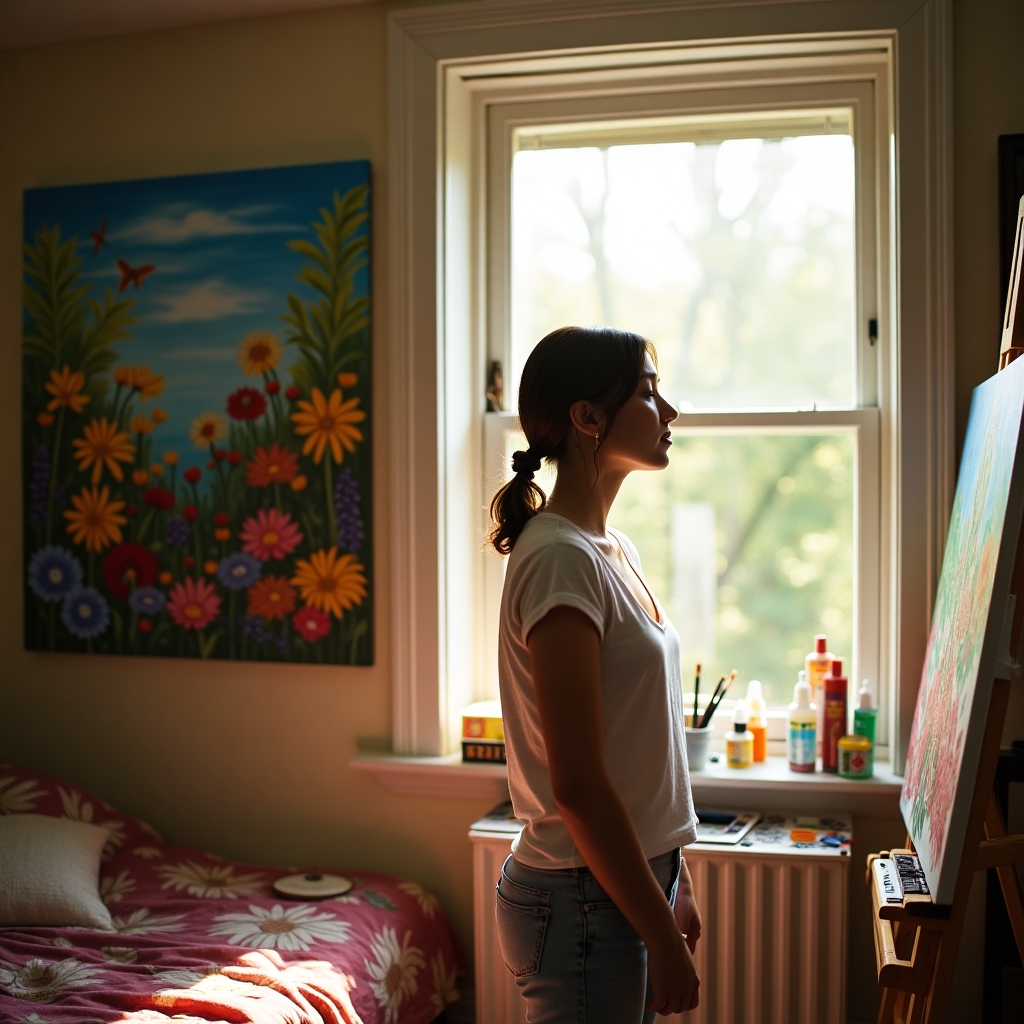
In the early mornings, before the house awoke, Leila painted. Her small attic studio was a world away from the pressures below. Her art was abstract, vibrant, and spoke of things beyond the tangible. But her family viewed it merely as a hobby, a phase that would pass. They envisioned her future in medicine or law, professions they deemed worthy of the family name.
The struggle within Leila was not so much a rebellion against her family but a quiet yearning for them to see her for who she truly was. She loved them deeply and understood their hopes were anchored in their experiences and dreams for a better life. Yet, with each passing day, the internal tug-of-war grew more intense.
Her mother often spoke about her own youth, tales of resilience and sacrifice after marrying young and moving to a foreign land. “You have opportunities we could only dream of,” her mother would say, her eyes a mixture of pride and longing. Leila felt the weight of these unfulfilled dreams pressing upon her shoulders, urging her to be something she wasn’t.
Days turned into weeks, and the tension quietly simmered beneath the surface. Every conversation about her future felt like a series of veiled suggestions and silent disappointments. Her siblings had dutifully followed the path laid out for them, their successes celebrated with grand family gatherings where Leila often felt out of place.
It wasn’t until a particular evening, as the monsoon rains drummed on the tin roof, that clarity seeped into Leila’s heart. She was painting, lost in the swirling blues and greens that mirrored the storm outside, when her brother Amit walked in. Amit had always been the most understanding, having quietly pursued his own passion for music alongside his engineering career.
“Leila,” he said, his voice barely rising above the rain, “I know what it’s like to feel caught between duty and desire. But there’s strength in the truth of who you are.”
His words rested gently in her mind as the storm continued to rage outside. That night, as she lay awake, Leila realized that the expectations weighing heavily upon her were not chains but whispers. Whispers of love, fear, and hope. And in that moment, she understood that her journey was not about choosing between her dreams and her family, but about weaving them together.
The next morning, the rain had cleared, leaving the air crisp and the garden vibrant. As she stood by the banyan tree, the sunlight filtering through its leaves, she felt a quiet resolve grow within her. True to her heart, she would continue to paint. But she would also invite her family into her world, allowing them to see the passion and purpose behind each brushstroke.
Leila’s decision wasn’t about defiance but about creating a bridge. She wanted them to understand that her art was a tribute to their sacrifice, a testament to their journey. In her paintings, she captured the essence of their stories—the colors of the sea they had crossed, the warmth of the hearth they had built.
The family’s reaction was not immediate acceptance but rather a journey of discovery and understanding. Through conversations, shared moments, and the vividness of her art, they began to see the legacy of their dreams interwoven with Leila’s vision. Her art became a family tapestry, a symbol of generational healing and a testament to emotional courage.
And so, beneath the branches of the banyan tree, Leila found not just her place but her purpose—honoring the past while painting her own future.