
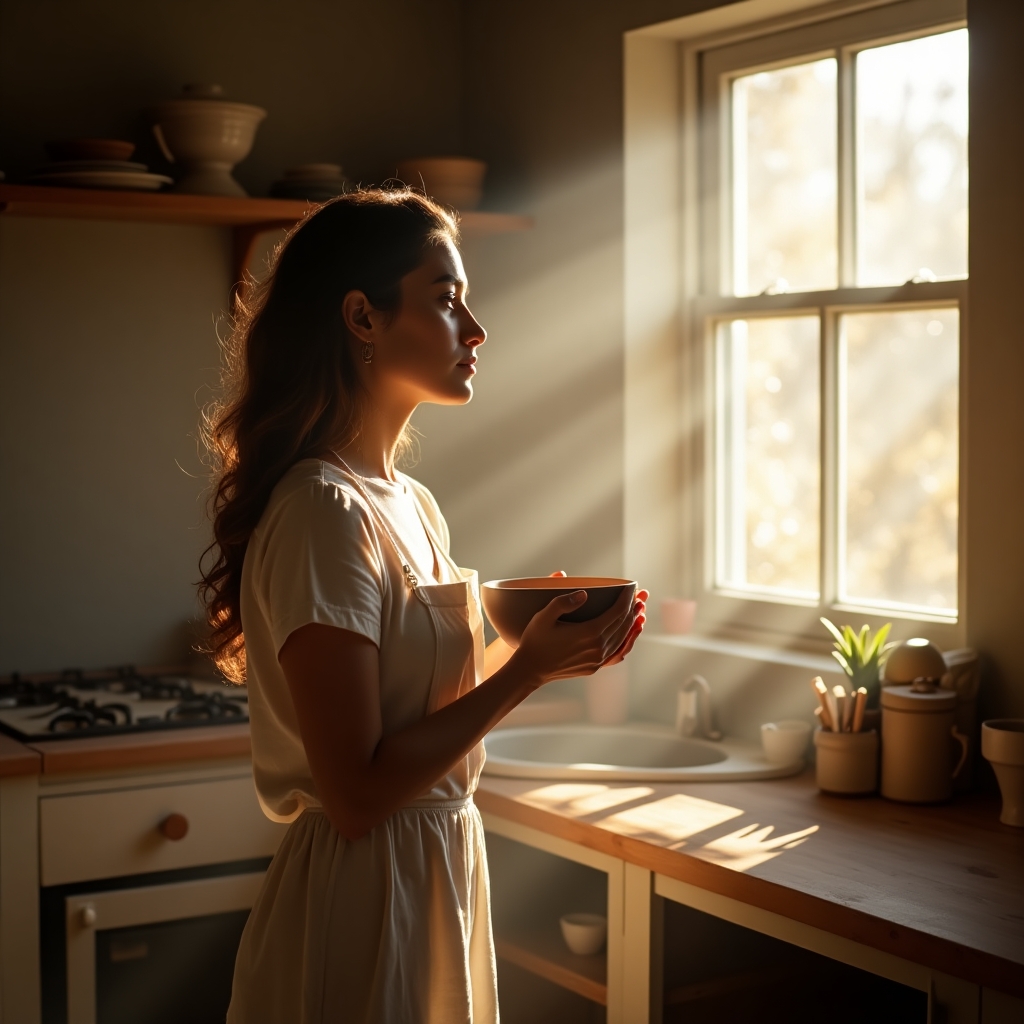
Anna Dawson stood at the kitchen window, watching the world outside wake up. The sky was a watercolor blend of orange and pink, a sight that used to fill her with boundless joy. Now, it felt distant, like a painting she could admire but never step into. She was 38, living in a house she never chose, with a man she once loved but now barely spoke to.
The kettle whistled, breaking the solitude of dawn. She mechanically poured hot water over the tea bag in her mug, the ritual as familiar as the worn path of her life. Her husband, Tom, shuffled in, glancing at her with sleepy eyes.
“Morning,” he mumbled, sitting down at the table.
“Morning,” Anna replied, her voice steady but devoid of warmth.
“Busy day ahead?” Tom asked, focusing on the newspaper.
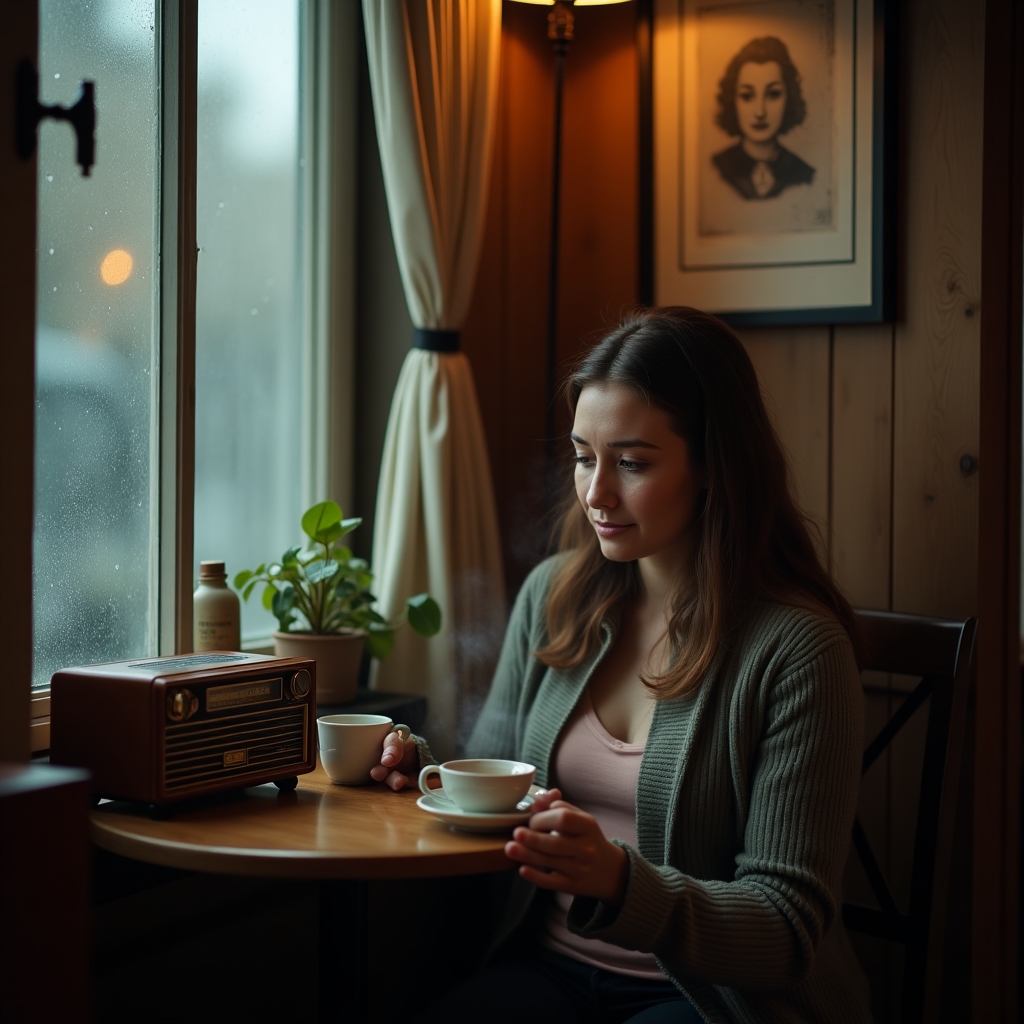
“The usual,” she said, sipping her tea, feeling the warmth seep into her, a small comfort in the narrative that had grown stale.
Tom’s eyes darted over the newspaper, barely present. She remembered when they would spend mornings talking about everything and nothing, dreams sprawling over endless cups of coffee. Now their conversations were reduced to logistics and brief exchanges about the weather.
Anna’s day unfolded predictably, work at the bookstore, lunch at her desk, a quiet ride home. Every moment felt prescribed, like a scene replayed too often.
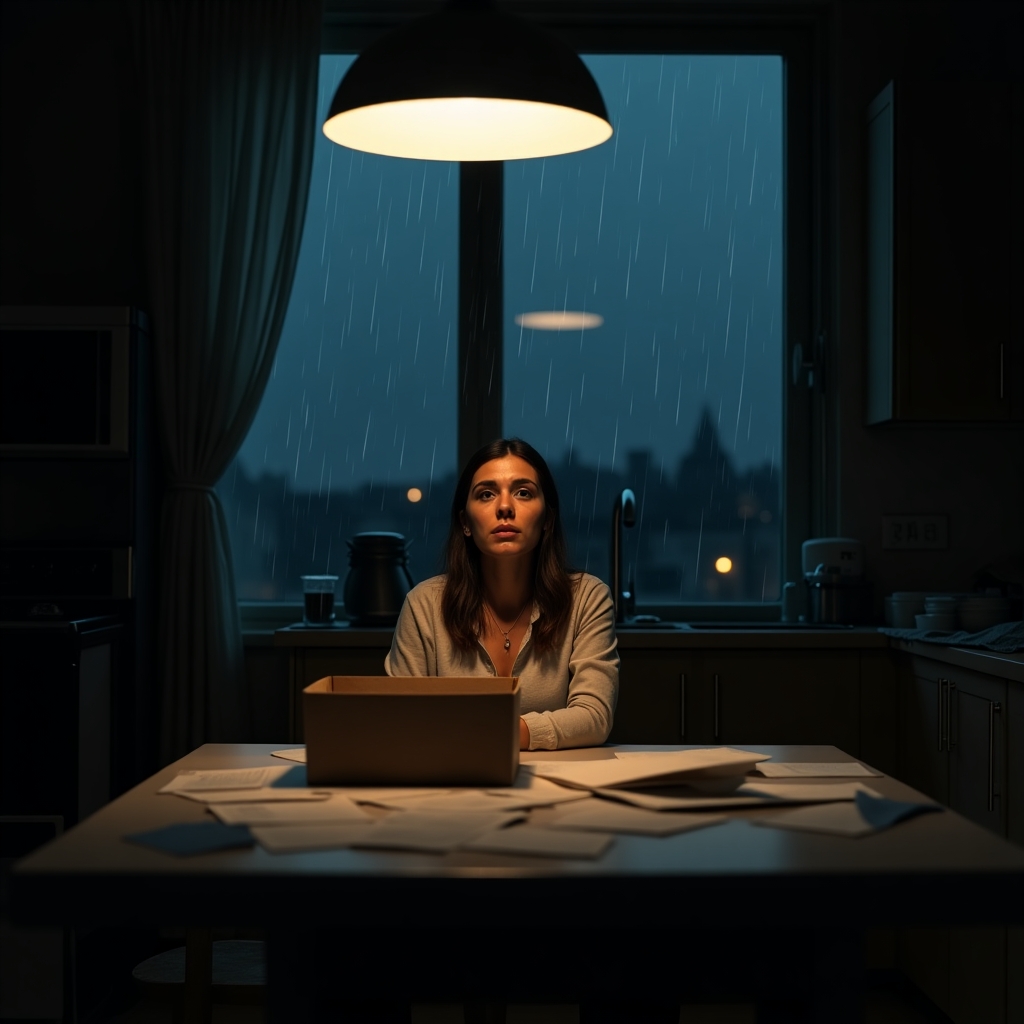
After dinner that evening, Anna sat at the kitchen table, the silence more comfortable than the strained conversation over dinner with Tom. She picked up a book, one given to her by a friend long ago. The cover was slightly frayed, the pages dog-eared from multiple readings.
As she read, a passage caught her attention, a quote about finding oneself in moments of solitude. It struck her deeply, as if the words were a lifeline thrown into the vast ocean of her life. She closed the book, her hand resting on it, feeling as though she was silently communicating with the woman she used to be.
The next morning, as she prepared breakfast, a small notion tugged at her mind. An idea, subtle yet persistent: she could change. It wasn’t about grand gestures but small changes that could shift the very fabric of her existence.
“I think I’ll take a pottery class,” she said abruptly, surprising herself with the declaration.
Tom looked up from his phone, eyebrows raised. “Since when are you interested in pottery?”
“I don’t know,” Anna replied, her voice soft but sure. “I’ve always wanted to try it.”
He shrugged, returning to his phone, the conversation as quickly dismissed as it started. But the seed had been planted, and Anna felt a small flicker of something she hadn’t felt in years — hope.
That evening, she signed up for the class online, her heart thumping with a mix of anticipation and fear. She realized how long it had been since she had done something purely for herself.
In the weeks that followed, Anna found herself eagerly looking forward to her pottery class. The first time she walked into the studio, the smell of wet clay and the gentle hum of conversation welcomed her. It was a new world, one where she was free to create, to explore without judgment.
Her hands, so used to the mundane tasks of life, found renewed purpose as they molded and shaped the clay. Each session rejuvenated a part of her spirit long dormant. She was learning to love the process, with its messiness and its beauty.
At home, Tom noticed the change. “You seem different,” he said one night, watching her with a mixture of curiosity and distance.
“I feel different,” Anna replied, a smile playing on her lips.
“In a good way?”
“Yes,” she said, meeting his eyes. “In a good way.”
As she continued to engage with this new part of herself, Anna noticed subtle shifts in her life. Her interactions with Tom were less about obligation and more about genuine moments of connection. The distance between them began to narrow, replaced by something more natural, more real.
One Saturday morning, as the sun poured into the kitchen, Anna made a decision. She set down her coffee cup, looked at Tom, and said, “I think it’s time we both start doing more things for ourselves.”
He looked at her, a question in his eyes. “What do you mean?”
“I mean,” Anna said, her voice steady, “we’ve been living on autopilot. Maybe it’s time we find what makes us happy again, individually and together.”
Tom nodded slowly, the words settling over him. “You’re right,” he admitted, a hint of vulnerability in his voice.
“Let’s start small,” she suggested with a soft smile. “Maybe take walks, try new things, rediscover what we lost.”
Tom reached across the table, his hand enveloping hers. “I’d like that,” he said simply.
In that moment, Anna reclaimed her autonomy, not with fanfare but with quiet determination. She realized that her freedom was always within reach, waiting for her to take that first step.
There, in the quiet of the morning, she felt truly alive, ready to embrace not just who she was, but who she was becoming.