


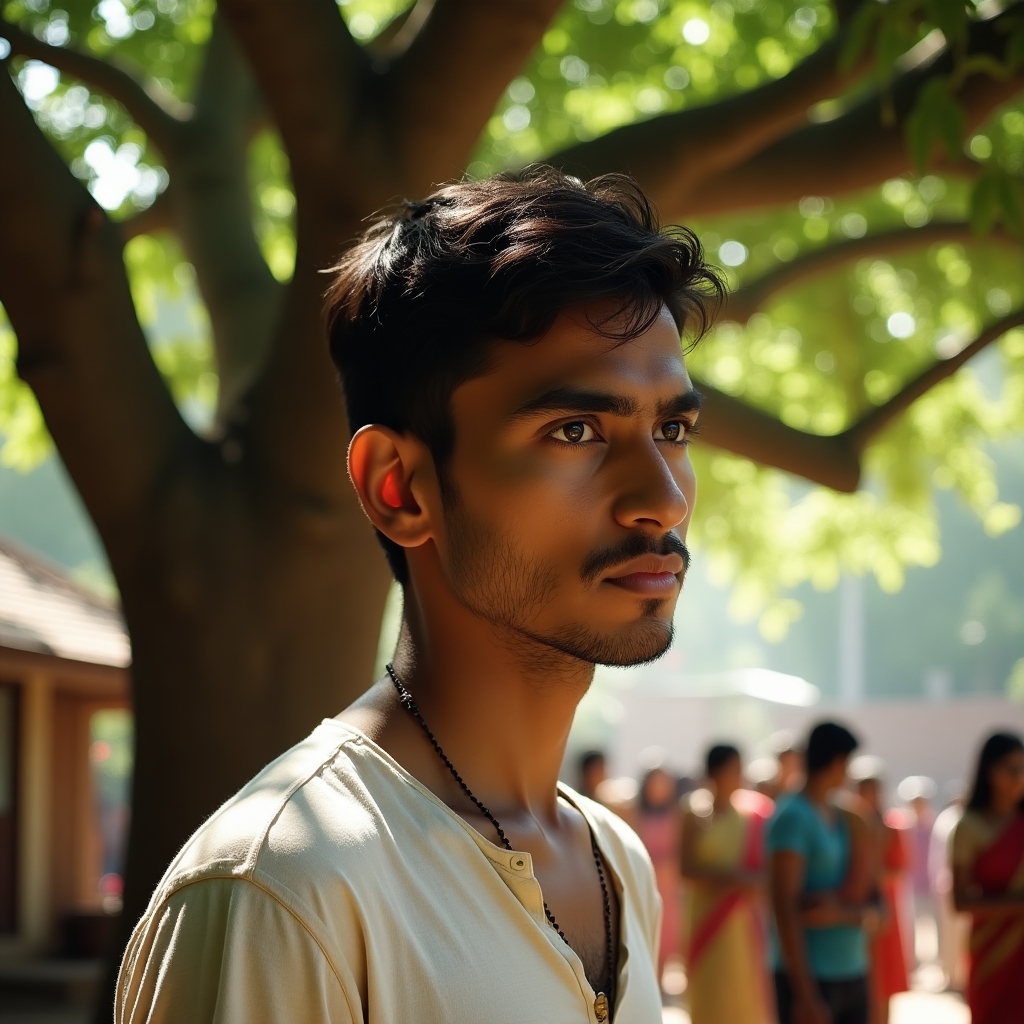
Under the sprawling shade of the ancient banyan tree in his mother’s garden, Arun sat cross-legged, tracing patterns in the sand with an absent mind. The thick, gnarled roots twisted fervently around him, a reminder of the deep roots of tradition and expectation that had defined his life. The tree, a symbol of ancestral wisdom and familial obligation, seemed to breathe its presence into every thought, every whispered memory.
Arun was a young man of twenty-four, a recent graduate with a degree in architecture, yet his life felt like a blueprint drawn by someone else’s hand. His family, deeply rooted in the traditions of their South Indian heritage, had expectations that he would continue the family business—a thriving textile company that served as both legacy and burden. Each thread of expectation was woven tightly with love, history, and an unspoken demand for loyalty.
In the eve-colored light of the garden, Arun felt the weight of his family’s dreams pressing him down, a quiet yet relentless pressure. His parents, particularly his father, were woven into the very fabric of the community, respected and revered. They had worked tirelessly to build a life around the business, and now they looked to him to carry that mantle forward.
Yet, Arun’s heart beat to a different rhythm. He envisioned spaces, structures that spoke of innovation, of blending tradition with modern utility. In college, he’d found joy in designing libraries and community centers, places where people could come together and share stories under a common roof—a different kind of legacy.
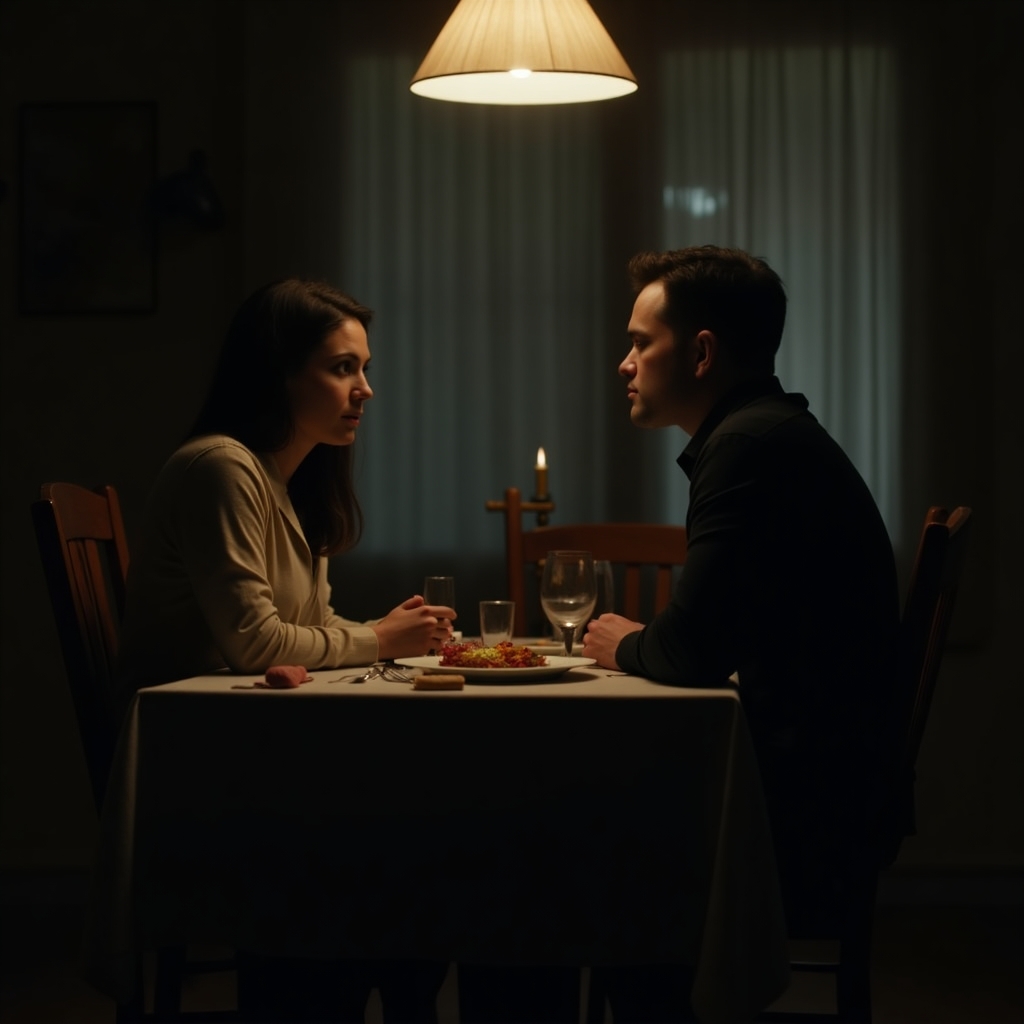
But in the presence of his family, words of dissent caught in his throat like dry leaves in the wind. He remained silent, nodding at dinner conversations, attending meetings at the textile factory, learning the trade out of obligation, not passion. His voice was a murmur in the cacophony of family expectations.
The psychological tension of his predicament was subtle, a threadbare cloth stretched too thin. He carried it in the slight stoop of his shoulders, in the quiet sighs that escaped when no one was around to hear. His mind was a constant battlefield, where duty and desire clashed like distant drums in the night.
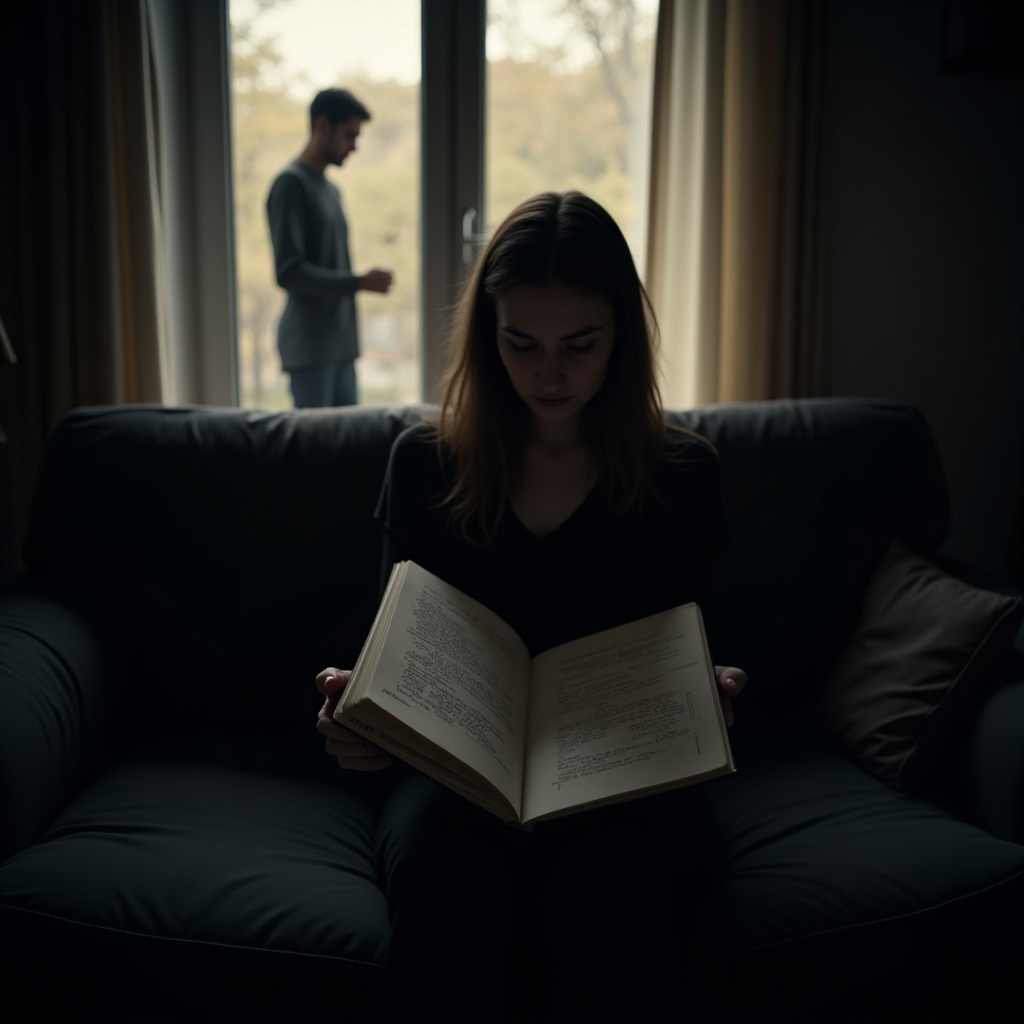
Arun’s only reprieve was his sketchbook, hidden away in his room like a secret lover. Each page was filled with blueprints and sketches, buildings that stretched towards the sky, yearning for light and space. These drawings were his whispers of rebellion, spoken to himself in the solitude of midnight hours.
The turning point came unexpectedly, as moments of clarity often do. It was during a family gathering in the garden, under the watchful branches of the banyan. Relatives had come from near and far, filling the air with laughter and stories, their voices mingling with the scent of jasmine and spices.
Arun watched his father, the patriarch, storytelling with animated gestures, his eyes alive with the passion of a man who had lived his dream. In that moment, a pang of realization struck Arun like a sudden summer storm. He saw a lifetime of dedication etched in his father’s features, yet he also saw the flicker of unfulfilled dreams in his own reflection.
Silence enveloped him, a cocoon of introspection amidst the vibrant chaos. The banyan tree, witness to generations, seemed to rustle a message just for him. It was a reminder that the roots of tradition could also provide nourishment for new growth. Arun understood then that his truth wasn’t a betrayal of his family’s values, but a continuation of them.
He stood up, brushing sand from his clothes, feeling the weight of his decision settle in with surprising gentleness. The banyan’s shadow lengthened as if to embrace him. He approached his father with measured steps, heart pounding with the courage he had long cultivated in silence.
“Appa,” he began, his voice steady yet infused with emotion, “I’ve been thinking about my future, about our family’s legacy. I want to honor what you’ve built, but in a way that is true to who I am. I see architecture as my path, a way to connect community and tradition in new forms.”
His father paused, the world seeming to still around them. Arun saw surprise in his father’s eyes, but also a glimmer of understanding, a silent acknowledgment of the courage it took to voice such a truth.
In that moment, Arun felt a release, a gentle untangling of the emotional binds that had held him. The banyan tree above seemed to sigh in relief, its leaves whispering secrets of acceptance and rebirth.
Arun’s journey was just beginning, but the first steps had been taken with a heart unburdened, guided by the gentle strength of personal and ancestral truth.
Beneath the sacred banyan, a new branch of Arun’s story reached for the sun, nourished by the roots of his past and the promise of his future.