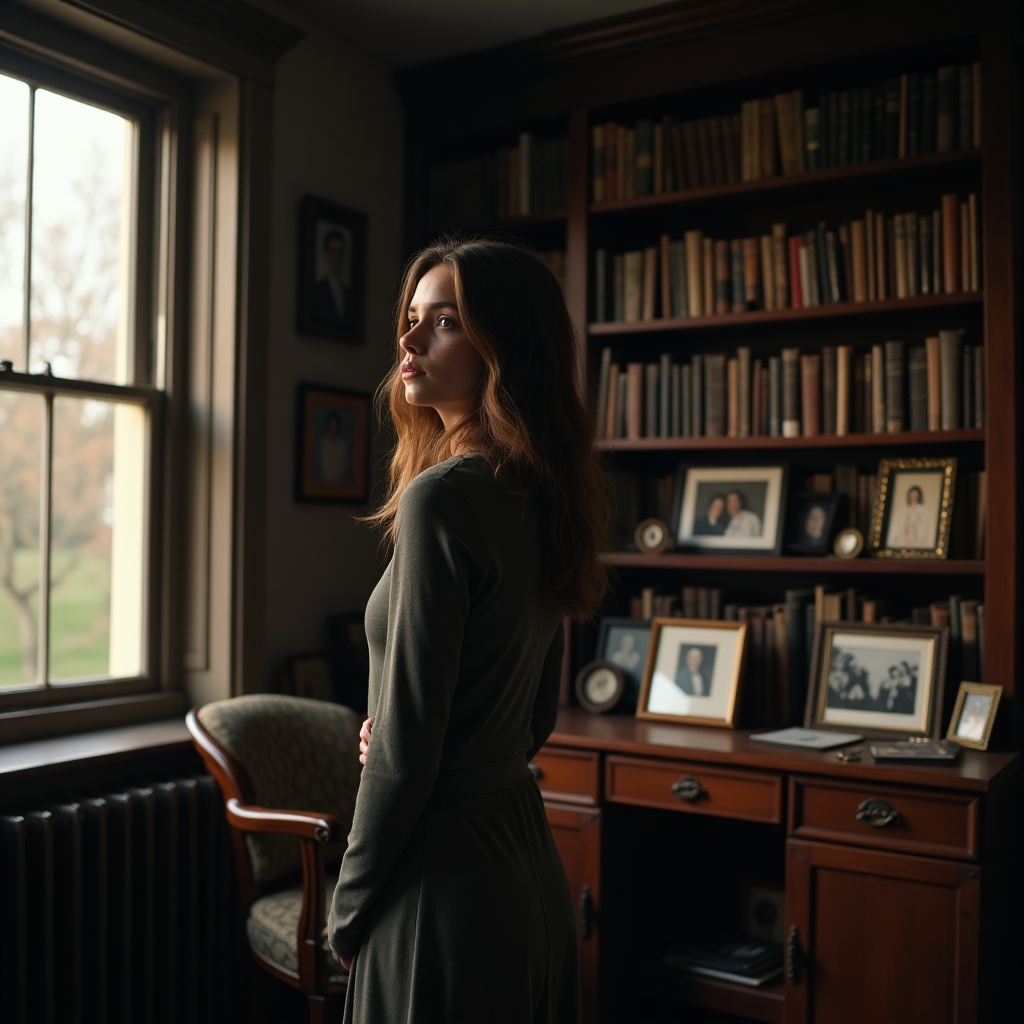




In the small coastal town of Greenwood, where the scent of the sea mingled with the fresh aroma of pine, Sarah lived a life that seemed serene from the outside. To the untrained eye, her days were a seamless loop of routine and quiet endurance. She worked as a librarian at the local library, a place she once loved for its silence but now found stifling. At home, her husband, Mark, was a good man by all traditional accounts. He provided, he didn’t raise his voice, and he rarely asked for more than what seemed reasonable.
But Sarah felt encased in a bubble of unspoken expectations. Her family had always emphasized the importance of being understanding and accommodating. Over the years, she had learned to suppress her own needs, her own desires, fearing that expressing them might disrupt the fragile peace she had worked so hard to maintain.
It was a Tuesday morning when something shifted. Sarah was shelving books when she stumbled upon an old, tattered copy of “A Room of One’s Own” by Virginia Woolf. Her fingers traced the embossed title, and as she opened the book, she was struck by a line that seemed to leap off the page: “For most of history, Anonymous was a woman.”
The words lingered in her mind long after she had closed the book and resumed her work. That evening, as she prepared dinner, she felt a strange courage brewing in her chest. Mark came home, placing his briefcase on the table with the same tired sigh that had become part of their evening ritual.
“How was your day?” Sarah asked, mechanically.
“Same as usual,” Mark replied, not looking up from his phone.
They ate in silence, the clinking of cutlery against plates the only sound between them. After dinner, Mark turned to her, “I might have to go to Chicago next week, just for a few days.”
“Oh,” Sarah said, feigning nonchalance. “Will you be back by the weekend?”
“I think so, but you know how these things go,” he replied, his voice trailing off.
Sarah nodded, but something inside her stirred. She watched him settle into the sofa, his attention already absorbed by the evening news. She felt a pang of loneliness, a deep yearning for something she couldn’t yet name.
The following morning, Sarah lingered at the library before opening, standing by the windows that overlooked the ocean. The sky was an endless expanse of gray, the kind that promised rain. She turned her attention back to her tasks, but as she worked, she couldn’t shake the feeling that she was standing on the edge of something.
Later that day, Mrs. Eldridge, a regular visitor, engaged Sarah in an unexpected conversation. “You have such a good aura about you, dear,” she said, her eyes twinkling behind her glasses. “Always so helpful and calm.”
Sarah smiled politely, but Mrs. Eldridge’s words pierced through her like a needle. Always so helpful. Always so calm. She wondered if that was all there was to her.
That evening, after Mark had retired to bed, Sarah found herself drawn to the book again. She read late into the night, Woolf’s words weaving into her thoughts like an insistent whisper. The realization dawned on her slowly, like the rise of the morning sun—she had been living a life dictated by others’ expectations, a life where her own voice had been drowned out.
A week passed, and Mark left for his trip. The house felt lighter in his absence, the air more breathable. One afternoon, Sarah received a call from her sister, Claire.
“Hey, Sar,” Claire’s voice crackled through the line. “I was thinking we should get together this weekend. You know, just us girls.”
Sarah hesitated, feeling the familiar pull to comply. But then, she remembered the feeling of standing on the precipice, the words she had been immersing herself in every night. “Actually, Claire, I think I’m going to take this weekend for myself,” she said, her voice steady.
“Oh,” Claire replied, surprise evident in her tone. “Everything okay? You’re always up for a get-together.”
“I know,” Sarah said, a small smile playing on her lips. “But I think it’s time I made some space for myself.”
After hanging up, Sarah felt an unfamiliar lightness. It was a small step, but it felt like she had reclaimed a piece of herself. That weekend, she packed a small bag and drove out to the coast. She walked along the shore, the waves crashing at her feet, the salty breeze tousling her hair.
As she stood there, gazing out at the vast, open sea, Sarah felt a newfound sense of liberation. She was no longer just a wife, a sister, or a daughter defined by familial roles. She was Sarah, a woman with her own desires and dreams. She realized that reclaiming her autonomy wasn’t about grand gestures; it was about these small, decisive moments where she chose to honor herself.
Sarah returned home feeling rejuvenated and at peace. When Mark returned, he noticed the change in her. “You seem different,” he said, a hint of curiosity in his eyes.
“I am,” Sarah replied confidently. “And it feels good.”