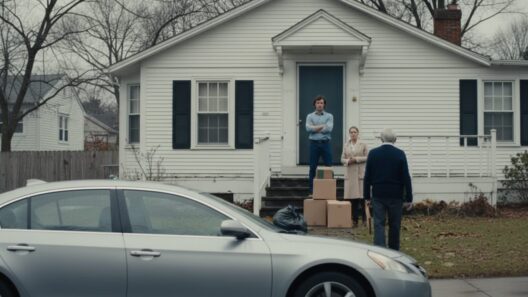
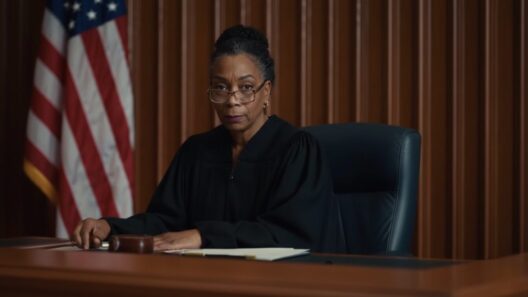
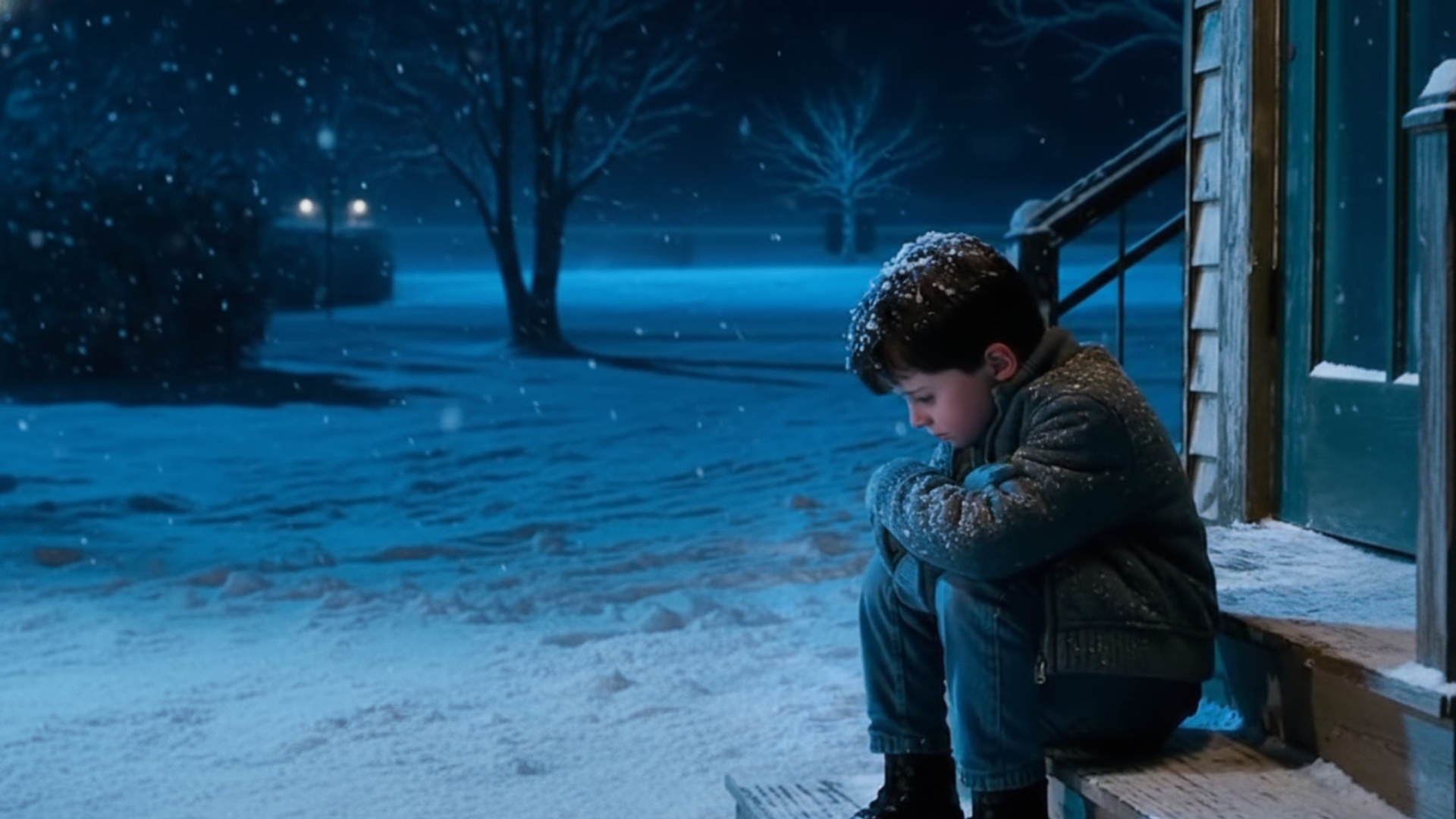
He found a little girl half-frozen on his porch in the middle of the worst blizzard in fifty years…
But when her “loving” aunt came to claim her the next morning, the old sheriff realized this child was worth killing for. Full story in the comments
On the edge of a small Montana town, the wind screamed across the open plains, driving sheets of snow against the windows of an aging ranch house. The thermometer nailed crookedly to the front porch read ten below zero and still sinking. Inside, Daniel Harper, seventy-three, ex-sheriff of Grayridge County, watched the numbers without much interest.
Christmas Eve, the calendar said.
Just another night, he thought.
The fire in the stone hearth hissed and cracked, casting a warm glow across a living room that felt too big and too empty. Since his wife, Rose, died four years ago, holidays were just darker days with louder memories. The photo frames on the mantel—wedding day, first Christmas, their daughter as a baby—stabbed at him whenever he looked too long.
Daniel poured two fingers of rye into a heavy glass and left the second glass beside it, untouched, as he’d done every December 24th since Rose passed. Habit, or maybe penance. He lowered himself into his leather armchair with the reluctant crack of old joints.
Outside, the storm deepened. The weather radios had been howling about “the cold front of the decade” all afternoon. For once, the weathermen weren’t exaggerating. White swallowed everything beyond the yard light. The world ended at his fence line.
Thud.
The sound came from the front door. Heavy, dull. Not a branch. Not the rattle of loose siding.
Daniel froze, glass halfway to his lips.
Then came a faint, dragging scrape, low against the wood. A weak, rhythmic scratching, like fingernails over sandpaper.
He set the glass down and reached for the object that still felt as natural in his hand as it had thirty years ago—the blackened oak cane hanging off the side table. The cane’s handle had been carved from the grip of his first service revolver. Old sheriffs didn’t retire; they just found new ways to lean on the past.
Muttering under his breath, he crossed the hall, every step echoing in the quiet house. He flicked on the porch light. Snowflakes whirled in the frosted glass like a shaken snow globe.
“Probably a damn raccoon,” he growled to no one.
He unlatched the chain, twisted the deadbolt, and yanked the door open—
—and the storm roared into the house like a living thing. Freezing air knifed into his lungs. Visibility was nearly zero, just a wall of white swirling under the yellow porch light.
Daniel squinted against the blast and was about to slam the door when he looked down.
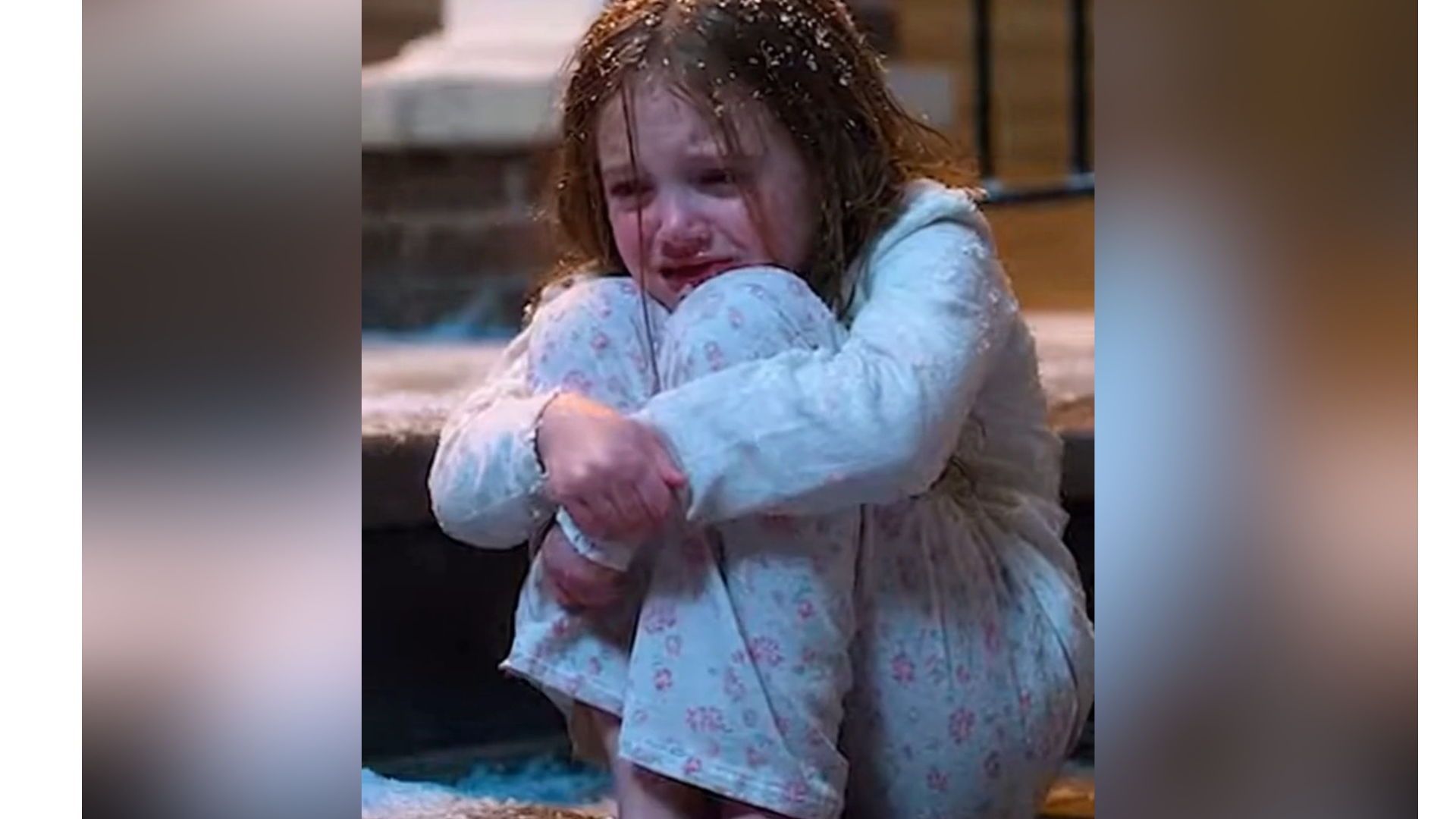
There, half-buried in a drift on the welcome mat, lay a tiny shape wrapped in a cheap purple coat. One small hand poked out, fingers stiff, skin gone the color of candle wax. A knit hat with a cartoon fox was caked in ice.
For one suspended second, his mind refused to process what he was seeing.
Then the training kicked in.
“God in heaven,” he rasped, dropping the cane.
He knelt, ignoring the explosion of pain in both knees, and scooped the bundle into his arms. It was feather-light. Too light. A little girl, maybe five, her lashes frozen together, lips blue. One boot was missing. Her other sock was soaked through and rimed with frost.
Daniel kicked the door shut with his heel and carried her straight to the fire. He laid her on the faded rug, his breath coming harsh and fast.
“Hey. Hey, sweetheart. Can you hear me?” His voice sounded strange in his own ears—urgent, high, nothing like the steady baritone witnesses had trusted for decades.
No response. Her chest rose in shallow, stuttering breaths. Frost clung to the collar of her coat. He fumbled with the zipper, his stiff fingers clumsy with panic, and peeled the wet fabric away. Underneath, she wore thin flannel pajamas patterned with dancing polar bears.
Pajamas. In a blizzard.
“Who left you out there?” he muttered, more to the walls than to her.
He wrapped her in the thick wool blanket from his armchair, tucking it around her like a cocoon, then sprinted—or what passed for sprinting at his age—to the kitchen. The old landline hung on the wall, its curly cord tangled.
He dialed 911 with shaking fingers.
A click. Then a static cough. Then nothing.
He tried again. And again.
The storm had taken the lines down.
“No, no, no,” he hissed, slamming the receiver back into the cradle. The nearest hospital was forty miles away. The snowplows wouldn’t come until morning, if they came at all.
He hurried back to the fireplace and lowered himself to the floor beside the girl. He pulled her against his chest, feeling the eerie cold through the layers of blanket. He pressed her icy cheek against his flannel shirt and wrapped his arms around her small frame.
“Come on, kiddo,” he murmured into her hair. “You don’t quit on me. Not tonight.”
He rocked her slowly, eyes locked on the flames licking at the logs. Memories he’d spent years burying surfaced anyway: the first time he’d hauled a body out of a snowbank, the shaking hands of a mother who’d been too late, the little pine box at Rose’s funeral when their baby hadn’t made it to her first Christmas.
He whispered the only prayers he still remembered. They tasted strange, like words from someone else’s life.
Minutes stretched into an hour. The wind screamed, rattling the old house, but inside, the fire fought back.
Just when dread settled like lead in his stomach, the small body in his arms convulsed with a weak cough. Then another. The girl’s eyelids fluttered, breaking the thin ice. Slowly, impossibly, she pried them open.
Eyes, big and gray as storm clouds, stared up at him. They weren’t grateful. They were terrified.
“You’re all right,” Daniel said, his voice breaking. “You’re safe. I’ve got you.”
Her gaze darted past him, toward the front door, then back to his weathered face. Her teeth chattered so hard her whole body shook. When she tried to speak, only a rasp came out.
He leaned closer. “What is it? Where’s your mom?”
Her eyes unfocused, as if she were seeing something miles away, or deep inside her memory. Her lips barely moved.
“M-mom… she’s… cold,” the girl whispered.
A single tear slid from the corner of her eye, freezing almost instantly.
Then she sagged against him, slipping into a heavy, exhausted sleep.
But she was breathing.
Daniel Harper, who had once held murderers’ confessions without flinching, now sat on his living room floor clutching a stranger’s child while the clock over the mantle ticked past midnight into Christmas Day.
He didn’t know her name. He didn’t know who had abandoned her on his porch in a death-blizzard.
But as his gaze fell on the faint, finger-shaped bruises around her small wrists, something ancient and dangerous stirred in his chest.
The Sheriff hadn’t retired after all.
Chapter 2: The Performer
By ten the next morning, the storm had broken, leaving the world buried under a deceptively beautiful blanket of white. Sunlight bounced off the drifts, blindingly bright. Snowplows finally groaned their way up the rural road that led to Daniel’s ranch.
Inside, the house felt different. Alive.
The girl—he’d found a name tag sewn clumsily into the lining of her coat: “MIA”—sat on the couch, wrapped in the same wool blanket. Her cheeks had some color now. She stared at the muted TV without really watching it, fingers clenched in the fabric.
She hadn’t spoken again. She hadn’t cried either. She just… hovered there, like she wasn’t sure she was allowed to exist.
Daniel brought her a mug of warm cocoa, more milk than chocolate, just the way Rose used to make it for the kids who passed through his office on bad days.
“There you go,” he said, setting it on the coffee table within her reach. “Don’t burn your tongue.”
She didn’t move to take it, but her eyes flicked to the steam.
When the rumble of an engine pulled into his driveway, Daniel glanced through the front window. A county SUV, snow-caked and idling. A young deputy climbed out, stomping through the drifts.
Ethan Cole. New blood. Barely out of the academy. Daniel had trained him for all of three months before hanging up his badge.
Cole tipped his hat when Daniel stepped onto the porch.
“Sheriff—uh, Mr. Harper.” He corrected himself quickly. “You called in about a child?”
“Inside,” Daniel said. “Found her on my porch just before midnight. Half-frozen.”
Cole’s expression shifted from polite to horrified. “We’ve been looking for her all night. There was a wreck out on Route 12, two miles east. Car went nose-first into the ravine. Driver didn’t make it. We thought there was a kid with her but couldn’t find any tracks in that mess.”
“The driver?” Daniel asked. But his gut already knew.
“Female. Early thirties. No ID on her, but the car’s registered to a Laura Keene.” Cole rubbed a gloved hand over his jaw. “We found empty prescription bottles all over the passenger floor. Oxy, benzos. Looks like she was riding the edge and finally went over it. Literally.”
“Pills,” Daniel repeated quietly.
“Yeah. Sad story, but not exactly rare,” Cole said with a tight shrug. “We figured she wrapped the car around a tree high as a kite and the kid either wasn’t real or already wandered off and…” He caught himself, glancing past Daniel toward the house.
“And froze to death,” Daniel finished for him.
Cole swallowed. “She’s really in there?”
“She is.” Daniel’s eyes hardened. “And she didn’t wander here on her own. There were no tracks when I opened my door. Snow was beating sideways. Somebody carried her, dropped her, and drove off before the drifts covered their tracks.”
Cole shifted uncomfortably. “Maybe she ran from the crash? Kids do crazy things when they’re scared.”
“In ten below, in pajamas, across two miles of open field, uphill?” Daniel’s tone sharpened. “A five-year-old doesn’t make that walk. Not with all ten toes still attached.”
Cole looked down, chastened. “Well, Social Services is swamped. Half the county’s power is out, and the main road into town’s barely passable. They asked if you could keep her here until they can send someone this afternoon. Or I can take her back to the station, but the heat’s spotty there.”
“She stays here,” Daniel said without hesitation. “You tell them the old man still remembers how to heat a house and warm up a scared kid.”
Cole nodded, relieved. “Yes, sir.”
Three hours later, just as Daniel finished coaxing Mia into eating half a grilled cheese sandwich, another vehicle rolled up his driveway.
This one wasn’t county-issue. A sleek black SUV, tires chewing confidently through the packed snow. The kind of car you didn’t see much this far from the highway.
A woman stepped out, immaculate despite the weather. Her tan wool coat was tailored, her boots leather and expensive, her dark hair twisted into a perfect chignon. Sunglasses covered most of her face, though the sky had long since clouded over.
Daniel recognized her before she even shut the door.
Victoria Lane.
Real estate queen. Philanthropist. The woman who’d bought up half the town, turned old ranches into vacation rentals, and slapped her name on the new library for good measure. To most of Grayridge, she was a savior.
To Daniel, she was a giant smile hiding a ledger.
She rushed up the walk toward Cole, who’d just stepped outside to meet her.
“Deputy Cole,” she cried, voice already trembling with curated grief. “They said at the station—Laura—my sister—” Her legs “buckled,” and she clutched at Cole’s arm like she might collapse.
Daniel watched from the porch, expression unreadable.
“I’m so sorry, Ms. Lane,” Cole said awkwardly, holding her up. “We… we did everything we could.”
“She was troubled,” Victoria sobbed, just loud enough for Daniel to hear. “I begged her to get help. She had… issues with medication. But she wouldn’t listen. And Mia—oh God, where is Mia?”
Cole gestured toward the house. “Mr. Harper found a girl on his porch last night. She matches the description. About five, brown hair—”
“That’s her.” Victoria straightened a fraction too fast. The raw grief smoothed at the edges. “Thank God. At least my niece is alive.”
She turned to Daniel, stretching out a manicured hand. “You must be Mr. Harper. You’re the hero who saved her. I don’t know how to thank you.”
He didn’t take her hand.
“She’s inside,” he said flatly. “Hasn’t said a word since she woke up.”
“Trauma,” Victoria said, nodding with the authority of someone who had read about it in an article once. “I have the best child psychologists on call in the city. I’ll take her back with me. We’ll fly down first thing tomorrow.”
“She’s in no shape to travel,” Daniel replied. “Roads are still slick. Storm’s not fully passed. She needs rest, not airports.”
“I understand your concern,” Victoria said, her smile tightening, “but I’m her only remaining family. I spoke with Judge Harmon on the phone. He’s arranging an emergency guardianship order. I’ll bring the paperwork tomorrow, but in the meantime, I’m taking my niece home.”
She stepped forward.
Daniel shifted to block the doorway.
“That doorstep nearly killed her once,” he said calmly. “She’s not crossing it again until this is done by the book. The coroner hasn’t finished with the crash scene. Social Services hasn’t interviewed her. Judge Harmon doesn’t sign anything without paperwork, and you know it.”
For a heartbeat, something flickered behind Victoria’s eyes. The soft, grieving aunt vanished. In its place, Daniel saw a flash of cold, hard calculation.
“Mr. Harper,” she said, dropping the sweetness from her tone, “I appreciate your… country justice. Truly. But this is a family matter now. I won’t be kept from my sister’s child by some retired lawman playing hero.”
“You will be kept from her by the law you think you own,” he replied. “Come back tomorrow with real papers. I’ll still be here.”
They locked eyes.
Then Victoria smiled again, bright and brittle. “Of course. We all want what’s best for Mia.” She turned to Cole. “Deputy, I assume you’ll escort me to town? I have to make arrangements… for my sister.”
“Yes, ma’am,” Cole said, clearly relieved the confrontation hadn’t escalated.
As Victoria glided back to her SUV, Daniel watched the perfect line of her shoulders, the measured steps, the way she didn’t once glance toward the house where her “beloved” niece supposedly sat trembling.
He went back inside.
Mia had pulled the blanket over her head.
“Do you know that lady, kiddo?” he asked gently.
The blanket trembled. A small head shook fiercely from side to side under the wool.
Daniel’s jaw tightened.
This wasn’t an accident. And he suddenly knew, with the cold certainty of a man who’d seen too many bodies on the roadside, that the story of Laura Keene and her pills was only the surface.
Chapter 3: The Will and the Warning
Night fell early, as it did in winter. The storm’s edge had moved on, leaving a clear, bitterly cold sky and a silence so deep it rang in Daniel’s ears.
He made soup—simple chicken noodle from a can, dressed up with fresh thyme. Mia ate two bowls, methodically, eyes never leaving the spoon. Hunger, at least, was stronger than fear.
While she finished, Daniel took her thawed coat from the back of a chair. Something small and metallic glinted inside the inner pocket.
He reached in and pulled out a locket. Silver, worn, the clasp slightly bent. It didn’t look like the kind of jewelry you bought; it looked like something you held onto.
He clicked it open, expecting to see a faded photo of a smiling mother.
Instead, he found a tiny folded scrap of paper and a photo so recent the edges were still sharp.
The photo was of a house.
This house.
His breath hitched.
Hands suddenly clumsy, he unfolded the paper. On it, in hurried, shaky handwriting, were eleven words that yanked the ground out from under him:
“If anything happens to me, take Mia to Sheriff Harper.”
Below that, another sentence, more cramped, as if written in a hurry: “He is the only man here who won’t sell us.”
And then, in parentheses, underlined twice: “Don’t trust V.”
Daniel sank into the nearest chair.
Laura Keene knew him. Or at least, knew of him. He hadn’t been Sheriff in five years. He had no memory of her name crossing his desk. Yet she had told someone—maybe herself, maybe her daughter—that if the worst happened, this old house at the end of a frozen road was where safety lived.
He needed answers.
He dug through the battered metal filing cabinet in his study, the one he’d never quite gotten around to emptying. Names, dates, old case numbers—then, a familiar one.
Lane, Jeremiah.
Victoria’s father.
Dead six months now, after a long illness. He’d owned ranches, motels, half the strip of shops on Main Street. The town had held a memorial for him big enough to choke the church parking lot twice.
Tucked behind that file, folded neatly, was another: Keene, Laura.
Ten years ago. Domestic disturbance. He skimmed.
A scared young woman reported her live-in boyfriend for threatening her with a gun. The boyfriend happened to be Jeremiah Lane’s nephew. Charges mysteriously dropped after she “changed her statement.”
Laura Keene. Then twenty-three.
He flipped back to the Lane file. In the attached notes on the estate, one line stood out, written in the neat, precise scrawl of Judge Harmon’s clerk:
“Primary beneficiary: granddaughter, Mia Keene, to receive controlling interest of estate at age 25. Interim control: held in trust. In absence or death of primary beneficiary, all holdings revert to surviving child, Victoria Lane.”
The paper slipped from his fingers.
It wasn’t pills.
It was millions.
Daniel picked up the kitchen phone again and dialed a direct line, one he still remembered better than his own.
“Grayridge County Courthouse, records,” came a familiar voice.
“Sam. It’s Harper.”
There was a pause. “Danny? Retirement not suiting you?”
“Need a favor. Jeremiah Lane’s probate. Tell me I’m misreading it.”
Paper rustled over the line. Then a whistle. “You’re not. Girl’s set to inherit just about everything. Victoria’s executor until then, but if the kid… well, if she’s not around anymore, it all slides back to Victoria, slick as ice off a windshield.”
“Any life insurance on the mother?” he asked, already knowing the answer.
“Couple of modest policies. Nothing big. Why?”
“Because Laura didn’t die for an insurance check,” Daniel said quietly. “And I’m starting to think that wreck on Route 12 looked a little too convenient.”
In the living room, the TV hummed softly. Mia was drawing on a scrap of paper he’d given her, the locket now clutched tight in her small fist.
He knelt beside her.
“Mia,” he said. “Can you talk to me for a minute?”
She tensed, eyes darting to his face, then to the door, then back. Slowly, she nodded.
“Did your mom drive the car last night?” he asked, keeping his voice low and even.
Mia’s lips trembled. She shook her head.
“Who was driving?”
She swallowed so hard he could see her throat work. When she finally spoke, her voice was rough, like it scraped the inside of her chest on the way out.
“Aunt Vicky.”
The room seemed to tilt.
“Victoria drove,” Daniel repeated. “Were you in the back seat?”
Mia nodded, tears welling. “Me and Mommy. Mommy was crying. Aunt Vicky said we were going to a new house. A better house. With a big yard.”
“What happened then?”
Mia’s hands clenched into fists, crumpling the corner of her drawing. “The car stopped. Aunt Vicky got out. She opened Mommy’s door. They yelled. Mommy said ‘you can’t do this’ and Aunt Vicky said ‘I have to, for all of us.’”
“And you?” Daniel asked, his voice like glass. “What did she say to you?”
“She opened my door and took off my seat belt.” Mia’s tears spilled over, tracking down her cheeks. “She said, ‘Come on, sweetheart, we’re going to play a game. You have to be brave. Run up the hill. Run to the lights. Sheriff Harper will help you.’”
Daniel’s heart stuttered.
“Did you run?” he asked.
Mia shook her head. “It was cold. I was scared. I… I couldn’t move. Mommy screamed my name. Aunt Vicky picked me up and put me in the front seat, next to Mommy. She gave Mommy something in her hand. Pills. Mommy said no, but Aunt Vicky shoved them and then she…” Mia gasped, the memory overtaking her. “She pushed. The car went b-bye…”
Her small body folded in on itself. Daniel gathered her gently into his arms, letting her sob into his shoulder.
“And how did you end up on my porch?” he asked after a long moment, when her breathing had steadied.
Mia’s voice dropped to barely a whisper. “Aunt Vicky pulled me out before the car fell. She put me in her big car. We drove a long time. Then she stopped here. She carried me to your door and put my hand on the wood. She said, ‘Stay right here. The cold will make you sleepy. When you wake up, everything will be better.’”
Daniel closed his eyes.
Victoria hadn’t just tried to kill her sister. She had delivered her niece like a package to the one place in the county far enough from anyone else that a small body could vanish under drifts before sunrise.
And she’d done it under Daniel Harper’s porch light, banking on the idea that the old hermit inside wouldn’t open his door for anyone anymore.
She had miscalculated.
Chapter 4: The Standoff
Dawn on Christmas morning came clear and brittle. Frost glittered on every branch, every fencepost. Under the blue sky, the world looked almost innocent.
Daniel sat at the kitchen table, an old service revolver laid out in front of him. He hadn’t fired it in years, but his hands still knew the ritual. Check the barrel. Spin the cylinder. Six rounds. Enough.
He wasn’t planning to shoot anyone, he told himself. But planning had very little to do with why the gun ended up within arm’s reach.
In the pantry, the cellar door stood closed. Behind it, Mia sat on a pile of old quilts with a flashlight, a stack of coloring books from the box Rose used to keep for visiting nieces and nephews.
“You stay down there until you hear my voice,” he’d told her. “Not a knock. Not anyone else. My voice. Understand?”
She’d nodded, fear and trust warring in her eyes.
Now, as he sipped coffee that had long gone lukewarm, the crunch of tires on snow drifted through the quiet.
Daniel stood and looked out the front window.
The black SUV again. But this time, it wasn’t alone.
A white van followed it, the logo of a private “behavioral health center” stamped on the side. Two burly men in matching navy jackets climbed out. They had the loose, bored stance of hired muscle who thought they were above their job.
Victoria stepped from the SUV buttoning a dark coat, a folder tucked neatly under her arm.
She climbed the porch steps, her breath puffing in delicate clouds. When Daniel opened the door before she could knock, she smiled like she was greeting an old friend.
“Good morning, Mr. Harper,” she said brightly. “I brought the court order. Emergency guardianship. Judge Harmon signed it himself. These gentlemen are here to transport Mia to a specialized facility. She’s been through a terrible trauma. She needs professionals, not… this.” Her eyes flicked over his worn furniture, his old flannel shirt.
“Funny thing,” Daniel said mildly. “Judge Harmon called me early. Wanted to wish the old Sheriff a Merry Christmas. He mentioned your little late-night request.”
Victoria’s fingers tightened on the folder.
“You don’t have any authority anymore,” she said softly. “This isn’t your fight. Hand over the child, and you can go back to your… retirement.”
“And you can go back to spending money that isn’t yours?” Daniel asked. His voice had a strange calm to it, the stillness right before a storm front hits. “No. I don’t think so.”
The mask slipped.
For the first time, Victoria Lane stopped pretending.
Her smile vanished. Her eyes cooled into flat, dark stones.
“Do you have any idea who you’re crossing?” she asked. “You think anyone’s going to believe a washed-up cop and a traumatized five-year-old over me? I built this town. I fund its schools, its food pantry, its hospital wing. Without the Lane Foundation, Grayridge dies.”
“You don’t build a town,” Daniel said. “You just bought it cheap when folks were desperate. Laura’s kid was never supposed to see twenty-five, was she? But you got greedy. You couldn’t wait.”
Victoria’s jaw tightened. “Last chance. Step aside.”
The two men from the van moved up the steps, big shoulders filling the doorway. One of them glanced uneasily from Daniel to Victoria, sensing tension but not understanding its depth.
Daniel didn’t back up.
“I called in a favor too,” he said. “State Police out of Billings. Captain owes me his career. They’re on their way with a forensics team. Seems awful curious that a car registered to a multi-million-dollar estate holder went into a ravine the same night her heir nearly froze to death on my porch.”
Victoria flicked a glance at the empty road. “You’re bluffing.”
“Maybe,” Daniel said. “But in the meantime—Mia stays here. You take one step over this threshold, and I will consider you a threat to a minor under my protection. Badge or no badge, that still means something to me.”
She laughed then, a short, sharp sound. “You’re shaking,” she said, eyes raking over the revolver suddenly visible at his hip. “You won’t fire that. Your hands probably can’t even hold it steady.”
“I’m shaking because I’m angrier than I’ve been in ten years,” he replied. “And I’m working real hard not to do something we’ll both regret.”
Her composure finally cracked.
With a hiss of pure rage, Victoria lunged.
She went for the gun first, fingers clawed, nails raking across his hand. Pain flared up his arm. The revolver clattered down the wooden steps into the snow. One of the orderlies swore and jumped back, not wanting any part of a weapon in the mix.
Daniel grappled with her, surprised by her strength. She was a decade younger, fueled by panic and entitlement. But he wasn’t fighting for a paycheck or a reputation.
He was fighting for a little girl sitting in his cellar, listening to every sound overhead, waiting for the voice he’d promised.
He twisted, leveraging her arm the way muscle memory taught him, pinning it behind her back. She shrieked, kicking at his shins.
He forced her down onto the porch railing, holding her there as sirens wailed faintly in the distance.
Closer. Louder.
The blue-and-red flicker of cruisers washed over the white yard like a second dawn.
Deputy Cole was the first up the walk, his eyes wide as he took in the scene: the van, the gun half-buried in the snow, the town’s wealthiest woman snarling under the grip of a seventy-three-year-old man.
“Get cuffs on her,” Daniel barked. The command voice slipped out without his consent. “And call the Captain. Tell him to bring his people and a warrant. Start with her SUV. Passenger side. Then the ravine.”
Victoria thrashed, eyes wild. “You have no proof! You have nothing!”
Daniel leaned down, his breath misting near her ear. “You left your proof in a five-year-old’s coat pocket,” he said. “And she lived long enough to tell me exactly who drove that car.”
Her fight went out of her then, replaced by a quiet, simmering hatred that scared him more than the outburst.
But it was too late.
The storm, both outside and inside the Lane family, had finally broken.
Chapter 5: After the Freeze
The trial broke Grayridge in ways no blizzard ever had.
Details spilled out that made even hardened ranchers go quiet in diners. Financial records. Surveillance footage. Forensic evidence that told a story more damning than any witness.
Mia’s fingerprints were all over the passenger door of Victoria’s SUV. Not the back seat where a child would normally ride, but the front. Laura’s so-called “suicide note,” conveniently found in her jacket pocket at the crash site, matched Victoria’s handwriting in old bank forms. A gas station camera two towns over caught Victoria buying a large bottle of vodka and three packs of pills the day before the wreck, despite having no prescriptions in her name.
And then there was Mia herself.
By the time the case went to court six months later, spring had thawed the world outside. Inside the packed courtroom, the air was thick with curiosity and something like shame.
On the stand, her legs swinging in the too-big wooden chair, Mia told her story in halting, clear words. When asked why she hadn’t died in the snow, her eyes slid briefly to the gallery, to where Daniel sat beside the county victim advocate.
“He opened the door,” she said simply. “He found me. Mommy said to go to him if something bad happened. So I did. I just… took a long time getting there.”
It sealed Victoria’s fate.
Life without parole.
The day the verdict came down, Daniel drove them home in his old pickup with the windows cracked, letting in the warm smell of cut grass. The fields that had been white and deadly that night were now green and humming with life.
Summer settled over Grayridge with a gentleness that felt like an apology.
On a late July afternoon, Daniel sat on his porch, a pocketknife in one hand, a strip of cedar in the other. The air was thick with the scent of pine and the distant sound of someone mowing their lawn. Bees drifted lazily through the wildflowers that had reclaimed his neglected front flowerbed.
Beside him, Mia hunched over her own piece of wood, tongue stuck out in concentration, her smalle
“Careful,” he said. “Always cut away from your hand, not toward it.”
“Like this, Grandpa Dan?” she asked, holding up what was, generously, the rough outline of a horse.
He took it, turning it between his fingers. The legs were uneven, the head too big, but the effort was there.
“Exactly like that,” he said. “Every good carver started with something that looked like that.”
She beamed, the kind of smile that reached all the way to those storm-gray eyes and warmed them into something new.
The town had surprised him.
Grayridge, which had once whispered about “that poor junkie Laura,” now lined up to drop off casseroles and clothes, to press envelopes with gift cards into his hand, to knit hats small enough for Mia’s head. They built her a swing set in his yard. They invited them both to barbecues, school plays, church picnics.
Daniel Harper, who had once been the gruff lawman you only approached when trouble knocked, became “Grandpa Dan” to more kids than just the one who lived in his house.
On a Sunday afternoon, as cicadas buzzed in the heat, Mia tugged at his sleeve.
“Can we go see Mommy now?” she asked.
He looked out at the lane leading to town, sunlight dappling through the cottonwoods.
“Yep,” he said, standing with only a small groan. “Think she’s due for some flowers.”
They loaded into the truck—the same old bench seat, the same cracked dashboard. Mia climbed up herself now, buckling her own seat belt, the fox hat replaced by a sunhat with daisies.
They stopped at the roadside stand where Mrs. Kellerman sold mason jars of wildflowers. Mia picked the brightest ones, insisting on extra yellow.
At the hill overlooking the town cemetery, they walked side by side, a small hand folded easily into his.
They knelt at a simple headstone bearing Laura’s name.
Mia arranged the flowers carefully, then whispered something Daniel didn’t try to overhear. Some conversations didn’t need a witness.
On the drive back, with the windows down and warm wind in their faces, Mia turned to him.
“Grandpa Dan?” she said.
“Yeah, kiddo?”
“Do you think Mommy’s still cold?”
He swallowed, the memory of that first night flashing like a ghost behind his eyes.
“No,” he said softly. “I think she’s warm now. I think she knew you made it. And that you weren’t alone.”
She smiled, satisfied.
As they bumped back down the dirt road toward the little ranch house on the edge of town—the house that had once felt like a tomb and now sounded with laughter and late-night cartoon theme songs—Daniel realized something else.
For the first time in a long time, the quiet didn’t feel like a punishment.
The winter inside him had finally started to thaw.
And on that porch, under that old, crooked thermometer, with a little girl humming to herself beside him and the town’s future dozing in the summer sun, Daniel Harper wasn’t cold anymore.