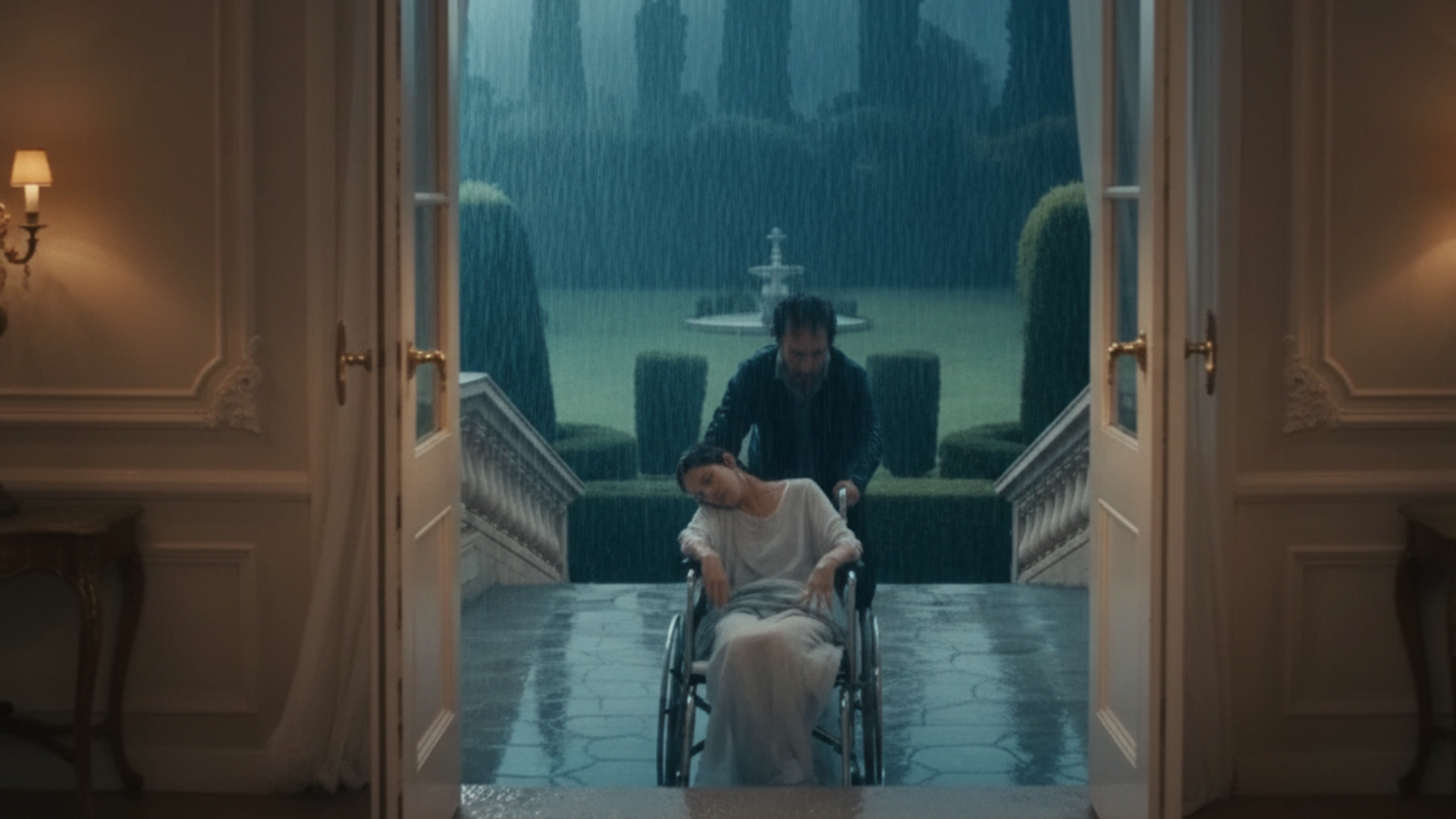

He stood under the pouring rain in a cheap jacket at the entrance to the university… and suddenly one of the strictest professors turned pale when he saw his face.
My name is Mark, and at my PhD defense most of the applause was not really for me, but for a man who technically should not even have been allowed inside.
All my life I was ashamed of his worn-out jackets covered in plaster and his calloused hands, until I realized that these very hands had turned me into a scholar.
I was born in a small industrial town where mornings began not with birdsong but with car horns and the clanging of metal at construction sites.
My father left when I was three, and all I remembered of him was the smell of cheap cologne and a blurry silhouette blocking the doorway for the last time.
My mother worked as a cashier in a 24-hour shop and came home at dawn, taking off her shoes so quietly as if she were afraid to wake her own exhaustion.
Money was always short, and school trips, new sneakers, and paid clubs existed for me only in other people’s conversations.
When I was seven, a man walked into our apartment whom my mother introduced as “Andrey, a coworker… for now.”
He wore an old checkered shirt, jeans stained with paint, and held a hard hat in his hands, nervously turning it as if he did not know where to put it.
“Hi, Mark,” he said, suddenly crouching to be at my eye level. “I’m not very good with kids, but I can fix bikes and stools. Deal?”
I only shrugged and hid behind the door, watching him help my mother carry heavy bags and silently repair the wobbly table leg that had been waiting for ‘later’ for years.
Andrey was a concrete worker in a private construction firm.
He left before dawn, came back when the few streetlights outside were already lit, and each time left by the stove a sheet of paper folded in four with big numbers on it—a table of expenses for the week.
At first he did not intrude in my life.
At most, he asked how school was and put a chocolate bar on the table if he saw an A in math in my grade book.
One day I came home from school in tears: my classmates had laughed at my old backpack with its loose threads and broken zipper.
Mom snapped, called me ungrateful, and slammed the bedroom door, while Andrey silently took an old roll of gray duct tape out of his work bag and, sitting in the kitchen, carefully “healed” my backpack.
“You know,” he said, not looking at me, “when you can’t afford something new, you just have to make the old thing stronger than it was. That’s not so bad either.”
In that moment I noticed for the first time how his work-worn, cut-up fingers trembled as he tried to make something not just sturdy, but also neat.
One evening, while I was doing algebra homework and he was scrubbing cement off his hands, I could not hold back:
“Why do you push yourself so hard every day?”
He paused, wiped his hands on an old towel, and said:
“Because one of us has to get out of here. I won’t make it in time. But you still can.”
I brushed it off. At our school almost no one ended up at university, and grad school belonged to the realm of myth.
But at some point Andrey stopped asking just “how’s it going?” and started asking “what grades did you get?” and “which subjects do you really like?”
In 9th grade I won the district physics olympiad, and he came to the award ceremony in his only clean shirt, buttoned all the way to the top, standing by the wall and trying not to step on the shining shoes of the other parents.
After the ceremony he quietly slipped a crumpled envelope into my hand. Inside were two banknotes and a small note: “It’s not much, but it would be a shame to pay less for a brain like that.”
At the end of school I got a letter: I had been recommended for a fully funded place at a technical university in the capital.
Mom read the paper, sat down right on the stool, and burst into tears, while Andrey went out onto the balcony, smoked in silence for a long time, then came back and said:
“You’ll go. We’ll figure it out.”
A week later he sold his old car, the only thing he truly ‘owned.’
I overheard him on the phone:
“Yes, Sergey, I know it’s cheap. But I need the money now, not in a month. The boy has to go.”
On the day of departure he carried a big bag in his hands—he had packed into it everything he thought a student needed: a thick sweater, a basic tool kit ‘just in case,’ a thermos, and three packs of cheap coffee.
At the train station, before I boarded, he scratched the back of his head awkwardly and said:
“Listen, Mark… I’m not asking you to call me dad. Just remember that if things get really bad—call me. I don’t get your smart stuff, but I know how to haul sacks. We won’t go under.”
I only nodded, afraid that if I opened my mouth I would not be able to hold back the lump in my throat.
When the train pulled out, I opened the food container Mom had given me and found under the mashed potatoes a small piece of paper: “Study so that my back aches for a reason.” The handwriting definitely was not hers.
Student life in the capital was another planet: bright lights, rich classmates, talk about trips abroad, and laptops more expensive than all the things in our apartment combined.
I was ashamed of my old phone and coat, but every morning I remembered that somewhere, on a freezing site, Andrey was already hauling blocks so my dorm fees and textbooks would be paid.
In my final year the head of department hinted that with a strong thesis and some conference participation there was a chance to get into a PhD program.
I went back to the dorm stunned: more years of study, more costs, and once again asking Andrey to work extra shifts?
That evening, after a long struggle with myself, I finally called him.
He picked up, and through the background noise of the site I heard his voice:
“Mark? What happened? Are you okay?”
I quickly explained the situation, bracing for a heavy sigh, money talk, pressure to give up.
Instead, he only asked:
“Do you want this? Not because it’s trendy, not because someone said so, but you yourself?”
“Yes,” I exhaled. “I do.”
On the other end there was the clatter of metal, someone calling his name, a “wait a sec,” and he came back on the line.
“Then it’s simple,” he said. “You’ll be doing the thinking, I’ll be doing the lifting. Each of us has his job. Just do yours properly—that’s the only rule.”
He hung up so fast, as if afraid I might change my mind.
The PhD years flew by in labs, libraries, and endless article revisions.
I was exhausted to the point of nausea and sometimes wanted to quit, but each time I pictured Andrey heading to work at five in the morning in winter so I could afford not only pasta and tea, but also the books I needed.
Once, when I came home for a short New Year’s break, I saw him sitting on a stool, massaging his knee, a packet of cheap painkillers open beside him.
“Injured?” I asked.
“Just slipped on the stairs,” he waved it off. “Don’t worry, I’ll stay in one piece at least until your defense.”
That was the first time I realized I talked about my defense as if it were a given.
For him it was a goal that justified dampness, aching joints, and always being called just “the worker.”
The day of the defense came on a spring morning.
The hall was full—students, lecturers, a couple of people from the administration, my mom clutching a tiny handbag, and… Andrey, whom I had finally convinced to attend after his long resistance.
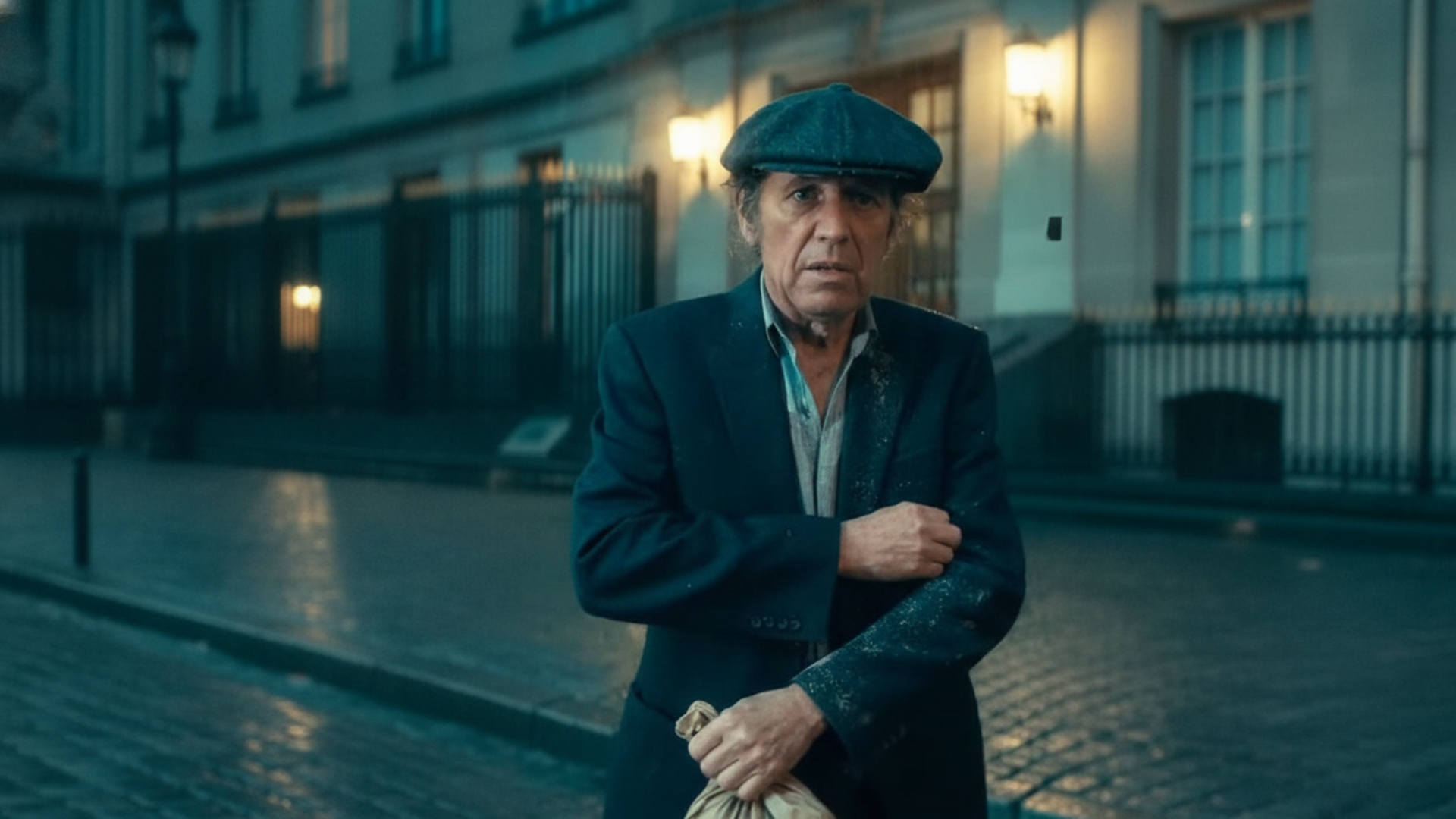
He appeared in the doorway ten minutes before the start, wearing a dark blazer that was simultaneously too broad in the shoulders and too short in the sleeves.
On his feet were old but carefully polished shoes, and in his hands a supermarket bag with the words “Happy holiday!” printed on it.
“What’s with the bag?” I whispered.
“Oh, nothing,” he mumbled. “Thought we might treat folks to something… if it all works out.”
At the center of the committee sat Professor Lebedev—strict, aloof, one of those whose name was spoken almost with reverence at conferences.
He was my official opponent, famous for tearing even the most confident candidates to shreds.
The defense went by in a blur.
I answered questions, showed graphs, justified formulas, heard applause, but all the while caught Andrey’s gaze in the last row, clutching that bag as if it were a case full of something priceless.
When the chair announced that the work was graded “excellent” and the degree would be conferred, Mom began to cry, and Andrey simply straightened his back like a soldier at roll call.
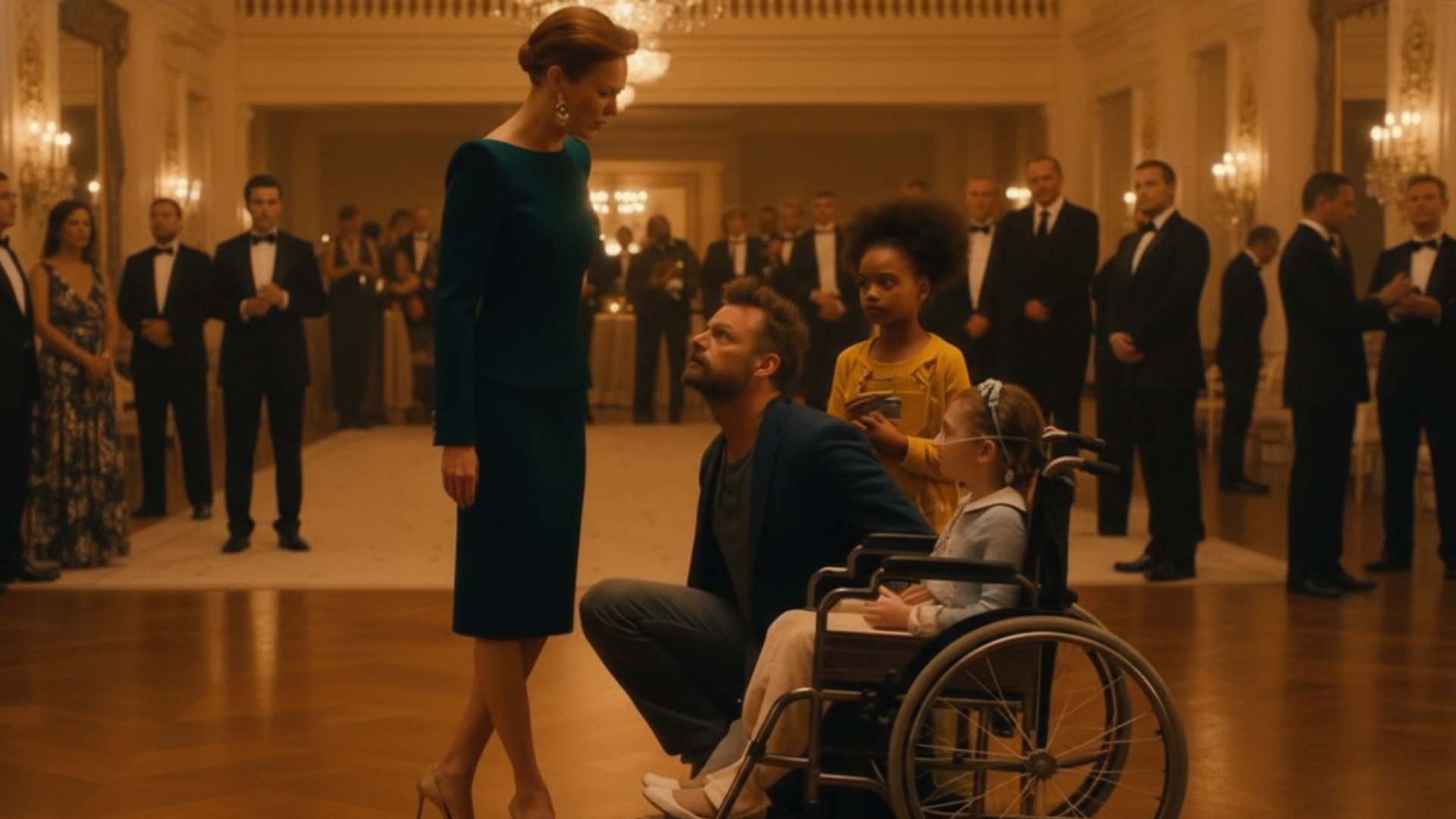
After the official part, Professor Lebedev walked over to us.
First he shook my mother’s hand and said a few routine phrases.
Then he looked at Andrey… and froze.
His face changed: the arrogant mask slipped, his eyebrows trembled, his lips parted.
“Excuse me…” he said quietly. “Is your name by any chance Andrey Kovalyov?”
Andrey nodded, baffled.
The professor stepped closer, peering into his face as if trying to cut through years and clouds of someone else’s memories.
“About twenty-five years ago you worked on a site on Komsomolsky Prospekt, right? Seventeen-story building, yellow brick…” his voice dropped.
“I did,” Andrey replied vaguely. “I’ve worked all over the place.”
“There was this kid on the seventh floor back then…” Lebedev swallowed. “He slipped on the stairs. Everyone ran down, but you… you went up those wet steps and shoved him onto the landing when the beam was already cracking.”
He gave a nervous half-laugh. “He still has a scar right here on his temple.”
The professor took off his glasses, and for the first time I noticed a thin white line on his temple, disappearing into his gray hair.
“That was you, wasn’t it?” he asked Andrey in a completely different tone.
Andrey blinked a few times as if he could not believe what was happening.
“Kid in a red windbreaker,” he said quietly. “Screamed so loud my ears rang for days. Thought I wouldn’t pull him up… So you did grow up.”
The hall fell silent.
The people who had just been talking about complex formulas and technical terms now stared at two men—one in an expensive suit, the other in a cheap blazer—as if witnessing an impossible story.
The professor laughed softly, with more relief and gratitude than irony.
“I did grow up, yes,” he nodded. “And today I was evaluating your… work. And I have to say: it’s outstanding.”
He turned to me.
“Your stepfather once pulled me out of a hole I’d climbed into by my own stupidity. Now you are pulling others out of ignorance. Quite an investment he made there.”
Andrey hesitated, scratching the back of his head in embarrassment.
“Oh, come on,” he muttered. “I was just doing my job back then.”
“No,” the professor shook his head. “Your job was to mix cement. Nobody paid you to fish us idiots out when we didn’t watch our step.”
He inhaled deeply. “If it weren’t for you, I’d never have made it to this faculty or this hall.”
Then, unexpectedly, he held out his hand to Andrey—not the way people greet support staff, but as one would to an equal.
“Thank you. For that staircase. And for this young man,” he nodded toward me. “You’ve done more for science than many of us.”
Andrey’s lips trembled.
He lowered his eyes so no one would see the shine in them and quietly said:
“I just wanted him to have a different life. Not like mine.”
Mom, still sniffling, pulled me into a hug.
All my teenage resentment, the shame of his dirty work jackets, the irritation at the smell of cement—everything instantly felt petty and disgraceful.
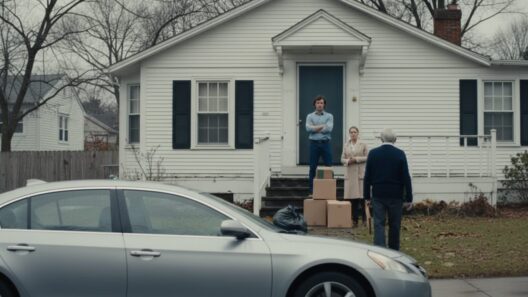
After the ceremony we stepped outside.
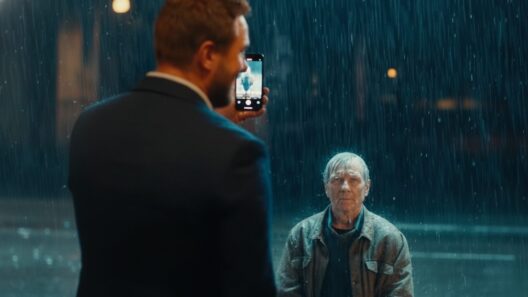
The rain had intensified, the university lights reflected off the wet asphalt, and Andrey, clutching his ridiculous bag of cookies and lemonade, still could not believe what had happened.
“See that?” I tried to joke. “You’re practically a faculty legend now.”
He just snorted:
“A legend in rubber boots… No thanks. Let the legends stay in your books.”
We stood in the downpour, cold raindrops mixing with the warm ones that never quite made it off his lashes.
I looked at the university building, at Andrey’s arms under the thin blazer fabric, and suddenly it became clear: my diploma was not only about my sleepless nights, but about every single one of his workdays, when he silently chose concrete and back pain instead of his own dreams.
“Andrey,” I said.
“Yeah?”
“Let’s go home, Dad.”
He jerked as if shocked by electricity.
He turned to me, trying to figure out if he had heard correctly, then quickly turned away toward the road and just nodded:
“Let’s go… son.”
In that moment all titles, ranks, and honors faded.
Because in a world where a professor once hung above a concrete void and a laborer held him by the collar, the most important title needed no diploma: “The one who didn’t let you fall.”