

She dismissed five caretakers in six months, hoping to protect her son… But the sixth hire shattered every unspoken rule.
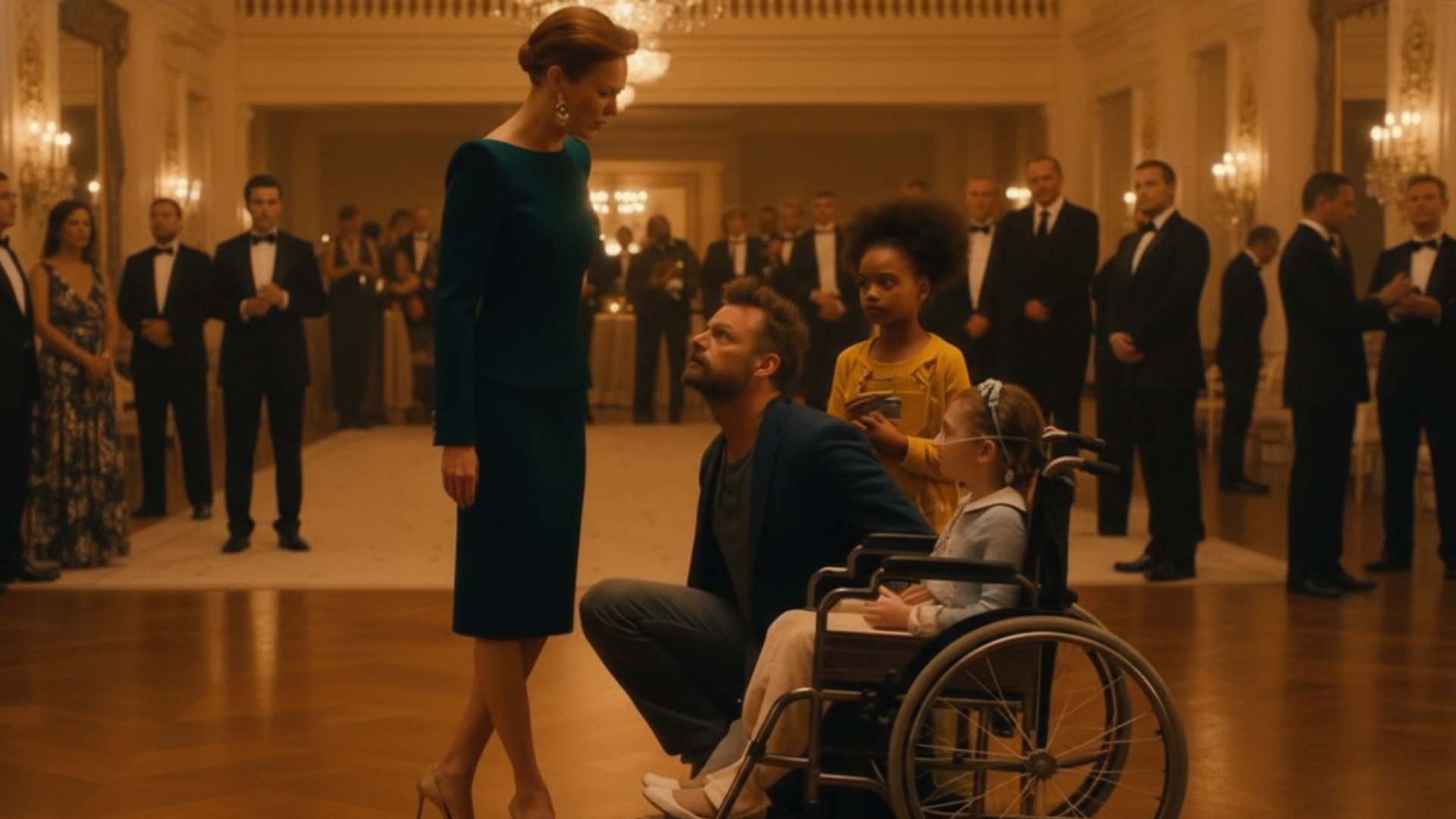
When Eleanor Tisdale paced the corridors of her sprawling Victorian estate, she did so as both owner and warden.
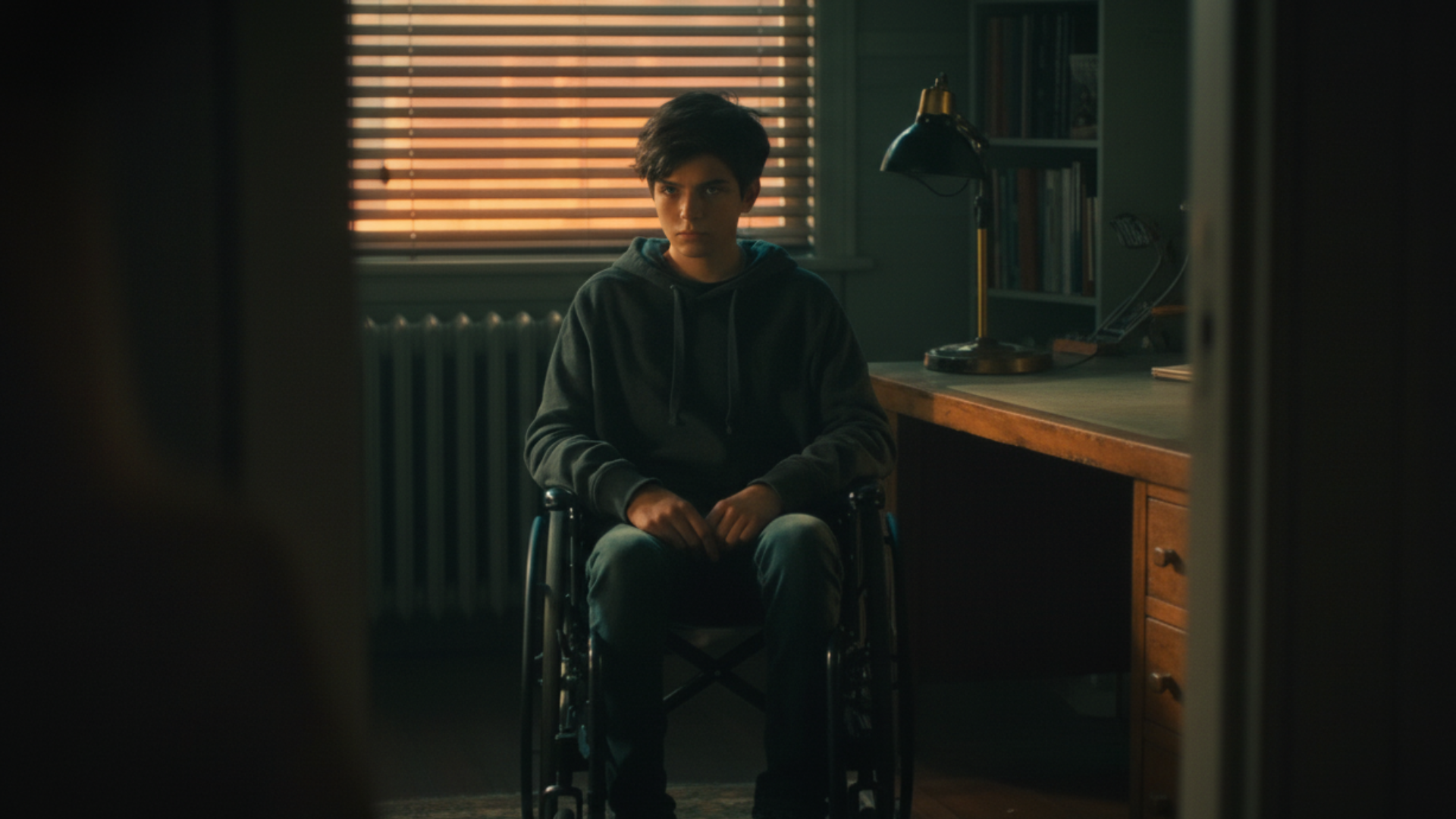
Her only child, ten-year-old Samuel, had not set foot outside his room for nearly a year—not since the accident that stole both his ability to walk and his trust in the outside world.
Sunlight filtered through stained glass windows onto velvet carpets. The furnishings—imported clocks, shelves lined with ancient books, marble busts—reminded visitors of wealth and old European tradition. Yet, beneath these signs of success, every step echoed the loneliness Eleanor could not shake.
Samuel’s father, once a daring journalist turned diplomat, had vanished on a crisis assignment overseas. Letters came, brittle and infrequent. Eleanor had learned to keep the sadness from her son, but his silence was its own kind of answer.
Where there should have been the clatter of play, there was only the soft shuffle of Samuel’s wheelchair and the mechanical hiss of the oxygen system she’d insisted installing. The room was filled with technology—learning tablets, a wall-sized aquarium, even a planetarium projector—yet lacked laughter.
Caretakers came and went. The first, a kindly retired nurse, had lasted barely a month, reduced to tears by Samuel’s icy silences and terse demands. The next, a cheerful young man with ambitions to be an actor, soon found his jokes could not penetrate the fortress around Eleanor’s son. Each new arrival clung to hope and routine, certain they’d be the one to break through, only to leave defeated.
Eleanor became stricter, shrouding Samuel in silence and routines that gave her the illusion of control. She interviewed each potential hire with increasing skepticism. Those with too much warmth she mistrusted. Those with too little, she dismissed.
Then, on a bleak November afternoon, the agency suggested someone different: someone “with an unconventional approach,” in Eleanor’s words. Hesitant but desperate, she agreed.
Her name was Sabine. Short, wide-set, perhaps forty years old, with assertive hazel eyes and a deliberate, gentle presence. Her qualifications were atypical—a decade working with traumatized children, but outside traditional institutions. She moved slowly, respectfully, making no promises.
The first day, Samuel refused to speak with her. The second, he told her to go. By the third, Eleanor expected her to resign—like the rest.
But Sabine remained. She went about the routines without commentary, humming quietly, showing Samuel the gears of his technology rather than urging him to interact. She respected the boundaries Eleanor had set—but not strictly.
Instead of coaxing, she observed. She watched the minute changes in Samuel’s posture and phrase, noticing his stares at the planetarium, his fingers lingering over the buttons that could fill the room with field crickets or a thunderstorm at dawn.
One morning, just as fog clung to the riverbank outside, Sabine brought a sealed cardboard box. She set it on Samuel’s table without a word, then busied herself by the window.
Samuel ignored it at first. After fifteen minutes, curiosity got the better of him.
Inside was a small, battered notebook. The cover was blank. He flipped through a few pages: all were empty except for one, halfway through, where written in neat cursive was a single question: “If you could go anywhere tonight, where would you want to see the stars from?”
He closed it and said nothing.
That night, Sabine operated the planetarium herself. She showed Samuel not overused cityscapes but projections of vast deserts, icy tundras, the deep sea—somehow reading his imagination. The next day, a page in the notebook read: “Would you visit again?”
Over mornings and evenings, the notebook became their language. Eleanor watched with skepticism, then disbelief, as her son began to write longer answers and pose his own questions. Sometimes Sabine would respond with a drawing, or a riddle. Soon, Samuel’s refusals ebbed away, replaced by requests: “Can we see the northern lights next?” “Do you know stories of ancient travelers?”
One evening, as a digital aurora rippled across the ceiling, Samuel said, “I’d like to see real stars.”
Eleanor’s heart froze. For months, even opening the window seemed too much.
But Sabine answered as if it were simple fact. “Then we’ll try.”
That weekend, with medical permissions and every precaution in place, Sabine dressed Samuel warmly and wheeled him outside for the first time since the accident. Eleanor followed, clutching her own hands in nervous disbelief. On the lawn, under a sharpened winter sky, Samuel looked up. He said nothing, but tears made his breath visible in the cold air.
The next day, Eleanor caught herself humming. The house, somehow, felt lighter.
Sabine didn’t solve everything. Letters from Samuel’s father still came sporadically. The medical prognosis remained unchanged. But the world in the mansion had cracked open, ever so slightly.
The notebook grew thicker, the nights richer with imagined and real journeys. Samuel laughed for the first time in a year, his voice surprising everyone, most of all himself.
And Eleanor, for the first time, believed her son might not remain a prisoner to shadows and memory.